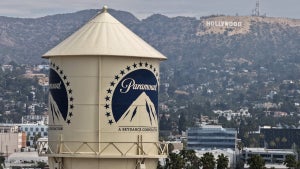
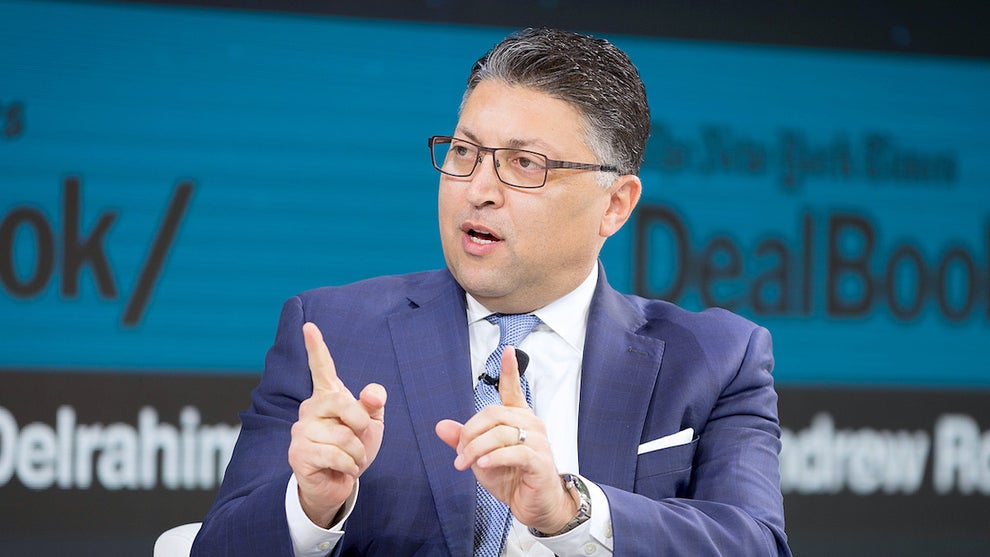
Paramount’s Chief Legal Officer Makan Delrahim railed against state AGs’ challenge to block its pending $110 billion merger with Warner Bros. Discovery on Monday, calling the lawsuit a “weaponization of antitrust law.”
A total of 12 state AGs led by California sued last week, arguing it would create an entertainment giant that would control 27% of the wide-release theatrical distribution market, 30% of the submarket comprising “anticipated blockbuster films” and 27% of the basic cable bundle. The group warned that the deal’s approval could give the combined company increased leverage over movie theaters and cable distributors, lead to an increase in consumer prices and reduce content output.
In response, Paramount has argued that the AGs’ case is “one of the weakest” in modern history, ignoring the intense competition from both established and emerging studios and streaming platforms like Netflix, YouTube and A24. It adds that the combined company’s cable networks are largely complementary, as opposed to being direct substitutes, making them unlikely to reduce competition. More fundamentally, the company noted, the continuing decline of pay TV has weakened every programmer’s negotiating position.
“As a California taxpayer, I would hate my attorney general to be wasting my taxpayer money on something like this where it shouldn’t. There’s no law. This is the weaponization of antitrust law if I’ve ever seen one,” Delrahim told Puck’s The Town podcast on Monday. “The market definitions don’t make sense. Just because you can sue in court, it makes no sense that you should do so. And here, this merger is pro-competitive. They should not want to do that.”

California Judge Araceli Martínez-Olguín will decide whether to issue a temporary restraining order against the pending $110 billion deal by Wednesday, which could last for up to 28 days.
On Friday, Paramount’s attorney Jeffrey Kessler argued that a preliminary injunction hearing prior to Sept. 30 is needed in order to prevent the media giant from suffering “very severe harm” due to a 25 cent per share ticking fee for every quarter until closing, translating to around $7 million per day and $650 million per quarter.
But James Weingarten, the attorney for the group of state attorneys general, argues that setting a hearing in August to “suit the defendant’s needs to avoid a payment they negotiated to make is beyond the pale” and has instead proposed April 2027 in order to give them time to gather evidence and let the court heart from witnesses.
“The witnesses you need to hear from are not just defendants’ handpicked witnesses. You need to hear from other people at the defense company. You also need to hear from the competitors and the customers. These are the folks who tell courts what really goes on in the marketplace,” Weingarten added. “We need a reasonable schedule that fits well within the timelines that other courts have put to bring forward our evidence that we need on the final merits decision of a permanent injunction.”

When asked about reaching a potential settlement with California Attorney General Rob Bonta, Delrahim emphasized that a list of possible concessions have already been sent to him and the other AGs, but declined to elaborate on specifics.
“You do remedies when you have harm, when you have a proof of illegality. One, there isn’t. You also do them to settle before you get to that determination,” he said. “Of course, whenever you have leverage on one side or you’re negotiating, we want to get out. So we said we would, of course. It’s on the attorney general’s desk. I was shocked when he said upon filing that it was only in the press that he learned about it. He got it two months ago.”
He added that Bonta’s office gave Paramount no response and that the company remains “open to all legitimate discussions” to address potential antitrust harm.
“They just wanted to bring the lawsuit. That’s fine,” Delrahim added. “But they should settle this thing if they if they really want an enforceable commitment.”
A spokesperson for Bonta’s office did not immediately return TheWrap’s request for comment.