
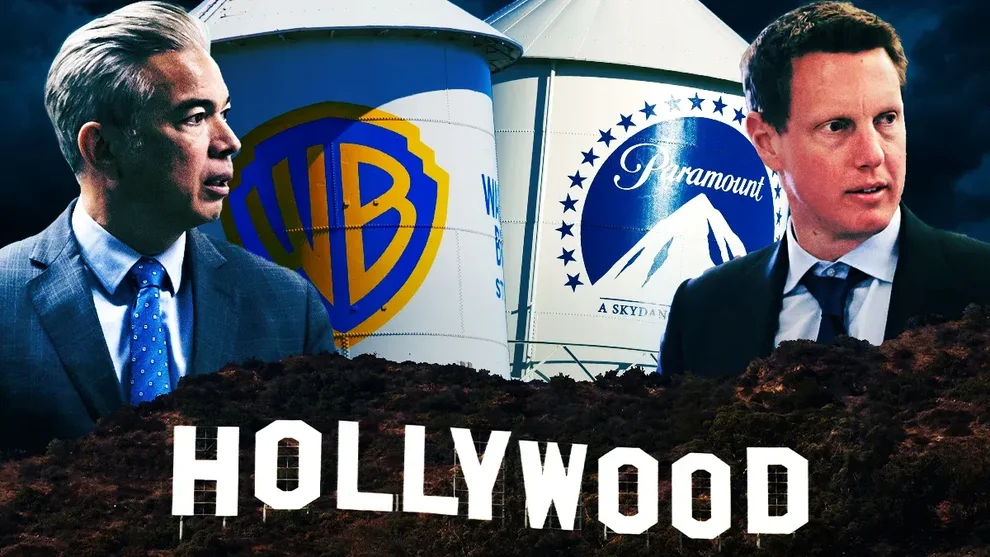
Paramount Skydance on Thursday forcefully pushed back against a lawsuit seeking to block its proposed $110 billion acquisition of Warner Bros. Discovery, arguing that the challenge brought by a coalition of 12 state attorneys general rests on an outdated view of the entertainment business and ignores the realities of today’s media marketplace.
In an opposition brief filed ahead of Friday’s hearing on the states’ request for a temporary restraining order, Paramount described the case as “one of the weakest merger challenges in modern antitrust history,” and urged a federal judge to reject an attempt to halt the transaction before it can close.
The filing marks the first time Paramount has laid out its legal arguments in court after California Attorney General Rob Bonta and attorneys general from 11 other states sued Monday, claiming that the merger would illegally concentrate power in film distribution and cable programming. The coalition of states contend that a combined company would control roughly 30% of the blockbuster theatrical distribution market while giving four studios — Disney, Universal, Sony and the merged Paramount-Warner Bros. Discovery — control of approximately 93% of that segment.

Paramount countered that those market-share calculations ignore the intense competition from both established and emerging studios.
“Low barriers to expansion by existing competitors — including Universal, Disney, Amazon MGM, Sony, Lionsgate, A24, and NEON — make Plaintiffs’ concentration figures irrelevant and ensure that competition will remain vigorous,” Paramount wrote.
The company also pointed to Amazon MGM’s breakout success with “Project Hail Mary” as evidence that competitors can quickly scale theatrical output. If Paramount were to reduce its release slate after the merger, the filing argues, then rivals including Amazon MGM, Lionsgate and A24 would have strong incentives to fill the output gap, preventing the merged company from exercising pricing power over theater chains.
Paramount also disputed the states’ claims involving cable, where prosecutors argue combining two of the industry’s largest portfolios of basic cable networks would give the company outsized leverage over cable and satellite distributors.
Instead, Paramount argued its channels and Warner Bros. Discovery’s cable networks are largely complementary as opposed to being direct substitutes, making them unlikely to reduce competition. More fundamentally, the company said, the continuing decline of pay TV has weakened every programmer’s negotiating position.

“In this environment, every programmer’s bargaining position is diminishing because the underlying asset (pay television subscribers) on which affiliate fees are calculated is eroding annually,” the filing stated.
The opposition also argued that the states have failed to demonstrate the imminent, irreparable harm required for emergency relief, noting that the U.S. Department of Justice previously closed its antitrust review without challenging the transaction and contending the plaintiffs are seeking to block a merger based on speculative future harms rather than concrete evidence.
U.S. District Judge Araceli Martínez-Olguín is scheduled to hear arguments on the states’ request for a temporary restraining order Friday morning. If granted, the order would temporarily prevent Paramount from closing the deal while the court considers whether a longer preliminary injunction is warranted.
