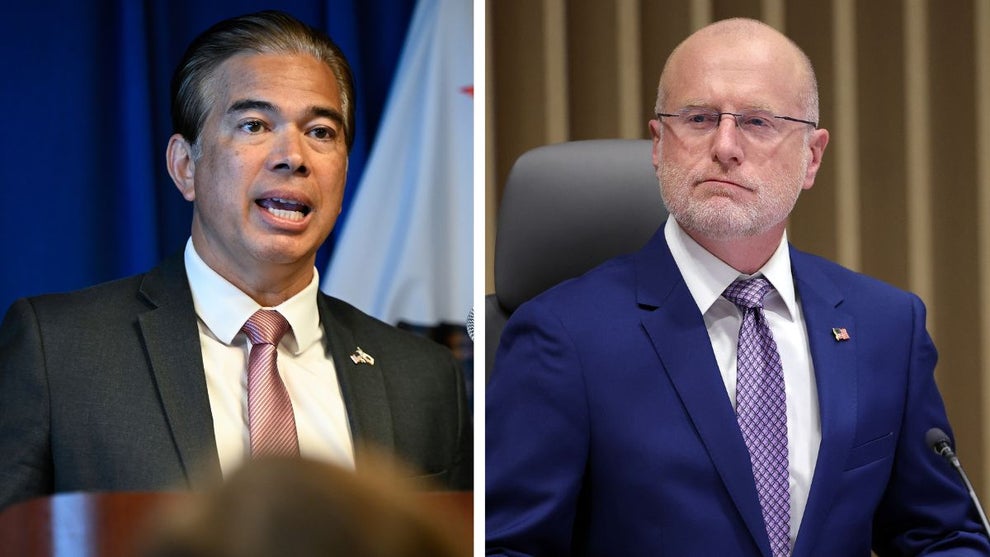
Rob Bonta hit back at FCC chair Brendan Carr’s claim that the states could drop its antitrust lawsuit against the Paramount-Warner Bros. merger with a CNN spinoff.
The California attorney general clarified his stance in a statement shared to X on Wednesday, where he made it clear he “never said” what Carr was suggesting.
“Unsure where this reporting originated from, but I’ve literally never said this,” Bonta wrote. “Spinning off one channel from a media conglomerate is not a sufficient remedy to protect consumers and preserve competition in the film and television industry.”
Bonta’s response came hours after Carr told The Hill’s Julia Manchester that he doubted that the states’ legal challenge would be successful.
“There was a story that broke a couple weeks ago that said that California was floating the idea, according to news reports, of dropping all antitrust litigation if there was one condition that was met,” Carr said, “which is that the purchase involved was spinning off of CNN.”
Carr further noted that he didn’t “understand what antitrust theory you have that says there’s a problem with this acquisition that is made or broken based on one cable channel being included.”
He added: “So, I think it’s a bit of a tell that this really isn’t a legitimate antitrust case, but ultimately, that’ll be up for the courts to decide.”
Carr appeared to stand by his stance Wednesday evening, responding to Bonta on X with a receipt of sorts: A screenshot from a Puck News report, which claimed the California attorney general wanted Paramount to sell CNN if the merger went through.
Bonta did give some insight into what a possible settlement in the antitrust challenge could look like, sharing on KQED Forum on Tuesday that he’d be “interested in potential structural remedies.”
“What’s a structural remedy? It means keeping corporate entities separate,” Bonta said. “Having a suite of cable channels that remain separate from this merger, from this merged company. Having a streaming service that’s separate. Having a news channel or a TV studio that’s separate. Having a film studio that’s separate. So we would be interested in considering structural remedies, but the behavioral remedies have traditionally not proven to be effective.”

As we previously reported, Bonta and 11 other state attorneys general sued to block the Paramount-Warner Bros. Discovery merger on Monday. Bonta led the charge with the filing, blasting the merger as “unlawful.”
“Today, I am leading 12 states in challenging the proposed merger of Warner Bros. and Paramount and asking the court to block the deal,” Bonta said in a statement. “California’s film and entertainment industry touches the lives of Americans daily. We’re going to court to fight for a free and fair market and protect this iconic industry.”
The state AGs argued that the merger would create an entertainment giant with increased leverage over movie theaters, as well as cable and streaming platforms. The states followed up this suit with a request for a temporary restraining order and an injunction, with Bonta defending on CNN that it was meant to “make sure that the proposed merger is halted during the pendency of the litigation.”
In response to the states’ action, a Paramount spokesperson shared that they plan to “vigorously defend the transaction and demonstrate that this challenge is inconsistent with sound competition policy and the competitive realities of the media marketplace.”
“Delaying this transaction will only harm entertainment workers,” the spokesperson continued at the time, “who have already suffered over recent years as technology has disrupted their livelihood and cost California tens of thousands of entertainment jobs.”
The Writers Guild of America followed with its own suit on Tuesday, citing similar antitrust and competition concerns.
