
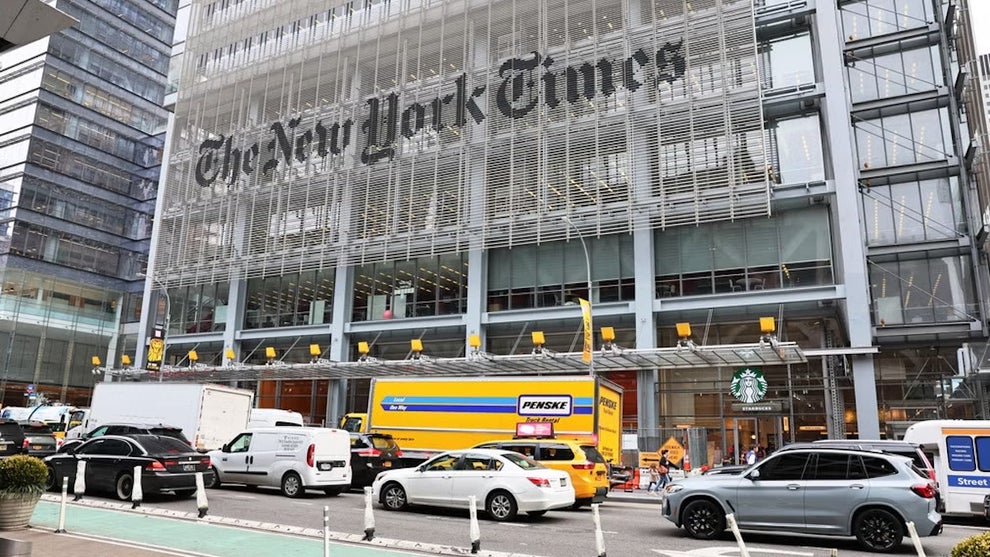
The New York Times filed a motion Wednesday seeking to block the Trump administration from subpoenaing three of its journalists and forcing the disclosure of their sources for coverage surrounding the Qatari-donated Air Force One plane.
The Justice Department delivered subpoenas to several reporters’ homes Friday, requiring them to testify about their confidential sources before a federal grand jury in Manhattan.
Three Times reporters, Julian E. Barnes, Eric Lipton and Eric Schmitt, received subpoenas for their coverage that detailed security concerns about President Trump’s new Air Force One jet.

“These subpoenas are brought in bad faith to punish The Times for its coverage. They violate the constitutional rights of The Times and its journalists,” the Times’ lawyer David McCraw wrote. “We are going to court to defend our journalists’ rights to report freely on the administration and to provide the public with stories that matter.”
McCraw also called the subpoenas “abusive and improper” in addition to violating the journalists’ First Amendment rights.
Last week, the journalists reported that Trump Turkey on an older Air Force One for security reasons, under the advice of the Secret Service. A July 9 New York Times article then reported that the new Air Force One lacked anti-missile capabilities, among other advanced security features found on the older aircraft.
The subpoenas were issued by Jay Clayton, the U.S. attorney in Manhattan, whom Trump nominated to serve as his director of national intelligence. Todd Blanche, the acting attorney general, said during his Senate confirmation hearing Wednesday that he authorized the subpoenas.
“We’re not targeting reporters — they’re material witnesses,” Blanche said. “Just like a reporter would be a material witness to a car crash.”
The Times’ executive editor Joe Kahn published a video Wednesday, defending his reporters and calling the subpoenas a “naked attempt to intimidate The New York Times and to keep us from reporting on matters that we think are essential to national security.”
