
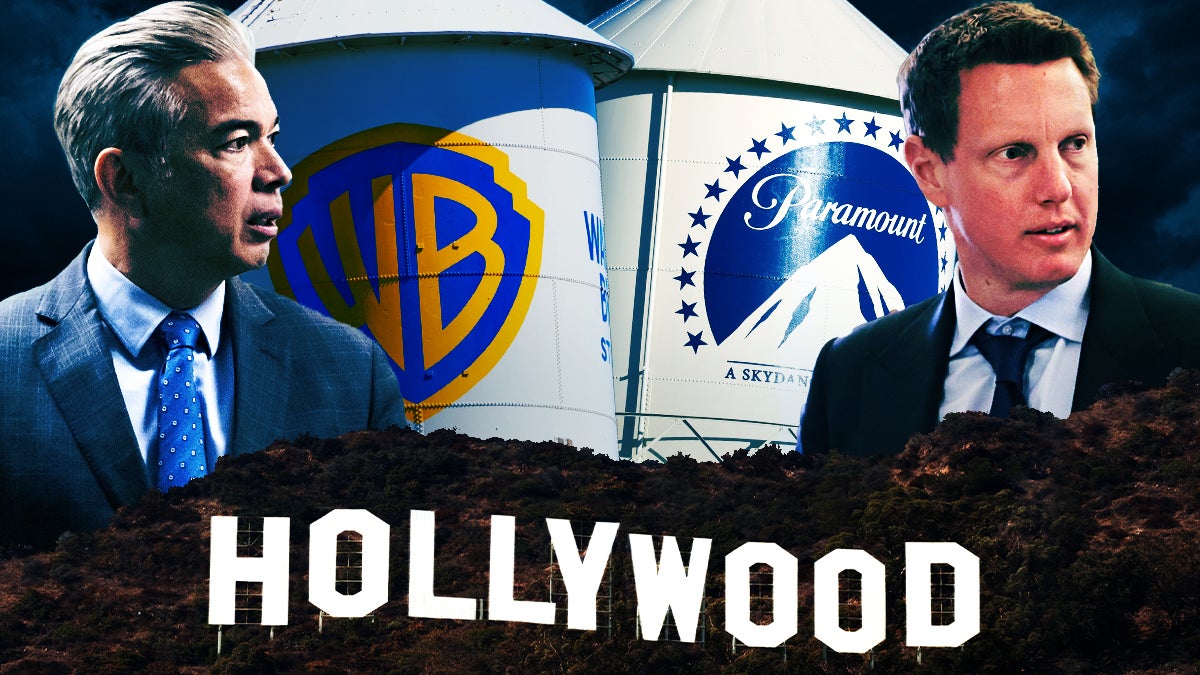
A dozen states have thrown the long-awaited wrench into the Paramount deal to acquire Warner Bros. Discovery, raising the prospect that its plan faces a delay it can ill afford.
The 12 state attorneys general, led by California AG Rob Bonta, on Monday filed their lawsuit challenging the $110 billion merger, alleging the deal would reduce competition in the distribution of films and give the combined company too much power when negotiating with TV distributors, ultimately leading to higher prices for consumers. Later that evening, it asked a federal judge to temporarily halt the transaction.
The states have a unique time advantage in this legal fight. While the restraining order is for two weeks, it could lead to a temporary injunction that pushes back the closing date past Paramount’s self-imposed Sept. 30 deadline, after which it would have to begin paying a daily “ticking fee” to shareholders, which amounts to about $650 million each quarter.
Ultimately, this case lives and dies on whether the judge grants the preliminary injuntion. Such a move could be a devastating blow to Paramount’s bid to cobble together two legacy studios — it’s already taking on massive debt for the deal and isn’t in a position to pay out even more to shareholders. It also potentially gives the state AGs significant leverage over the company with future settlement talks.
Paramount blasted the lawsuit, arguing it “reflects a fundamentally flawed application” of antitrust laws.
“We will vigorously defend the transaction and demonstrate that this challenge is inconsistent with sound competition policy and the competitive realities of the media marketplace. Delaying this transaction will only harm entertainment workers who have already suffered over recent years as technology has disrupted their livelihood and cost California tens of thousands of entertainment jobs,” a Paramount spokesperson said in a statement.
On Tuesday, Jeffrey Kessler, the lead trial counsel for Paramount, told CNBC that he didn’t believe the AGs would get the injunction, arguing that the deal would produce a stronger linear TV and theatrical company.
But two legal experts who reviewed the case believe the states have a good shot of getting that preliminary injunction.
“It’s a pretty strong case,” said Abiel Garcia, an antitrust attorney at Kesselman Brantly Stockinger, noting that the argument is a straightforward case of a horizontal combination — one studio buying another — where it’s easier to prove harm.
Bryan M. Sullivan, an entertainment lawyer and partner at Early Sullivan Wright Gizer & McRae LLP, said he can see the merits of the arguments on both sides, but agreed the states likely have enough to warrant an injunction.

What happens next
The states moved quickly to file the request less than 12 hours after announcing the lawsuit. The original announcement of the filing said they had initially requested Paramount and Warner Bros. Discovery proactively halt the merger themselves.
That clear didn’t happen.
Garcia said he didn’t expect Paramount to play ball, and that it has an incentive to move quickly.
“If I’m advocating the best strategy, I’m not letting the other side take the time to get their ducks in a row,” he said.

It’s unclear how long it would take for a judge to decide on granting the injunction, but given the situation, it would likely get an expedited review. Sullivan said the court typically looks at the potential harms on both sides, and that the ticking fee would be a factor.
It took a month for a district court judge to issue an injunction halting the Nexstar-Tegna merger.
Still, it’s not a guarantee that the states will get that injunction, and at least some on Wall Street are betting that this gets resolved before the Sept. 30 deadline. On Monday, Paramount shares rose 1.5% to $9.55 and Warner Bros. rose 1.9% to $27.09.
“It seems like it could have been worse, and WBD’s stock is even up a couple of percent on the announcement, indicating that perhaps some of the uncertainty about the shape of the case had been resolved,” said Paul Nary, an M&A and strategy professor at the Wharton School of the University of Pennsylvania.

Going on the offensive
Monday’s lawsuit challenging the Paramount deal marks just the latest example of the state attorneys general being more proactive in enforcing antitrust laws than the Department of Justice.
And it’s been a relatively strong track record.
In 2024, they led the successful blocking of the Kroger-Albertsons merger due to concerns about grocery prices. In April, a federal jury found Live Nation and Ticketmaster guilty of illegally operating as a monopoly despite an earlier settlement with the DOJ.
But the April injunction blocking the Nexstar-Tegna merger — which had already closed the prior month — signaled that the state AGs needed to be taken seriously at a time when the U.S. Justice Department seemed to ease up on its own scrutiny.
“This administration has time and time again shown us there are other things at play beyond what the law should say,” Garcia said.
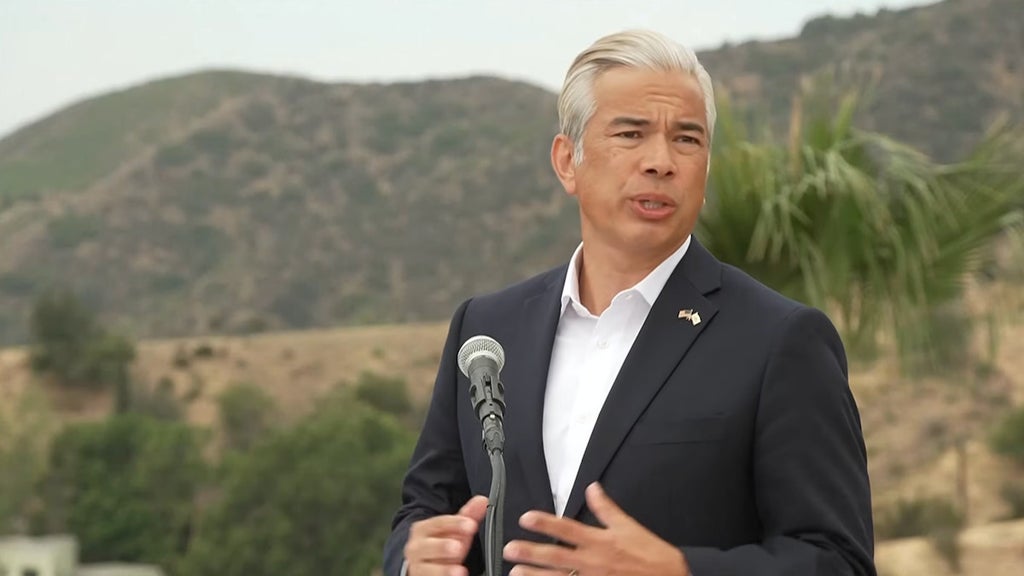
Bonta said as much during a press conference on Monday.
“The Trump administration has absolutely dropped the ball. Worse than dropping the ball. It would be better if they just did nothing,” said Bonta. “They’re definitely doing nothing, but also they’re affirmatively making things worse.”
The states’ argument is that the combination of Warner Bros. and Paramount would leave three film distributors controlling 75% of the market. The concern is the combination would result in fewer films, despite Paramount’s promise to deliver 30 films a year. Notably, 21st Century’s output of films fell drastically after it was acquired by Walt Disney Co.
On the cable side, they would combine for 27% of basic cable television channels, with enough bargaining power to exact higher fees that would then get passed down to consumers.
Paramount has argued that the rise of tech companies including Netflix and Google, which owns YouTube, makes the merger necessary for it to be competitive. It’s also argued that the deal would lead to the creation of more jobs.
Sullivan said that Paramount’s argument about the threat of big tech is valid, and the case will come down to a statistical analysis of the harms in each of the states that are suing.
“Given the whole nature of the entertainment industry being upended in the last several years, this is a case where both sides have good arguments to make,” he added.
The state AGs believe it’s more cut and dry and plan to make their argument in the Northern District of California, which Garcia said was a “more plaintiff-friendly area” but with “tough judges who really understand antitrust law.”
