
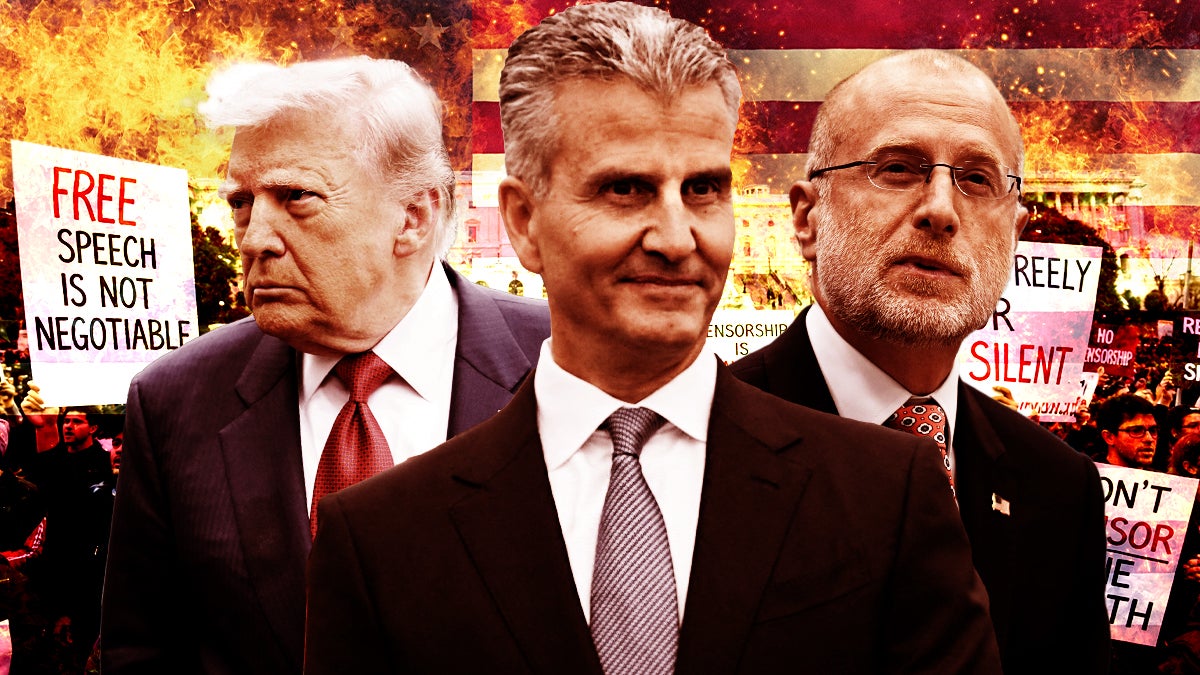
Jimmy Kimmel, ABC’s embattled late night host, closed out Disney’s annual upfronts presentation to advertisers on Tuesday with a quip that summed up his last year in the Trump administration’s crosshairs.
“I didn’t think I’d ever see you guys again either,” he told the crowd at Manhattan’s Javits Center, which erupted into thunderous applause when he walked out.
Last year, under Bob Iger’s second tenure as Disney CEO, that seemed like a real possibility as Kimmel was pulled off the air amid Donald Trump’s calls for his firing. Now, two months into Josh D’Amaro’s leadership amid renewed calls from the White House to fire Kimmel and the Federal Communications Commission threatening ABC’s “The View,” Disney is biting back.
Disney’s 52-page brief to the FCC last week marked a pivot from its conciliatory approach to Trump’s second term as president under Iger, which included a $16 million settlement in a defamation case experts believed it could have won and a temporary suspension of Kimmel after FCC Chairman Brendan Carr threatened the company.
Instead, Disney rebuked the federal regulator’s yearlong pummeling of the company, including an investigation into the diversity practices of eight local ABC affiliates that culminated last month in a demand they file for early renewal of their broadcast licenses.
That final demand may have been what crossed the line and forced Disney to take its more aggressive approach.
“Chairman [Carr] has given them no choice but to push back,” Bob Corn-Revere, chief counsel for the Foundation for Individual Rights and Expression, told TheWrap. “It’s one thing to try and jawbone your way into modifying a licensee’s behavior. But once you start taking various regulatory actions, like the investigation over ‘The View,’ or like the designation of earlier license renewal, then it’s sort of an action-forcing event.”
In an interview with TheWrap, Anna Gomez, the lone Democratic FCC commissioner, said Disney has “learned a lesson that other companies and organizations also are learning, and that is that capitulation does not buy protection.”
“Instead, it invites more harassment,” she added. “This time, Disney has chosen courage over capitulation, and they will win in any challenge that they bring against this administration’s attempts to silence it.”

Gomez on Monday sent a letter to D’Amaro praising the company’s decision to rebuff “a sustained, coordinated campaign of censorship and control” — a rare show of support by a commissioner over an FCC matter.
“The fight ahead may not be easy, but the law, the facts, and the public are on your side,” Gomez wrote. “This is a fight worth having, and one that I am confident you will win.”
Even Kimmel is showing teeth, taking aim at CBS’ decision to cancel “The Late Show” — one many saw as a capitulation to the Trump administration — while appearing alongside Stephen Colbert with his fellow late night hosts on Tuesday.
“When I got knocked off the air for a few days, people canceled Disney+,” Kimmel said. “Why aren’t you people canceling Paramount+? Because you didn’t have it in the first place?”
Paramount declined to comment.
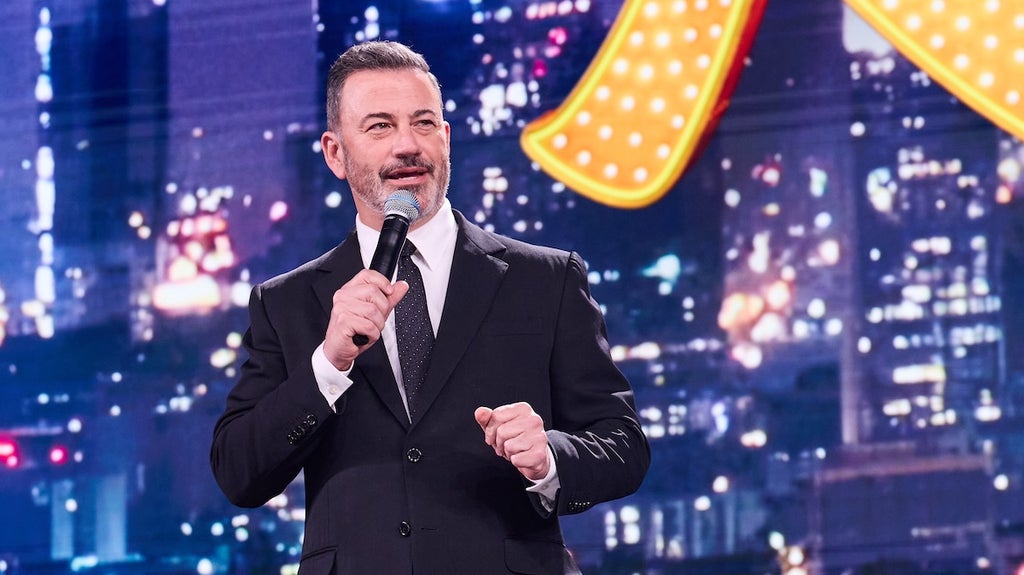
As for D’Amaro, he took the upfronts stage on Tuesday and, rather than showing his muscles, he painted a portrait of his love for Disney and why this particular entertainment brand is so special.
“That feeling, the one that does not fade, the one that becomes part of who someone is, that is our entire business,” he told a room of thousands of ad executives and anyone else who might be listening. “No focus group invents that. No algorithm produces it. No amount of capital can buy it. That is what every audience, every sponsor, every brand in this room is actually trying to buy.”
He went on: “The thing is, you cannot acquire a hundred years of trust. You can’t put generations of belonging on a balance sheet. And in a world of infinite choice and constant distraction, that kind of presence is rare, and getting rarer.”
An FCC spokesperson did not respond to a request for comment.
Why Disney changed its tune
Disney’s decision to not just stand its ground but forcefully push back on the FCC’s actions stands in stark contrast to the more passive tone the company struck throughout 2025, and while a spokesperson did not respond when asked why the D’Amaro-led company took a defiant stance against the FCC, Corn-Revere said Disney didn’t have many other options.
He called Carr’s demand for an early renewal process a “blunder” that he speculated was a job-saving effort to show Trump he would pursue actions against his media enemies. Still, Corn-Revere said, the efforts have not gone far: Kimmel remains on the air, and the legal process of the FCC’s ABC license demand will drag on beyond Trump’s tenure.
“In terms of sort of a lasting impact, [Carr’s] informal actions have backfired, and the more he moves toward taking formal actions, the more he moves closer to having some kind of accountability for what he’s doing,” he said.
The political environment is different now, too, with Trump’s popularity considerably lower than it was when Kimmel was first pulled off the air. Calls from the president and his wife Melania Trump to reprimand the late night host a second time failed to gain the widespread support that spurred Iger and Dana Walden to take action last year, and the FCC’s attempt to go after “The View” is seen by most experts as an attack on the First Amendment.
Gomez, the Democratic commissioner, said Carr’s actions go beyond the FCC alone. Instead, she said they were part of Trump’s “administration-wide campaign to bring any perceived critics to heel and just to basically send a message to other broadcasters, speakers, critics, that this administration will come after them if they displease the administration.”
She wouldn’t speculate why Disney under D’Amaro was willing to speak out now instead of during the past, but she said the company’s effort should send a message to other companies under FCC threat that have “the Constitution, the First Amendment, and the law on their side.”
The FCC’s drumbeat
Disney set the dynamic of how it would deal with Trump early on. Within a month of his electoral victory, Trump brought Iger to heel by getting the company to pay him $16 million to settle his defamation suit over a George Stephanopoulos interview and his legal costs.
Shortly after Trump’s return to office, the FCC revived a dismissed complaint against ABC, Disney’s broadcast channel, over how the network’s news anchors, David Muir and Linsey Davis, moderated the 2024 presidential debate between Trump and Kamala Harris. The move enraged Gomez and other press freedom advocates, though the company remained largely silent.
The FCC ramped up its pressure two months later, opening an investigation into the company’s diversity, equity and inclusion practices as Trump sought to extinguish it. “I want to ensure that Disney ends any and all discriminatory initiatives in substance, not just name,” Carr wrote in a March 2025 letter to Iger.
“We anticipate the opportunity to address the agency’s inquiries during our forthcoming dialogue,” a spokesperson said at the time. By the end of the year, the company removed all instances of “diversity” and “DEI” from its 2025 business report (and, it should be noted, many other companies followed suit). Then came last month’s FCC order for eight of ABC’s local stations to file for early renewal for their broadcast licenses in the investigation.

The pressure wasn’t limited to the parent company alone, extending its meddling to Disney’s ABC shows.
After Kimmel made a joke last September in the days following Charlie Kirk’s assassination, Carr threatened action if Disney didn’t discipline Kimmel. Within hours and after deliberation between Iger and Walden, the company suspended Kimmel for nearly a week before returning him to air.
Months later, after an interview with Texas Democratic Senate candidate James Talarico, Carr launched the FCC’s investigation into “The View” for alleged violations of its “equal time” provisions, which mandate that broadcast licensees provide equivalent airtime to every eligible candidate seeking political office. Carr instead argued the show was not a “bona fide” news program, and again, Disney stayed largely silent.
But roughly a month after “The View” investigation came to light, Iger stepped down to make way for D’Amaro’s ascension. Now, the company is singing a different tune, demanding in its legal brief last week that the full commission affirms the opinion show’s bona fide exemption it has operated under since 2002. It called the action “unprecedented” and “counterproductive to the Commission’s stated goal of encouraging free speech and open political discussion.”
“Uncertainty as to the scope of broadcast licensees’ editorial discretion threatens to limit news coverage of political candidates and chill core First Amendment-protected speech for years and potentially decades to come,” the network wrote on Friday.
What happens next
In her letter to Disney, Gomez pledged to use “every tool available to me as a Commissioner to shine a light on what this FCC is doing to curtail press freedom and to hold this process to account at every step.”
Carr, who is no stranger to posting inflammatory attacks on social media, has yet to turn up the heat following Disney’s pushback. And Disney made clear in its legal brief that it thinks Carr is using the FCC to restrict views he doesn’t agree with, writing, “Some may dislike certain — or even most — of the viewpoints expressed on ‘The View’ or similar shows. Such dislike, however, cannot justify using regulatory processes to restrict those views.”
Gomez, meanwhile, told TheWrap she’s happy to see the D’Amaro-led Disney take a stand after choosing appeasement last year.
“Companies should be protecting their rights, because what we have learned from this administration is that if they give in to this administration, the administration comes back for more,” she said. “You’re never protected from capitulation. You’re just borrowing time, and that’s something that Disney has shown us.”
