

As the Los Angeles City Councilmember for Studio City and North Hollywood, Adrin Nazarian has heard plenty from producers, unions, and film workers about how Kafkaesque it has become to make movies and TV shows in a city synonymous with showbiz.
Since taking office last year, he’s spent months pushing the city government to make changes. Now, he and the City Council are boosting their efforts with a new ad hoc committee aimed at reducing on-location shooting fees, improving communication between the city’s myriad departments, demystifying the confusing array of special conditions producers must take into account, and generally, as Nazarian put it, “part the red sea of red tape.”
“Once we don’t have the industry here, once we just become like any other city with a certain percentage of our industry and income being entertainment, Hollywood is going to change forever, so it’s critical for us to do everything we can to double down,” Nazarian told TheWrap.
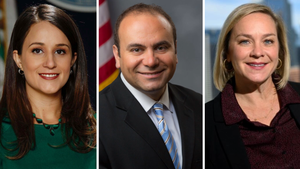
Work has and will continue to be done at the state and federal level. Nazarian joined other lawmakers at a press conference on Thursday urging Gov. Gavin Newsom to sign into law a new tax incentive to bring post-production work back from other states and countries, though it is unclear how much money will be allocated towards that project. On the federal level, a bipartisan push has begun to get a nationwide film tax incentive approved by Congress.
But those programs, while available to some extent for independent productions, are aimed primarily at the major studios who have moved blockbusters and top TV shows to Canada, Europe and Australia.
It’s the indie producers, who don’t have the money and resources to deal with the fees and confusing rules around on-location shooting, that Nazarian and fellow committee members Traci Park and Imelda Padilla are hoping to help at a time when FilmLA’s latest report show that the number of shoot days in LA County have collapsed by 53% compared to where they were in the summer of 2016.
“There’s a lot that we need to put in place — the effective communication, the interagency operations, and all of that — so that when the federal tax dollars come in, they’re not going to other states or other cities because we are ready and at the front of the line to benefit from those new opportunities,” he said. “There’s a sense of urgency in me to want to push as hard as possible because if we push, if our state partners push, if our county partners push, we’re going to be getting results.”
Nazarian spoke with TheWrap about the first issues the new city council committee is tackling and what he is hearing from the film industry about why filming in Hollywood isn’t what it used to be. The interview has been edited for length and clarity.

At the first meeting for this new committee, the focus was on a motion you introduced to the City Council to make several changes to the fees and permitting processes that LAFD, LAPD and the Board of Public Works go through with film shoots. Let’s break down what was discussed, starting with the fire department.
LAFD has a couple of different fees. One is a spot check fee, which is a set fee. Then it’s got a larger fee for a fire safety officer who shows up to a shoot, and sometimes that also comes about because they did a spot check, and they see that there’s a need to have a fire safety officer to come in and provide more guidelines of how to safely do the shoot. There’s an hourly rate and charge that then gets established with the fire safety officer coming in, and my contention was, “Why don’t we come up with some kind of a fee structure that, if you’re going to have a spot check done, reduces the burden by not having multiple different fees in place?”
I think we came to a good conclusion based on the feedback we received from the LAFD captain who was there answering the questions that we don’t completely erase that one fee, but we make it commensurate to the time spent by staff. The issue here isn’t whether a $300 fee is gonna crush the ability to do a shoot or not. The objective for the hearing was to make sure that every single department is being held to account, to make sure that they are doing what is necessary to roll out the red carpet for the industry and to make sure the industry is heard and is met with the need they have to quickly get their things done.

When we spoke with Stay in LA, they did say that the struggles with city departments when it comes to permitting is even more of an issue than the fees. It sounds like you’re hearing the same thing.
Yes. If you elongate or make it difficult for a shoot to happen, it makes it less likely that a producer is going to want to shoot here again in the future. They want certainty. The $300 fee is not an objectionable issue. What is objectionable is when they’re waiting for a too long of a period until they hear back about their permit, or once they get their permit, they’re met with other obstacles or resistance because they find out that last minute there’s something happening at the city facility, and they need to figure out how to address it.
Steve Kang, Mayor Bass’ film liaison, told us about that sort of issue with a production that had a permit for the Griffith Observatory that found that Parks and Rec were fertilizing the grass on that day. They had to call him and get him to tell the department to reschedule that work so they can shoot. But Steve Kang is just one man.
A good running system shouldn’t operate that way. You can troubleshoot. You can have a point of contact for troubleshooting, but it should be an extraordinary troubleshoot. Something like when you already have, for example, a master calendar, and you know you’re going to have a shoot at a certain location. So then, whatever else you’re doing needs to take that into consideration and be worked around it.
Those are things that are dealt with through good communication within and between departments, and that’s why what I’m trying to push for. It’s not just about the fee; it’s about the culture. It’s about shifting the way we do things within the city departments and then with intergovernmental communications, so that we’re working with the county and state facilities to make sure that everything is symbiotic. When your scale is as big as Los Angeles, and you’re dealing with multiple big issues, or issues that just happen to be big because they’re in Los Angeles, whether city or county, you are going to run into these obstacles if you are not organized with the many departments we have because of our population.

Most other jurisdictions competing for productions aren’t our size, and so they can easily compete. And as they’re ramping up, they can take up some of this work, because the initial phase is always easier. Once these other jurisdictions potentially hit certain plateaus, then that’s the issue of us becoming equal with everybody else and losing the advantage that L.A. has had for generations, and that’s what we don’t want to see.
At this committee meeting you also discussed how the Board of Public Works and FilmLA can make it easier for producers to understand the special conditions they have to abide by at specific locations throughout Los Angeles. From your talks with stakeholders, was that confusion flagged as a major issue?
I don’t want to be unfairly critical here, but … I think part of the issue is evolution. Our systems are not evolving quickly enough to adapt to the changing needs of the media and entertainment industry. When you look at how much more shoots are taking place that are social media based or commercial in Los Angeles up until a few years ago, these are smaller shoots that require certain levels of nimbleness. They’re smaller, but the frequency is greater, so it might be overwhelming FilmLA staff, or they might be looking at the more traditional feature films, episodic films, and so they’re trained or they’re used to certain types of shoots coming in, and they’re working with personnel on the other side that know the system.
Well, a lot of the folks that are doing the shoots now may not know the system, so they need either a little bit more handholding or a check sheet, checklist sheet to know exactly what they need to do, step by step, so that they can take care of things. These again, these are all things that are fixable. It’s just a matter of making sure we’re keeping up with the changing of times and evolving ourselves as government to meet the needs of the ever-changing and evolving industry.
Another major issue we’ve heard a lot about is “inconvenience fees,” where businesses are asking productions to pay them for lost business if they’re shooting on their street even if they’re low-budget shoots that can’t afford the payout. What can you tell us about the committee’s plan to change this with the LAPD and Board of Public Works?
This is, as you can imagine, a touchy subject. We are trying to change a culture where people have become either accustomed to or are very unwilling to yield to something happening on their street, or they don’t want to deal with the inconvenience, and so the easy way in the past was for production companies to say, “Well, here’s $1,000, here’s $2,000” so that they could continue doing their work without much obstruction.
If you are going to put that kind of a strain, especially on a small production with limited funds, to now come up above and beyond their projected budget of these types of payouts, it’s going to make it very hard for that filmmaker to decide to do another shoot in the future in Los Angeles. They’d opt to go somewhere else where they will not be dealing with those challenges. So it’s critical for us to address this touchy subject and go out and educate and say, “Look, you can come up with a certain term potentially with the filmmakers, but please understand that if you try to you try to create an obstacle, this industry is going to be moving on, and this industry includes people that are your neighbors, your family members, your friends. You’re hurting your own ecosystem.” You have to start out from somewhere, and that’s one step of making people understand going through that education process.

There’s also a section of your motion establishing a citywide motion picture officer position with the LAPD in coordination with the BPW and FilmLA, and also developing a film safety officer classification for duties that don’t require sworn personnel. Can you explain how that can help with permitting issues?
When the industry was booming in the 80s, street closures required police presence. It was just built into the film budget, no questions asked. L.A. was the only major place to do films, and producers needed to abide by the city’s rules. Well, things have changed. People can go a lot of other places, and if that’s the case, then we need to be looking at figuring out: Are these costs now, given that we don’t have that geographic monopoly anymore, hurting us from having shoots take place in Los Angeles or not?
A new classification is another way of reducing fees similar to what we’re coordinating with LAFD. We can have personnel that’s retired, or is maybe not a sworn officer, so that productions could pay a rate significantly less than what an hourly rate is for a sworn officer. These are just questions we need to start looking at, and heavily considering, and quickly making decisions on, if we want to make sure that we’re evolving with the times and staying competitive with other locations.
And looking out to next year, you mentioned at the committee that you are interested in establishing a full film liaison office to give Steve Kang a staff to support his work and to help facilitate communication between producers and different departments, but it is coming at a time when Los Angeles is facing a budget crunch. Given that, what can the city do budget-wise to address production flight?
We do have significant budgetary constraints, but we don’t want to be pennywise and pound foolish in these situations either, because what ends up happening is you invest let’s say $100,000 in a personnel position that is going to help facilitate hundreds, if not more, permits. Every one of those permits are dollar signs that, if that staffer was not there, would not be generated, or would be falling through the cracks, or whatever the situation is.
So us making that invest initial investment of $150,000 in a position, and that position then yielding hundreds of thousands of dollars later, which then leads to millions potentially more coming back to the city because Los Angeles is no longer seen as a difficult place to film, is how we should be thinking. We have a very short window to make these investments, because other parts of the country and the world have put those investments in while we didn’t and are now competing with us.