
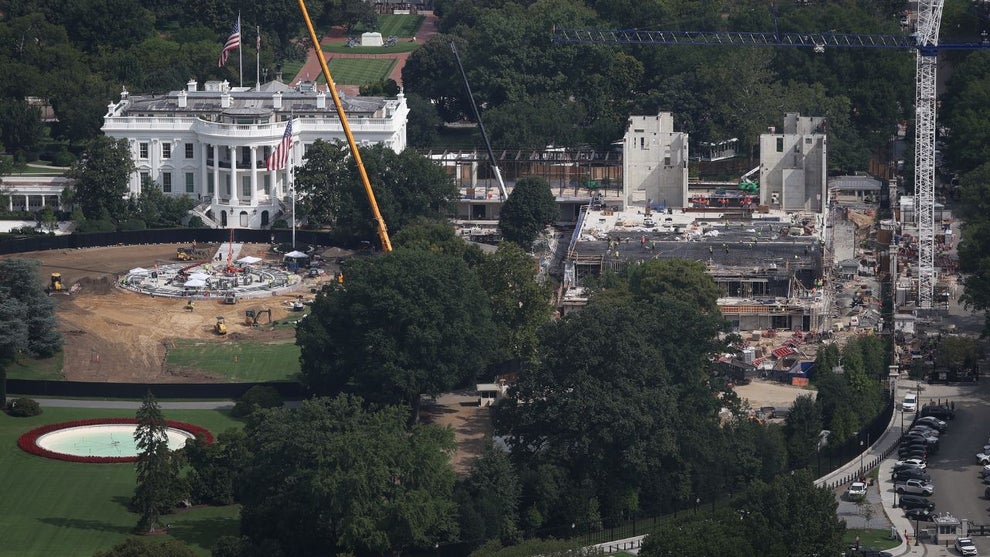
Chief Justice John Roberts on Friday allowed construction to continue on President Donald Trump’s $400 million White House ballroom while the Supreme Court considers the administration’s emergency appeal.
His brief order said the stay would remain in effect “pending further order of the undersigned or of the court” and offered no explanation for the decision.
The order does not resolve the underlying legality of the project. Roberts or the full Supreme Court could issue a subsequent order granting or denying the administration longer-term relief.

The Trump administration asked the Supreme Court to intervene last week after a federal appeals court upheld restrictions on the project. Solicitor General D. John Sauer argued in the administration’s filing that the ballroom is part of an “integrated military complex” that is “vitally required by national security.”
A divided three-judge panel of the U.S. Court of Appeals for the D.C. Circuit ruled Aug. 7 that above-ground work could not proceed without congressional authorization. The court left its decision on hold for 14 days, giving the administration time to seek emergency relief from the Supreme Court.
“Whether or not a massive ballroom should be constructed is for Congress to decide and is not a matter for Executive self-help,” the appeals court’s majority wrote.

The case was brought by the National Trust for Historic Preservation after the White House’s East Wing was demolished to make way for the planned 90,000-square-foot ballroom.
U.S. District Judge Richard Leon previously issued a preliminary injunction blocking above-ground construction unless Congress authorized the project. His order permitted underground work involving a bunker and other security facilities to continue.
Government attorneys have argued that the president has broad authority to renovate the White House and that the larger project includes upgrades intended to protect the president, his family, staff and visitors from drones, missiles and other threats.
Friday’s order keeps the lower-court injunction from taking effect while the Supreme Court weighs the administration’s request.
