
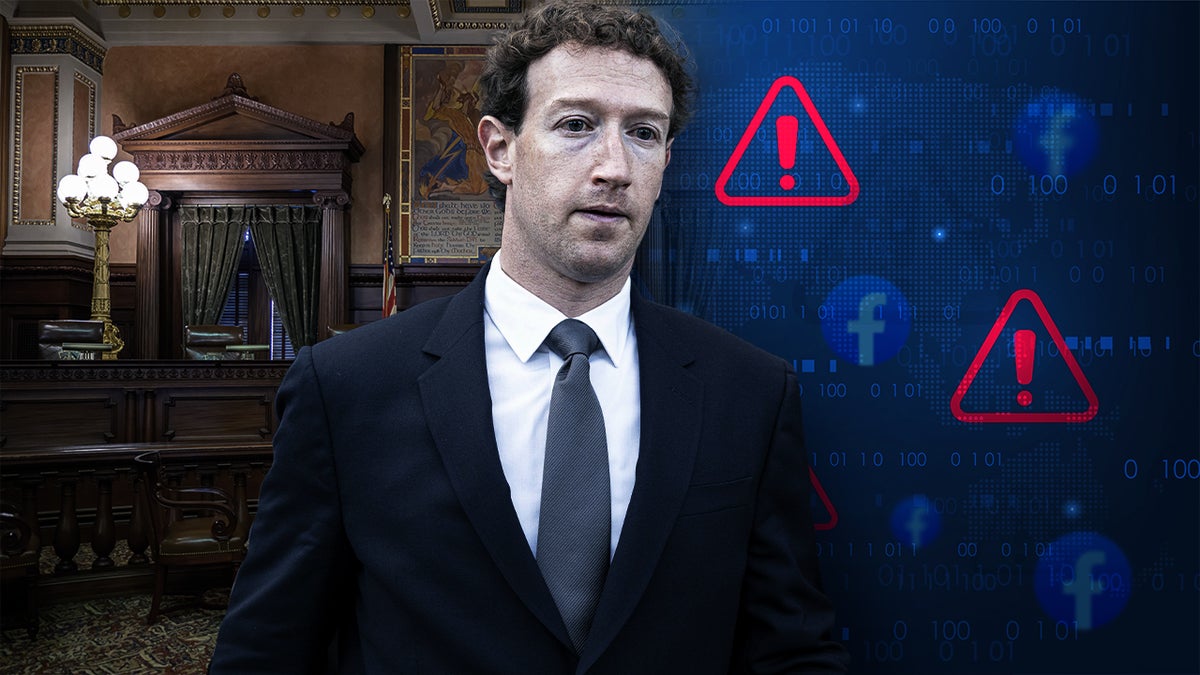
The bellwether Meta lawsuit over the damage done to kids by the social media giant was over before it really got going.
Last Tuesday marked the start of a trial that was compared to the lawsuit that the tobacco industry faced in the 1990s. After being accused of knowingly developing features designed to addict children to social media, 29 state attorneys general from California, Colorado, Kentucky and New Jersey sued Instagram and Facebook’s parent company Meta in a case that was estimated to potentially cost the company up to $1.4 trillion in damages.
But on Wednesday morning, Meta settled with a bipartisan group of 52 attorneys general across U.S. states, territories and the District of Columbia for approximately $18 billion. The company also agreed to implement several measures designed to limit social media usage for children and teenagers, changes it called for competitors YouTube and TikTok to also adopt in an open letter.
Those changes for underage Meta users include:
- A two-hour daily time limit
- Turning off access to apps at night as a default
- No notifications during school hours
- Clear prompts and notifications to teens every 15 minutes of continuous screen time
- New parental supervision controls, so parents can decide how their teens use the apps
Regardless of what YouTube and TikTok decide, Meta will pay out $12.7 billion (or 70% of the settlement amount) over the course of 10 years. But the remaining $5.3 billion (30%) will only be released if both YouTube and TikTok agree to implement several of the same changes Meta is introducing and if the companies pay a combined $5.3 billion. As part of the settlement, Meta denies any wrongdoing.
No one is surprised that Meta settled this lawsuit, especially considering the massive amount of damages that were potentially on the line. But this case is raising the same question for parents, lawyers, tech investors, journalists and everyday users alike: Is a new and safer era of social media on the horizon? Or has a tech giant once again thrown money at the problem amidst mounting global outrage and lawsuits related to how addictive these platforms are for children?
The experts who spoke to TheWrap ranged from skeptical to cautiously optimistic the settlement will lead to the kind of change that would make these platforms safer for children. Indeed, some called for additional action from the government — a step taken by the likes of Australia, the U.K. and France.

“There have been enough signs and clues that really make it incumbent on lawmakers to act. Parents, of course, are responsible for feeding their kids healthy meals, but nobody expects me to be able to keep the baby formula supply safe and the entire food supply safe. It has to be a systems-level solution,” Julie Scelfo, founder and executive director of Mothers Against Media Addiction (MAMA), told TheWrap. “We’re grateful that this settlement includes design changes for Meta, but we don’t think this is enough. We think it’s just the beginning.”
What’s notable about this settlement is how it puts some of the onus on other social media networks to follow suit. TikTok settled with the Department of Justice to the tune of $400 million last Friday, and last year, YouTube’s owner Google agreed to a $30 million settlement over a child safety and privacy lawsuit. Those settlements don’t even include the more than 3,000 social media addiction lawsuits that have been filed against Meta, TikTok and Google in the U.S. alone.
“I feel like [this settlement is] much more of a wake-up call for the other platforms,” Ben Moore, U.S. managing director of social media platform BeReal, told TheWrap. Unlike other social media sites, BeReal doesn’t offer an infinite scroll nor does it let strangers follow users.
But exactly how big of a wake-up call this may be remains to be seen. Some of the features Meta announced it would be implementing, such as new parental supervision controls and data collection minimization, seem as though they fall in line with typical COPPA (Children’s Online Privacy Protection Act) requirements. Others, like time limits and limited use at night, have already been implemented in other countries.

Then there’s the haunting question looming over all of these trials. Is it possible to force any of these tech behemoths to take penalties seriously?
“When you have a company that’s as large as a country, is there an amount of money? What is that number?” Charlie Germano, council and senior technologist for privacy initiatives at BBB National Programs, told TheWrap. “We haven’t seen it yet, so these [settlement] numbers keep going up. At some point, there has to be a number that drives change. I don’t know what that number is.”
Given its size, some are skeptical that this move will result in any tangible changes.
“This is a big win for Meta, which hands over some cash flow but doesn’t have to change its business model and can say that it is doing more to protect children,” Avi Greengart, an analyst at Techsponetial, told TheWrap. “The content and self-reinforcing algorithms are untouched by default, so if you believe that is where the problems really lie, then this settlement merely reduces exposure.”
A Meta spokesperson said the agreement resolves the company’s most significant legal exposure, and said other cases that involve claims like personal injury still have a long road ahead.
Roping YouTube and TikTok into this landmark case
One of the odder details of Meta’s settlement is YouTube and TikTok’s involvement. In order for Meta to pay out the full $18 billion, YouTube and TikTok must agree to implement a one-hour daily limit, “Night Mode” — an offering that supposedly blocks teenagers from using these platforms at night as Meta has vowed to do — and age assurance measures. What exactly those measures entail remains unclear.
Additionally, both YouTube and TikTok will each have to pay half of an amount totaling $5.3 billion, which amounts to 30% of the settlement fee Meta is withholding. If the courts approve this settlement, then and only then will Meta pay the states the full $18 billion amount.
“Meta would not want to be in a position where it is bound by terms more onerous than what its competitors may also have to abide by,” Joshua Wurtzel, partner at Schlam Stone & Dolan LLP, told TheWrap. “This deal structure solves Meta’s unilateral-disarmament problem — it will not tighten teen safety alone while its competitors capture the attention it gives up — while also giving Meta some flexibility.”
Or put more bluntly:
“You have to give it to Meta that they are dragging everybody else with them,” Carolina Milanesi, analyst at Creative Strategies, told TheWrap. “Talk about ‘the good of the kids’ and it drives a need for everybody to follow the same rules.”
The open letter has also left a sour taste in some people’s mouths about Meta’s actual priorities — “For meaningful progress to happen, we urge our peers to join us,” the letter ended.
“At the end of the day, all they really care about is market share. There really is no concern about society,” Scelfo said.
At the moment, it’s unclear how likely TikTok and YouTube are to adopt the measures outlined in Meta’s open letter. But, due to COPPA regulations and the growing tsunami of child safety cases against social media companies, it’s likely they will follow suit.

“Hopefully, it will create some sort of precedent that YouTube and TikTok will also somehow follow the steps of what Meta will decide to do,” Moore said.
“If I were TikTok and Google, I would recognize that public sentiment is firmly on the side of protecting kids,” Scelfo said. “It is a widely bipartisan issue, and, at the end of the day, they are going to have to choose which side of history they’re on. The battle lines became a little clearer with this proposed settlement.”
Representatives for YouTube and TikTok did not respond to requests for comment on this story.
The settlement also includes the stipulation that an independent auditor will test Meta’s compliance to the agreed upon settlement measures and report its findings to the states annually for five years. That element was praised by Scelfo and the members of MAMA. A similar system was put in place earlier this year as part of South Carolina’s Age-Appropriate Code Design Act, which requires that websites, applications or online services that could reasonably be accessed by a minor must be designed in a way that doesn’t harm underaged users.
That means creating designs that don’t encourage compulsive usage or include intrusions into reasonable privacy expectations, just to name a few of the parameters. However, exactly what will be addressed in this report is unclear.
“The settlement calls for the auditor to create a final report, but that is not public. The executive summary that has intellectual property and trade secrets redacted will be public,” Germano said.
Will platform changes lead to real change?
How much this settlement may financially impact Meta and its tech giant peers remains a question.
Though $18 billion is a large number, Meta reported $201 billion in revenue for 2025. Also, that $18 billion — if Meta has to pay it in full — would amount to about $1.8 billion a year over the course of a decade. That’s already about how much Meta is currently paying in legal fees. During the company’s second quarter earnings, it reported spending $2 billion in legal challenges.
That’s just a drop in the bucket of the company’s larger finances. During an earnings call for the same quarter, the company announced it was increasing its 2026 capital expenditure guidance by $10 billion to as much as $145 billion to realize its AI ambitions.
But imagine for a second the best case scenario: these fees do have an impact on social media platforms, and those platforms decide to make meaningful changes to create a safe digital space for children and teenagers. What proof is there that strategies such as time limits and nighttime blackouts work?

Australia implemented one of the most intense social media strategies late last year, banning the platforms from users 16 years old and younger. But, as of last month, TikTok usage among teenagers aged 13 to 15 years old only dropped by one percent compared to a period of time before the ban was put in place, according to a report by parental-control tool company Qustodio. There are also privacy concerns, which always arise when it comes to discussion about stricter age restrictions. Those age assurance models, whether they require users to upload an ID or rely on an AI scan, can feel invasive to many.
“Giving kids and their parents more choices and control is beneficial. But we also see the potential for significant risks to everyone’s privacy and free expression rights online, especially in the ways this settlement will subject all users to invasive age assurance and limit all kids’ access to content and services regardless of their individual needs,” Kate Ruane, director for the Center of Democracy and Technology’s Free Expression Project, told TheWrap. “We will continue to review the settlement and will be monitoring its implementation closely.”
“It’s going to be really interesting to see how [Meta] implements those remedies … and see if it’s just noise or if they actually respect the new product specs that the court has been asking them to implement,” Moore said.

What’s to come
This settlement is also far from over. In addition to the fact that the proposal has to be accepted by the courts, there are several loose strings that could impact the future of this particular case. For one, Meta’s requirement that YouTube and TikTok implement age assurance measures is a headache waiting to happen.
“I can see a scenario where one of their competitors’ age assurance mechanisms are different, and they fight about it,” Germano said. “I don’t think this settlement has seen its last day in court.”
This settlement also requires state attorneys general to review the report from the independent auditor and enforce a punishment on Meta if the company doesn’t hold up its end of the bargain. If that happens, it could come down to a question of manpower. There are only so many attorneys general in any state, and not all of them can be used to monitor Meta and other tech giants with nearly endless pockets.
But on a less depressing note, this case may help speed up the timeline for future related lawsuits, whether they involve other social media platforms, the proposed U.S. law Kids Online Safety Act (KOSA) or AI usage.

“The Meta settlement will absolutely set precedent for future lawsuits. The current protections are a solid foundation but other things are still unclear, such as AI use for video image creation,” Maribel Lopez, an analyst at Lopez Research, told TheWrap.
Also, as the addictive endless scroll becomes more of a liability for platforms like Facebook and Instagram, these companies may redesign their algorithms and platforms to focus more on authenticity and audience connection. “Platforms are going to rethink the whole playbook now that they can no longer optimize for time spent. Everything is going to be around the quality of the engagement,” Moore said.
Regardless of what’s ahead for our digital futures, Meta’s settlement means there’s no going back.
“It certainly set a precedent that social media companies are not untouchable,” Milanesi said.
As an ironic coda to the Meta news, Sony Pictures not-so-coincidentally dropped a new trailer for the upcoming film “The Social Reckoning” on Wednesday, which dramatizes the 2021 “Facebook Files” leak that revealed the company was aware of the harmful affects its platform and algorithm were having on society, but forged ahead anyway.
One of the fallouts from that leak? Facebook halted development on an app it was designing just for kids.
