
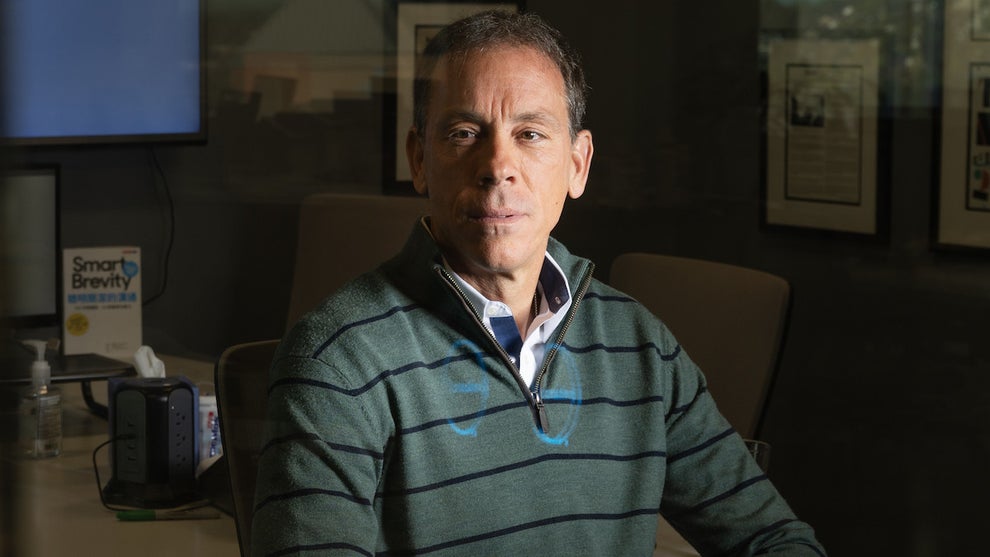
While Axios has “never been a video-first company,” as CEO Jim VandeHei put it to TheWrap, the company’s decision to bring back “The Axios Show” for a second season in March reflects its growing ambitions on the video front.
“It’s fun to try to figure out that world,” VandeHei said in an interview.
The second season of “The Axios Show,” sponsored by Uber, will feature the outlet’s stable of journalists going one-on-one with newsmakers across the political, technological and cultural landscape. The series will run from March through May.
The show’s first season, which blended Axios’ “Smart Brevity” style of concise breakdowns of why a story matters with a long-form video offering, included sit-downs with Commerce Secretary Howard Lutnick, Ukrainian President Volodymyr Zelensky, Sen. Bernie Sanders (I-VT), author Mel Robbins and Palantir CEO Alex Karp.
“It’s really about getting good guests and really smart interviewers, like our reporters, to be able to take what are typically kind of boring interviews and make them much more electric,” VandeHei said. “Ask people the questions other people would want to ask and have an aggressive but respectful conversation, as opposed to your kind of milquetoast, typical TV interview.”

Axios made news last year when Lutnick said the Trump administration wanted a cut of universities’ patent revenue, as well as when Zelensky said he would be ready to leave office after the war between Russia and Ukraine ended.
The show has not yet secured its first guests, though its wishlist includes President Donald Trump, Vice President JD Vance, California Gov. Gavin Newsom and CEOs steeped in AI’s rapid transformation.
While VandeHei said the show remains the company’s priority in terms of video, its return comes as Axios experiments with visual offerings as part of its growth strategy, including a companion series to VandeHei and fellow co-founder Mike Allen’s “Behind the Curtain” column and VandeHei’s commentaries on AI.
Axios rehired Jimmy Shelton from Big Think Media, which filmed the first season of “The Axios Show” and will film its second. Shelton, who serves as executive producer, previously worked as vice president of Axios’ Brand Studios and will oversee its YouTube strategy. (An Axios spokesperson declined to comment on how much the company spends on the show or the sponsorship figures.)

“The Axios Show” has reached more than 100 million viewers across YouTube, X, Instagram, TikTok and Axios’ website between full episodes and clipped excerpts, the company said. Its YouTube subscriber base grew 17% over the show’s first season.
VandeHei attributed the conversations’ reach, particularly on X, to the show’s format of reporters engaging with their subjects on a peer-like level instead of “the subordinate way a lot of interviews are often conducted.” Its Zelensky interview, for instance, was conducted by global affairs correspondent Barak Ravid, while co-founder Allen himself interviewed Lutnick.
“It’s very much about matching up our subject matter expertise with the person that we’re interviewing,” VandeHei said. “A lot of other media companies, they’re trying to make individual stars, right — amplify an individual personality, and to us, it’s kind of amplifying the collective personality of Axios, as manifested by whoever has subject matter expertise in that given area.”
Axios’ decision to lean into video comes as news outlets like the New York Times produce reporter-anchored short-form videos and as independent journalists on Substack lean heavily into video. News-adjacent video podcasts have also found their way to streaming services like Netflix and CNN’s “All Access” tier.

Axios found success in the past on television, winning an Emmy for its HBO interview series, “Axios on HBO,” which ended in 2021. Former Axios reporter Jonathan Swan’s sitdown with Trump, which nabbed the award, is regarded as one of the toughest on-camera interviews with the president.
VandeHei said he thinks the show’s success could potentially spur a media and entertainment company, ala a Netflix or HBO, to purchase it. “The Axios Show,” he said, differs from other video models in media that he says prioritize argumentative, ideological-driven offerings over content rooted in news.
“The show has such a unique identity, and we have such a unique ability to convene the most interesting people in the world and then make them be provocative and newsy and illuminating,” he said. “So we put a ton of emphasis on that.”
