
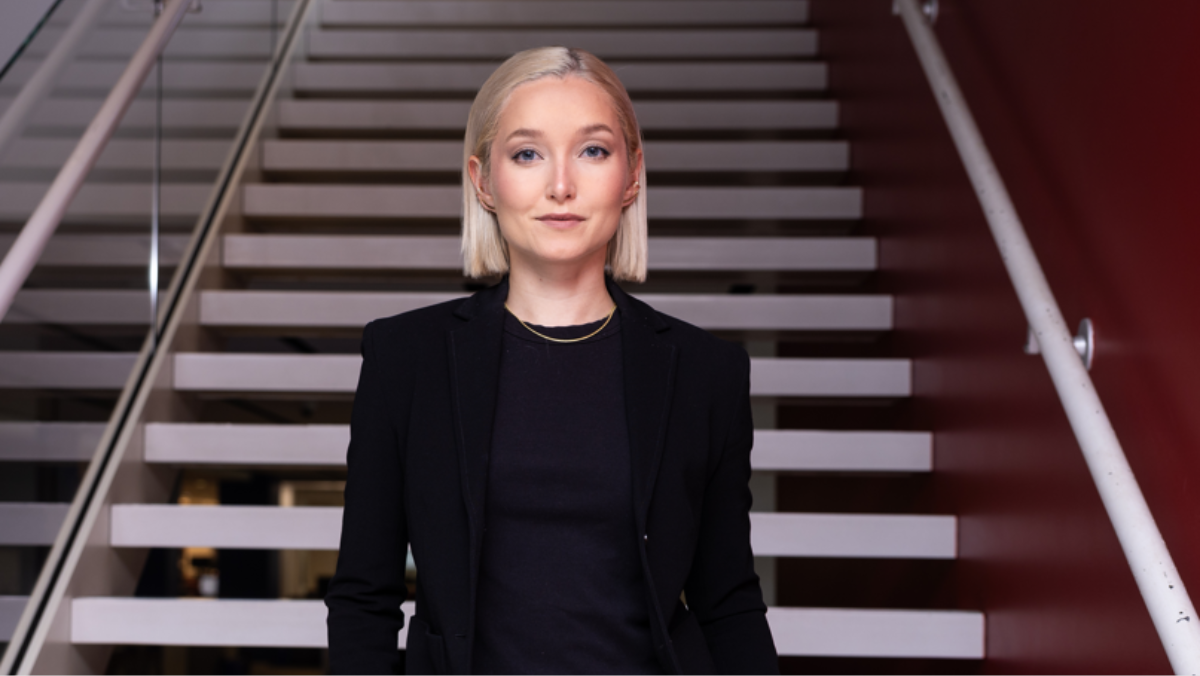
Someone joked to Politico’s Dasha Burns recently that she was “the Marco Rubio of Politico,” a reference to the Secretary of State’s many jobs across the federal government— and the countless memes it’s spawned.
“I wonder when the memes will start coming out,” Burns, 34, told TheWrap from her home in Washington’s Bloomingdale neighborhood ahead of Saturday’s White House Correspondents’ Dinner.
She has good reason to wonder. Starting next month, Burns will become Politico’s Global Anchor, a role tasking her with expanding the D.C. political operation’s journalism through more video and audio offerings. That’s in addition to her roles as Politico’s White House bureau chief, where she’s both interviewed and sparred with President Donald Trump; chief correspondent of its storied early-morning Playbook newsletter; and host of its weekly talk series “The Conversation,” which has featured interviews with the likes of Ukrainian President Volodymyr Zelensky, Illinois Gov. JB Pritzker and Bill Gates. And one more: she moderates C-SPAN’s weekly “Ceasefire,” a panel show that lets two political opponents debate civilly on air.
Since Jonathan Greenberger lured her away from NBC News in December 2024, Burns (and her litany of titles) has morphed into Politico’s first true attempt at molding a journalist into a creator-like figure, one that comes as the nearly 20-year-old outlet tries to step up its video and audio output. Another sign of this shift: Burns’ rise coincides with the ascension of Greenberger, who joined Politico six months before her after a decade at ABC News — and was tapped last month to be the outlet’s editor in chief.

Politico’s moves come as several Washington-based outlets are turning scoop-driven reporters into multiplatform stars. Axios has tasked several of its beat reporters to conduct on-camera interviews for “The Axios Show,” while the Washington Post launched “WP Creator,” a new franchise anchored by reporter Dylan Wells that covers the creator industry through a newsletter and Wells’ own TikTok account. Plus, NOTUS, the news outlet founded by Politico co-founder Robert Allbritton — and soon to be renamed “The Star” — launched its own video podcast, “On NOTUS.”
“It’s the ability to be on your TV, in your ear, in your inbox,” Burns said. “I think that is the world that we’re all pivoting to,” she said. “That’s what I’m trying to help drive at Politico and sort of help bring others in the newsroom [along].”
Multiplatform presence
One of Burns’ most visceral memories from her nearly ten years at NBC News was covering the Trump rally in Butler, Pa., as a gunman attempted to assassinate the Republican candidate, upending the 2024 presidential race. She recalled reporting “basically non-stop” from roughly 6 p.m. to 2 a.m. at the scene, an experience that reinforced her desire to relay up-to-the-minute information to a news-hungry audience.
Burns expects she and Greenberger’s TV experience can incorporate a “feeling of urgency” into Politico’s expanded video and audio offerings. “Politico has always sort of had the seeds of this,” she said in regards to engaging with new storytelling mediums, pointing to its early adoption of newsletters ahead of the Substack boom. “What I’m trying to help the organization do is think about how do we [get] the reporting, the core of what Politico does — it all stems from the reporting — but how do you get it everywhere?”
Greenberger pitched Burns on the idea of a podcast as she was considering joining Politico, the seeds of which later became the weekly series “The Conversation.”

Politico launched the show in June with an interview with Centers for Medicare & Medicaid Services Administrator Mehmet Oz, and while its weekly episodes’ YouTube viewership varies in the single to tens of thousands, episodes featuring boldface names such as Rep. Jasmine Crockett (D-TX) or Treasury Secretary Scott Bessent have topped more than 100,000 views. Her December conversation with Trump has nearly 800,000 views on YouTube. (Burns’ next conversation, out on Friday, is with media consultant Tammy Haddad.)
“Our first interview was with Dr. Oz, and by the end of the year, we were sitting down with the president,” she said. “That kind of speed from idea to execution just doesn’t happen in a lot of places, but I think it needs to happen more and more quickly because of how rapidly the business is changing.”
Burns won’t say how much her remit at the outlet may expand beyond her Global Anchor duties. Status reported earlier this month that Politico plans to move Playbook co-author Jack Blanchard off the newsletter, though Burns said while Playbook has “been a really important part of my portfolio,” she didn’t “want to get ahead of my bosses on the Playbook stuff.”
The ‘dichotomy’ of Donald Trump
Burns balances the weekly host role with her full-time duty of covering a president who has made attacks on the press — including on Burns — a staple of his second term.
Trump has sometimes refused to answer Burns’ questions, remarking in an October Air Force One press gaggle that Politico was “fake news.” He later told Burns during their December sit-down that he only agreed to the interview because the outlet named him the most influential person shaping Europe.
“Why would I talk to you, an extremely unfriendly publication, if you want to call it Politico … why would I do that?” he snapped when Burns asked if he’d rule out a ground invasion in Venezuela. “Why would I talk about that to Politico?”
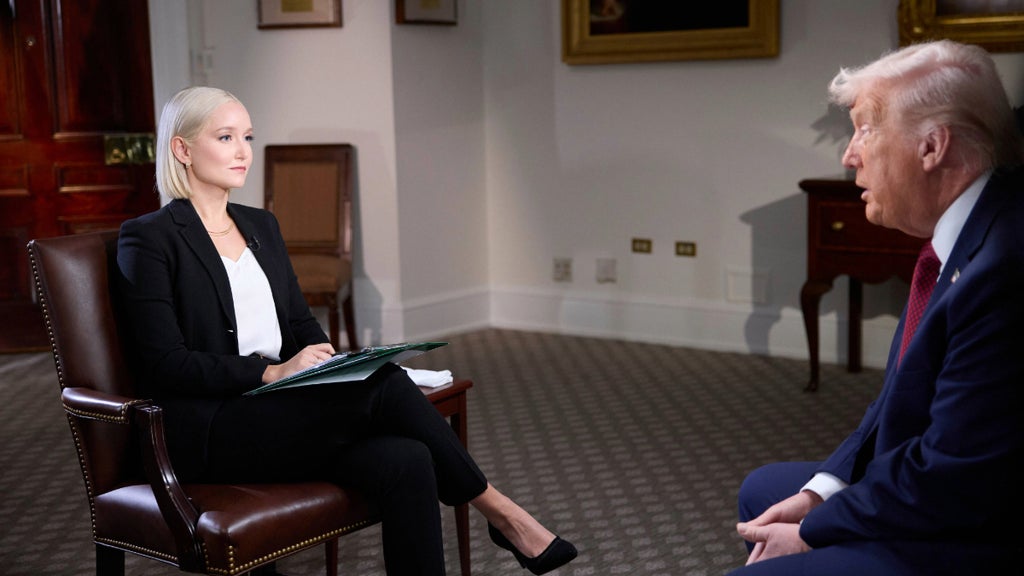
Still, as he does with many reporters he’s lashed out at, Trump continues to take Burns’ calls. Burns has forced a relationship with Trump and his press shop over years of covering him as a candidate and as president. It’s predicated, she said, on trying to be “as transparent as possible and make sure that all of my ducks are always in a row.”
“There is no one like Donald Trump when it comes to a subject of reporting, whether it’s his volatility or his accessibility,” she said. “It’s sometimes hard to hold this dichotomy of, on the one hand, he can be incredibly adversarial, and he sues organizations and he calls us fake news. On the other hand, he picks up the phone and his press shop is incredibly communicative.”
And what about the White House Correspondents’ Association inviting Trump to Saturday’s dinner?
“The tradition is that the president comes to the dinner, and I am glad that he’s coming,” she said. “We have to all face each other. I think sticking your head in the sand is not the answer for either the press or the president, and I think the best thing we can do is keep doing our jobs as best as we can, and without fear or favor.”
