

Live events used to be an extension of the media business. At Time, events and the digital revenue around them have become a critical lifeline at a time when publishers are facing existential crises on a regular basis.
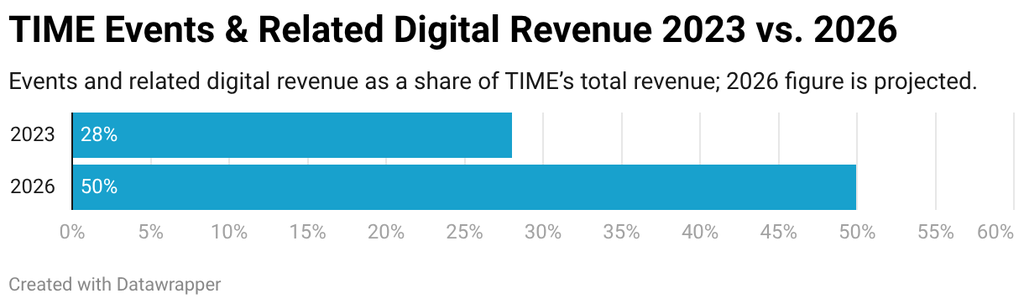
Events and related digital revenue are projected to account for half of Time’s total revenue in 2026, up from 28% in 2023, the company confirmed to TheWrap. Time expects to hold 47 events this year, up from 11 in 2022.
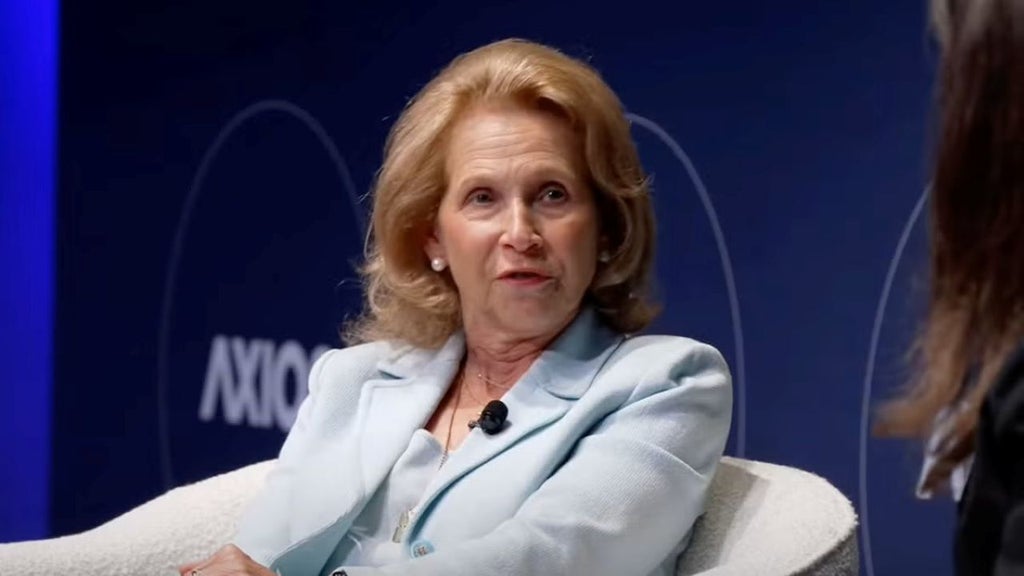
Axios is scaling up, too. Axios Live revenue is up more than 30% so far in 2026, the company told TheWrap. It held 160 events in 2025 and has produced 106 so far this year. Chief Revenue Officer Jacquelyn Cameron described live as the fastest-growing part of Axios’ portfolio.
The shift comes at an increasingly precarious moment for digital publishers. Google Search pageviews to publishers fell 34% year over year, according to Chartbeat data released earlier this year, as AI-generated answers and changing search behavior threaten the referral traffic that publishers have long converted into advertising revenue.
That pressure is forcing publishers to find businesses that don’t depend on someone clicking through from Google or scrolling past an ad.
That makes live events more than another revenue stream. They give media companies a way to build direct relationships with audiences they already have, create journalism and digital content that travels beyond the room and open new sponsorship opportunities. Time and Axios are pursuing that strategy at scale, while The Atlantic is concentrating on a smaller slate of tentpole gatherings and MS NOW is using events to deepen its relationship with its television audience.

Publishers aren’t the only ones seeing more value in live events. Advertisers are putting more money into them, too.
“Brands are absolutely allocating more of their marketing budgets to live events,” Chris Weil, founder and co-CEO of Horizon Sports & Experiences, told TheWrap.
TheWrap is also among the media companies with its own live-events business, built around franchises including its business conference, TheGrill (returning Sept. 30 in Los Angeles), and the Power Women Summit.
The value of community
Time Chief Strategy Officer Dan Macsai said the expansion grew in part out of Time’s signature TIME100 Gala, after the publisher repeatedly heard from attendees who wanted more opportunities to interact with the people and ideas represented by the franchise.
Following Marc and Lynne Benioff’s acquisition of Time in 2018, the company expanded programming into areas including health and artificial intelligence, building events around existing editorial franchises.
“The event isn’t the product, it’s where the community comes together,” Macsai said.

That audience is also part of the pitch to sponsors, which have included Booking.com, Rolex and Target. Time can extend its events through interviews, videos and other digital content while giving sponsors exposure beyond those physically in attendance.
Macsai said Time evaluates the business on two measures: “impact and revenue,” including whether an event creates journalism, resonates with attendees and generates conversation outside the venue.
Axios has built its events strategy around a similar emphasis on audience, with a focus on who is in the room rather than simply how many people attend.
“Over the past number of years, it has quickly become the fastest-growing part of the portfolio at Axios,” Cameron said. “And I do not see that slowing.”
Axios Live focuses on five audiences the company considers central to its business: policymakers at the federal and state levels, C-suite executives, investors, media and communications professionals, and influential professionals in local communities.
“I believe truly that there’s more power in the number 535 than 535,000,” Cameron said. “If I can engage the 535 members of Congress, and I can ensure that I’m convening members of Congress, their staff, etc., in the room in Washington, that matters to the kind of brand that I’m talking to.”
Cure for fragmentation
Weil said audience fragmentation is one reason advertisers are looking more closely at live events. Publisher-led gatherings can combine an established audience with the content and distribution of a media company.
“Publisher-led events come with built-in editorial credibility and content amplification that standalone activations simply don’t have,” Weil said. “Publishers aren’t just providing a venue — they’re bringing a media engine that extends the conversation before, during and after the event.”
For advertisers, the appeal is different from a traditional digital buy.
“With a traditional digital campaign, you’re paying for impressions and hoping for attention,” Weil added. “With a live event led by a credible publisher, you’re aligning with a trusted brand in front of a highly engaged audience, and that transfers to the sponsor in ways a traditional media buy rarely can.”

Less is more
Not every publisher is responding to demand by producing more events. The Atlantic has moved in the opposite direction, shifting from more than 100 events annually a decade ago toward a smaller slate of select tentpole events, the company told TheWrap.
Its largest, The Atlantic Festival, moved to New York last year after a 16-year run in Washington, D.C., and will return Sept. 17–19 with more than 100 speakers. The publisher has also launched Atlantic Across America, a national series ultimately intended to reach all 50 states, with sold-out events held in 10 states so far.
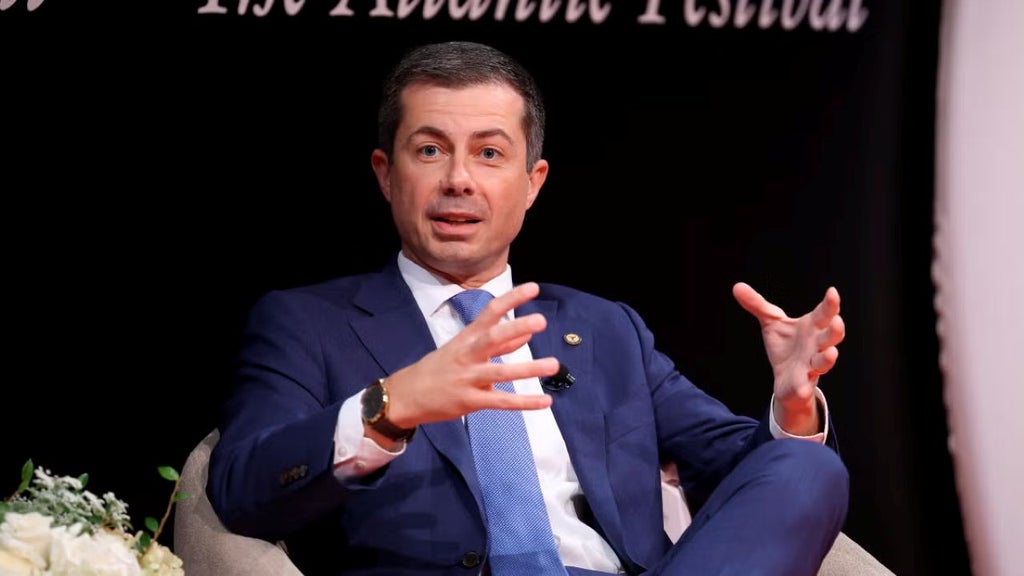
Events are a critical component of The Atlantic’s revenue strategy, according to an individual with knowledge, allowing the publisher to extend sponsorships beyond the room through content and community building. The company’s overall advertising revenue, which includes event sponsorship revenue, has increased nearly 60% since 2023.

Taking the show on the road
MS NOW is applying that strategy to its hi/ghly engaged television audience.
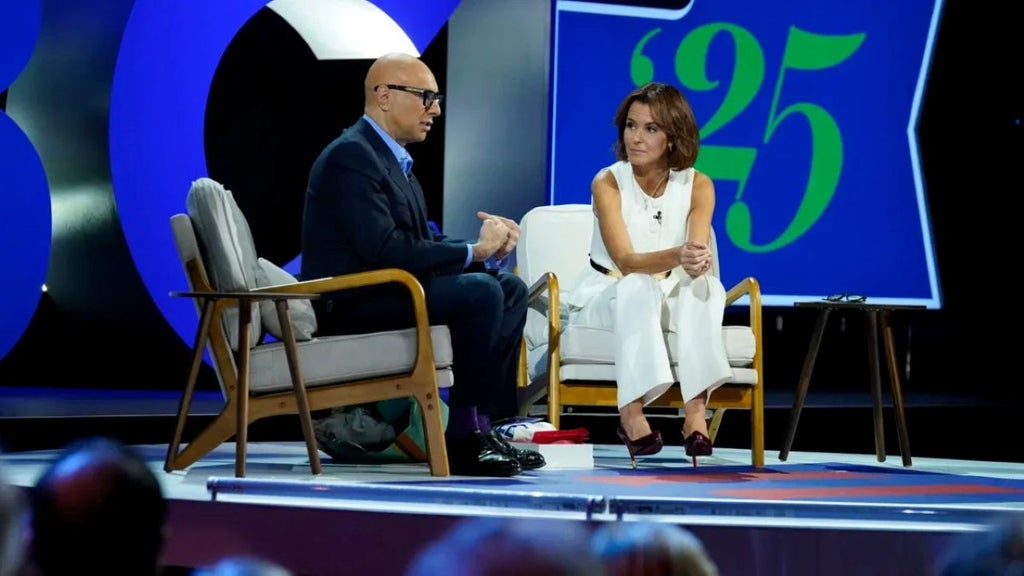
The network’s third annual fan event, “MS NOW Live: Together in Texas,” is scheduled for Sept. 26 at the College Park Center at the University of Texas at Arlington, with 15 anchors and reporters expected to participate, including Rachel Maddow, Lawrence O’Donnell, Jen Psaki, Chris Hayes and Stephanie Ruhle.
Each ticket will include a one-year membership offer, tying the event to MS NOW’s effort to build a direct relationship with viewers outside its traditional television schedule. The network views that relationship as increasingly important as the cable news business contends with advertising pressure across linear television.
MS NOW isn’t alone among cable news networks in taking its personalities directly to viewers. Fox News began building live events around its Fox Nation streaming service after its 2018 launch, including the annual Patriot Awards, which debuted in 2019 and has grown into a marquee event featuring Fox talent, live performances and fan activations.
Fox News Media has also been expanding its business beyond traditional cable television. The company projected roughly $500 million in revenue from non-cable sources in 2025, though that figure encompasses its broader digital and streaming businesses rather than live events alone. Fox News Media says it reaches an average audience of nearly 200 million across its platforms.
According to MRI-Simmons figures shared with TheWrap, MS NOW reaches approximately 31 million unique viewers each week, including roughly 3 million in Texas.
The network has a track record of drawing audiences to these events. About 4,000 fans attended its 2024 event in Brooklyn, while a Philadelphia event in June sold out with nearly 2,000 attendees.
Newsmakers
Cameron said direct interaction with audiences is becoming more valuable in a world filled with commoditized AI content. But increased investment in events also means more competition for attendees, sponsors and speakers.
“We are selling an experience. It’s a memory,” Cameron said. “We want to make you smarter, faster, and we want for you to feel as though this was incredibly compelling and memorable and useful for when you go back to your office or your desk.”
Macsai said building a meaningful events business requires more than simply adding events to an existing media operation.
“Don’t just hire one event person,” he said. “Hire the team.”
Time, Axios, The Atlantic, MS NOW and Fox News are using live events in different ways: as a significant revenue engine, a way to connect advertisers with influential audiences, a focused slate of tentpole events and a route from television viewing to a more direct membership relationship.
Across all four, live events offer another way to make money — and trust — from audiences they’ve already built.
