

Historically, streaming platforms measured victory entirely by top-of-funnel growth. Wall Street demanded subscriber acquisition at all costs, and the platforms delivered, scaling into massive, mature global ecosystems. However, that scale has fundamentally changed the math of the business. When your subscriber base sits in the hundreds of millions, churn is no longer a localized problem. A tiny percentage point of churn now equals millions of cancelled accounts.
When a major streaming platform experiences an elevated churn rate, it isn’t just a temporary dip in viewership, it translates to a measurable loss in forward-looking revenue. To put a number to this, Parrot Analytics’ Streaming Economics model calculates that major global streamers lost $6.3 billion to churn in 2025.
Live sports have a role to help stem this multi-billion-dollar bleeding and streamers have been aggressively investing in this area. This is a logical gamble. Sports remain the last cultural monolith capable of guaranteeing a massive top-of-funnel acquisition spike.
However, treating live sports as a cure-all is a mistake. A live game is effectively a decaying asset. It commands the world’s attention for three hours, but its value drops to zero the moment the broadcast ends. If platforms want to turn these expensive weekend viewers into long-term subscribers, they can’t just buy the rights they have to build a 365-day ecosystem around them.
Enter Netflix’s sports blueprint. When the streamer acquired the rights to Christmas Day NFL games, the strategy didn’t stop there. It built a retention infrastructure of content to keep these fans. Knowing that football has an expiration date, Netflix utilized NFL shoulder content to successfully fill the off-season void. Shows like “Quarterback,” “Receiver,” and “America’s Sweethearts: Dallas Cowboys Cheerleaders” provide content on the platform that helps keep NFL fans engaged on-platform even after game day.
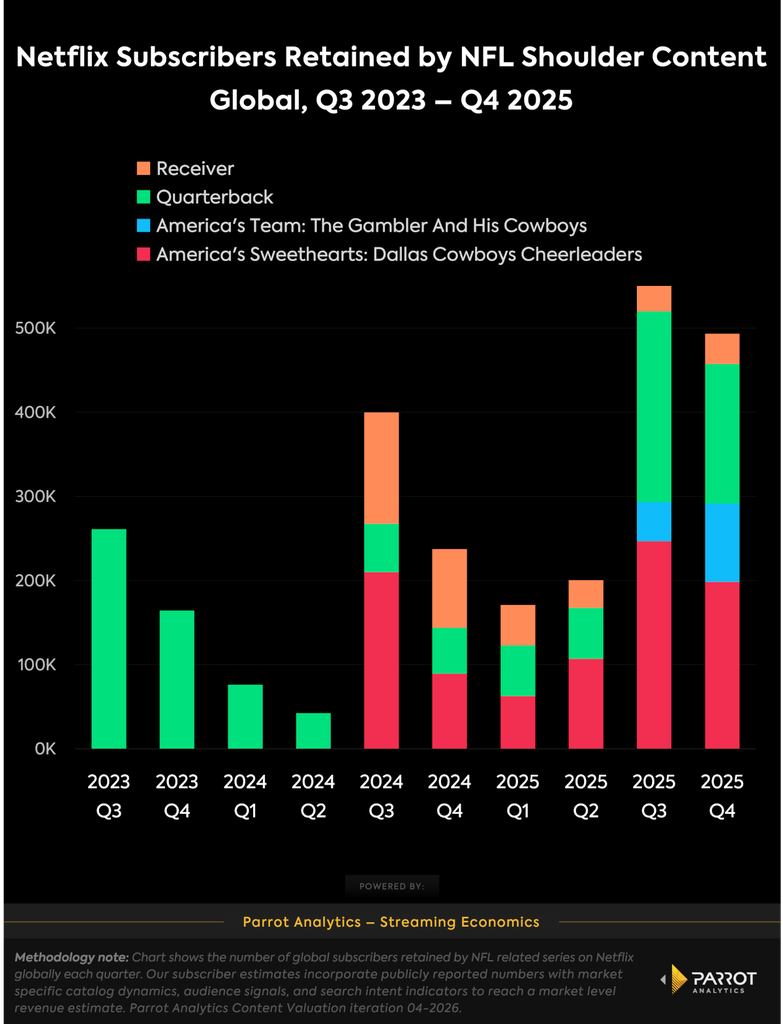
We calculate that these NFL shoulder shows now retain approximately 500,000 subscribers each quarter. By keeping the algorithm warm and fans engaged even when there is no live football to watch, these shows alone have generated over $100 million in global streaming revenue for Netflix. The streamer is reportedly looking to add more live games which will only increase the importance of the retention infrastructure it has built for these audiences.

But while shoulder content is a highly effective bridge across the off-season, the ultimate retention asset is a property that never has an off-season to begin with. If the NFL requires a retention infrastructure to keep fans engaged, professional wrestling offers a built-in, 52-week habit loop. This is the logic behind Netflix’s 10-year, $5 billion deal for “WWE Raw.”
Ted Sarandos noted when the deal was announced, WWE represents “52 weeks of live programming every year.” Because the story never ends, the property acts as a year-round retention anchor. This is quantifiable in the millions of subscribers the WWE franchise saves from churning. Our model calculates that content in the WWE franchise retains 1.25 million subscribers for Netflix globally every quarter.
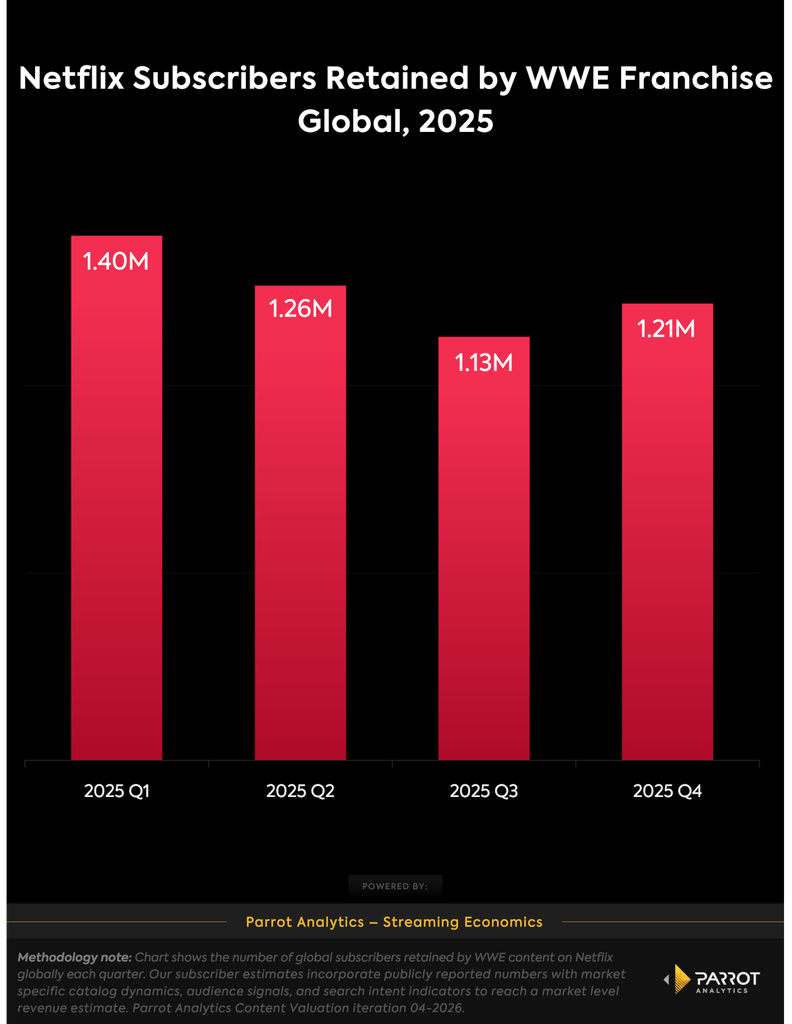
By retaining a massive audience that might otherwise hit the cancel button, WWE acts as a foundational pillar for Netflix’s broader business model. Before a single dollar of ad-tier monetization or international subscriber growth is even counted, this 52-week habit loop establishes a massive baseline of value strictly through sheer scale and churn prevention.
The industry is finally waking up to the true unit economics of live sports. The era of simply buying a live broadcast right and hoping the audience sticks around is over. To stop billions of dollars from walking out the back door, Hollywood must realize the new rule of the streaming era: Live sports spectacles may win the weekend, but shoulder content and continuous 52-week habit loops win the year.

How Streaming Expands Sports Fandom