
Typically, when you think of creator-led content, there’s a big name attached. Think MrBeast. Alex Cooper. Kai Cenat.
But there’s another sort of creator-focused business model that has long lived alongside these big names, creating viral videos that don’t hinge on a single personality, but a brand. Companies like Dropout, NowThis and Jubilee Media function more like traditional television, relying on IP and show formats that were developed in-house rather than by any single creator. It’s a strategy that’s becoming more popular, and that can produce consistent and repeatable videos that are all but guaranteed to secure millions of views. That’s all without running the risk of burning out a single, central auteur.
“We aren’t a company that is based on a single creator,” Sam Reich, the CEO of Dropout, told TheWrap. “I do think that [depending on one creator] has real strategic disadvantages that have to do with scale, which is to say one creator can only stretch themselves so far to create so much content.”
Before Dropout was a beloved streaming service with over a million subscribers, it was CollegeHumor, a comedy hub that’s been part of the internet’s DNA since 1999. The company’s videos were originally offered for free with ads before Dropout started to experiment with a subscription model in 2018. Now, Dropout offers selective videos and shortform content for free but keeps a majority of its content paywalled.
@dropoutdottv It's Dropout's 6 year anniversary! 🥳 🎉 To celebrate, we've finally made a trailer explaining what Dropout's whole deal is! Got a friend or relative you want to explain Dropout to, but need some audio-visual aids? This should cover you. #dropout #gamechanger #dimension20 #dropoutpresents #dontlaughnews #dirtylaundry #umactually #monetsslumberparty #gastronauts #veryimportantpeople #adventuringacademy #adventuringparty #nobodyasked ♬ original sound – Dropout.tv
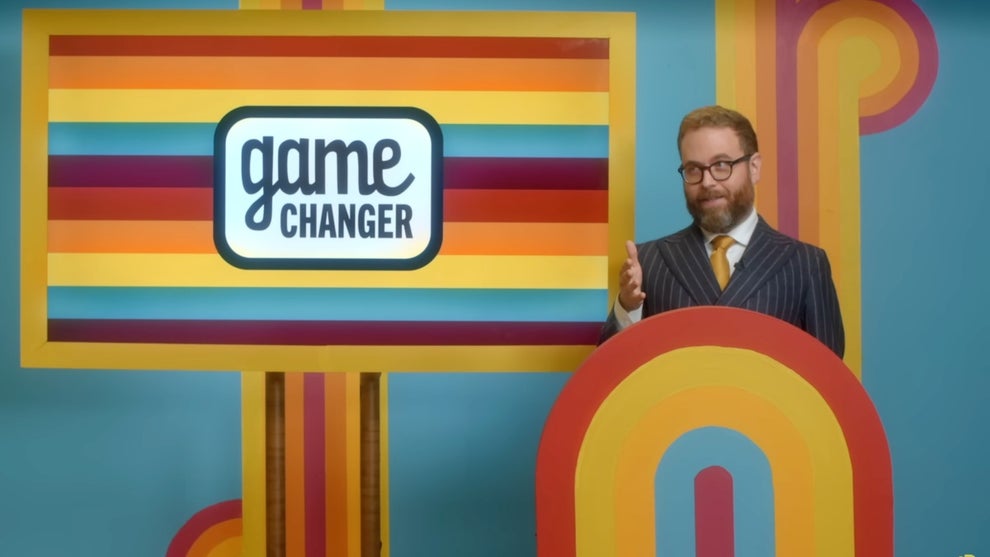
It’s a strategy that has paid off. The streamer plans to have 10 to 12 shows this year for its dedicated fanbase and hopes to hit 15 shows next year. Those include Brennan Lee Mulligan’s Dungeons & Dragons series “Dimension 20” as well as the improv-heavy game show “Game Changer,” which Reich hosts.
“There’s a funny way in which this era of social media especially has given birth to a lot of influencers who are just as good at — if not better at — the social media hustle than they are being creative or funny,” Reich said. “The infrastructure, the marketing mechanism, requires them to become those people. But that also means that the people who are dominating in the category are not necessarily the best or the funniest … That’s the purpose that Dropout serves within its community. We are really good at organic marketing, so we can concern ourselves with just going out and finding the best and funniest people.”
Though Dropout doesn’t revolve around a singular talent, it would be wrong to think the company isn’t talent-focused. The company works closely with its performers, letting them decide how closely they want to partner with the brand on social media. The company is even in the early stages of developing new series alongside its talent. Reich thinks of Dropout as a sort of “macro influencer for people who are not influencers themselves.”

NowThis, the shortform media company that’s especially popular with Gen Z and Millennial women, operates in a similar manner.
“We like to look at ourselves as an incubator for up-and-coming talent,” Michael Vito Valentino, the editor-in-chief of NowThis, told TheWrap. “We have over 100 million followers across platforms, and my favorite thing to do is look at up-and-coming talent, develop these unbelievable formats in-house, find folks that fit the voice of what we’re trying to do and then help grow them.”
NowThis has even found talent from within its own shows. Amber Singletary, for example, first appeared as a guest on the NowThis show “Are You OK?” before she was tapped to host her own show, “Judgy.” Speaking of “Are You OK?,” the talk show has released 16 episodes with guest hosts over the past two months and has seen over 18 million views, proof to Valentino that the format of the series and NowThis’ approach are working.
This format-first approach has really paid off for NowThis’ latest series, “Standup Desk.” Each episode of the shortform series features a different comedian who performs their set to a group of silent people in an office. The first person who bursts out laughing loses, prompting the comedian to end their set. The series is NowThis’ fastest growing show ever and has seen over 200,000 new followers in its first month, 2 million engagements and 13 million views.
@standupdeskshow Had to explain to my boss why I threw out my phone case. No space for little rascal behavior with @asha #standupdesk #funny #comedy ♬ original sound – Standup Desk
“For a lot of our shows, what we do is just Gen Z’s take on a talk show format,” Valentino, who previously worked for NBC and Paramount, explained. “At the end of the day, everyone still has to promote a product. So they come here and they do it.”
At the other end of the spectrum is perhaps one of the most discussed of these IP-centric digital media companies, Jubilee Media. Unlike Dropout and NowThis, Jubilee’s shows don’t depend on recognizable talent at all. Instead, the virality of shows like “Surrounded” depend on setting up an uncomfortable premise, like surrounding one progressive voter with 20 far-right conservatives, and letting what happens happen. The result has been so addictive, it’s led to Jubilee’s channel having over 10.8 million YouTube subscribers.
“One thing that makes us different from a lot of YouTube channels or even other studios is that we really think about our content programmatically as IP,” Jason Y. Lee, founder and CEO of Jubilee, told TheWrap. “We are trying to develop shows or vehicle formats that will not just have one video that gets a million views or 10 million views, but 100 videos that can each get a million views.”
It’s not just talk. Jubilee has produced hundreds of episodes of one of its more popular shows, “Middle Ground.”
“That’s a testament to the show, the IP, our audience and finding something that works. And it’s something that we’re constantly iterating on,” Lee said. “We’re constantly thinking about developing and piloting new shows. We think of ourselves as a digital first studio, essentially.”
The team has a specific set of criteria for every show, which includes asking is a series culturally relevant? Is it repeatable? Is it visually compelling? Can it lead to viral moments?
“Our aim at the end of the day is that we say we want to provoke human conversation,” Lee said. “If you watch any Jubilee content, it’s never a commentary. It’s always a conversation, meaning there’s always more than one individual, likely several individuals, who have different points of view. That’s one of the reasons why a lot of people love watching our content.”
