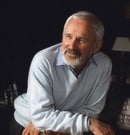
He’s directed and produced some of our most iconic American films — "The Cincinnati Kid," "In the Heat of the Night" and "And Justice for All," for starters — but Norman Jewison, 1999 winner of the Academy of Motion Picture Arts and Science’s prestigious Thalberg Award for his producing career, is Canadian through and through. Jewison is being honored this weekend at the Los Angeles County Museum of Art to mark the 20th anniversary of the Canadian Film Centre, which he founded, modeling it loosely after the AFI. He spoke with Eric Estrin about the surprising boredom of filmmaking and going to war to protect his vision.
 I was in the same position as John Frankenheimer and Franklin Schaffner and Sidney Lumet and Bob Mulligan. All of us were in live television in New York. I was out here doing Judy Garland’s first television special in 1962 with Frank Sinatra and Dean Martin.
It was Judy’s first exposure in television, and it was a tremendous success. She was quite dynamic. And while I was here doing that, Tony Curtis showed up at a rehearsal.
So I went down to the floor, and Tony came up and said, "Hi, how are you, I saw what you did with Belafonte ("Tonight With Harry Belafonte" in 1959) that was really terrific. You ever thought of making a movie?" And so he sent me over a screenplay. It was called "Forty Pounds of Trouble." It was a remake of "Little Miss Marker," and I think he was looking for young fresh blood.
He was under contract to Universal at the time and was a huge star, and he had his own company. I read the script and called him up and said, "Well, if you want to work with a director who’s never made a movie before …"
So that’s how it happened. I got a break from Tony Curtis.
I’ll never forget the first day on the set. He took me by the hand, and he took me around and said, "This is our director, young Normy Jewison from New York." And immediately, the Los Angeles crew looked at me and thought, "Oh boy, we got one of those television guys."
They were all seasoned filmmakers, you know — Russ Metty shot "Spartacus" for God’s sake. And so it wasn’t easy. And Tony Curtis says, "This is the microphone, and this is the camera …" He did a whole thing and made a joke about it, which cut the tension a little bit.
I had great trepidation really, but then I realized I was only working with one camera. I was used to working with three and four cameras. So I found it, to tell you the truth, after the first three days, I found it very boring. It was very slow compared to television. Compared to live television.
All kinds of things stand in your way when you’re trying to make a film. I mean, it’s you against the world. It’s like going to war. Everybody is trying to tell you something different, and they’re always putting obstacles in your way. You have to fight for what you believe in, and you have to defend yourself constantly. It’s a matter of confidence. It’s when you get indecisive and you lack confidence that you get into trouble, because everybody else will take over.
You know, it wasn’t easy making "Fiddler on the Roof" in Yugoslavia. And it wasn’t easy making "Jesus Christ Superstar" in Israel. I can remember the studio wanting me to come back from New Orleans when I was making "The Cincinnati Kid," because I insisted on going there to shoot the early scenes in the film.
And then I started to improvise, which meant I was staying longer. And I remember the studio sending a telegram, demanding me to return immediately with the crew and the cast: "Get out of there!" And I remember sending back a wire saying "If I leave now, I’ll go right to my house. Forget about it. I’ll walk off the picture."
I convinced them I would bring the picture in on budget anyway. Because I realized, the only thing they were worried about was the money. They didn’t care about the picture.
Sometimes you have to be forceful enough to persuade people that they’ve got to give in to your point of view. Because you can only have one point of view.