
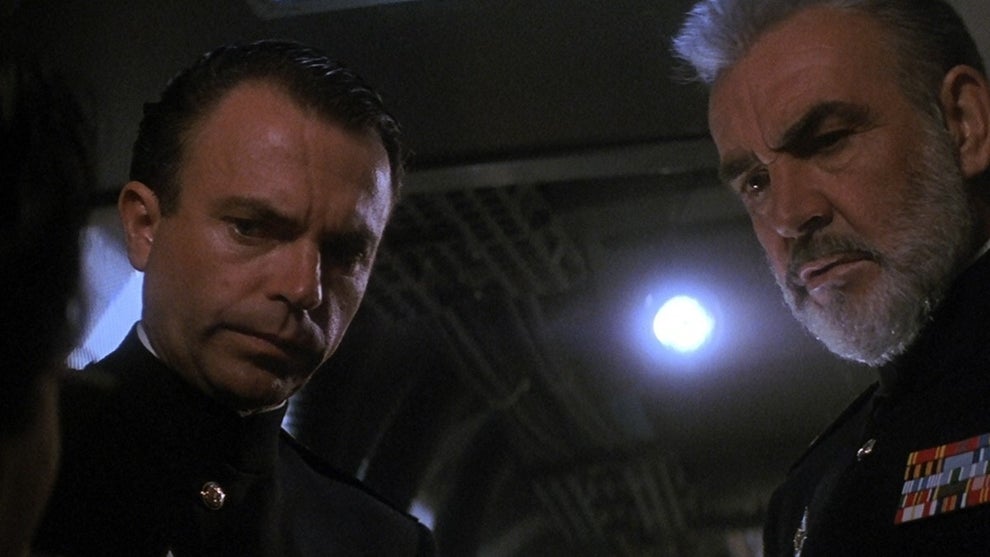
The June 23, 1993 issue of Entertainment Weekly had a cover story called “20 Questions About ‘Jurassic Park.’” The image that adorned the cover was of Sam Neill, surrounded by a pack of expertly photo-collaged velociraptors. And in the actual article, the first question was, Who the hell is Sam Neill? This question was odd, for sure, especially since he had been acting professionally since the late 1970s and already amassed at least a dozen credits across assorted roles on television and film.
But the article also spoke to how “Jurassic Park” had served to mark his arrival, in a big, big way – it’s his performance as Dr. Alan Grant, a curmudgeonly paleontologist who not only survives a theme park filled with marauding dinosaurs but also has his inner paternal sensibilities awakened. He is both the head and the heart of “Jurassic Park,” and his performance is perhaps the movie’s most dazzling special effect as he flits between curiosity, impatience, indifference, sensitivity, thoughtfulness and flinty intelligence. If you were a little kid and wanted to make it out of Jurassic Park alive, you’d too want to team up with Dr. Alan Grant, a part that Spielberg had initially wanted Harris Ford for. (Can you imagine?)
Now that Neill is sadly gone, even though the actor had been diagnosed as cancer-free (the family described his passing as “sudden and unexpected”), it feels only right that we take a look at his larger filmography: beyond “Jurassic Park” and its subsequent sequels (Neill also appeared in Joe Johnston’s “Jurassic Park III” and Colin Trevorrow’s “Jurassic World: Dominion,” one of the most expensive and cumbersome film productions ever).
To answer the question, posted by Entertainment Weekly decades ago – Who the hell is Sam Neill? – all you have to do is look at the incredible range of characters he played and how many sides of himself (and, indeed, humanity at large) he was able to tap into. It’s a staggering body of work, full of lovely, lively performances, so if we left your favorite Sam Neill role off the list, we apologize in advance. He was just too good. And, yes, “The Omen III” nearly made the cut.
NOTE: We are sticking to film work because he had just as impressive a television roster, including everything from the “Merlin” miniseries (and its follow-up) to roles on “Peaky Blinders,” J.J. Abrams’ underrated mystery show “Alcatraz,” and even “Rick and Morty.” If we had one role that we would highlight, though, it’s as the criminal Molloy in “The Simpsons” season 5 episode “Homer the Vigilante,” written by the legendary John Swartzwelder and directed by the equally amazing Jim Reardon. Neill reportedly thought the episode was a high point of his career, and it’s tough to argue.
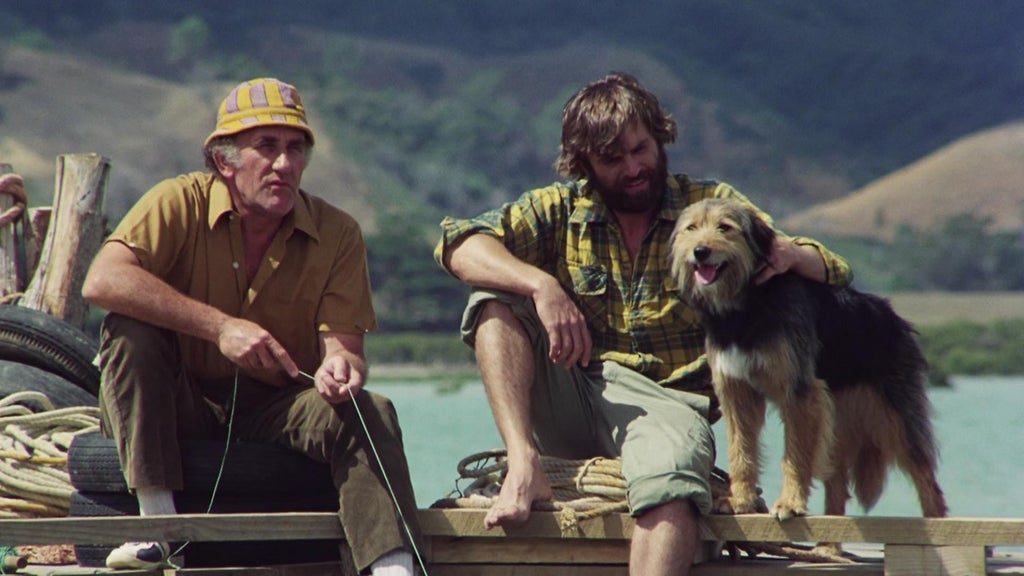
“Sleeping Dogs” (1977)
Neill’s first starring role was in this odd, unsettling thriller that was one of the first New Zealand features to gain widespread international attention. Stylishly directed by Roger Donaldson, who would achieve fame in Hollywood with everything from “Cocktail” to “Dante’s Peak” (he also directed Kevin Costner in the terrific 1987 gem “No Way Out”), Neill plays a man who, following a divorce, leaves New Zealand proper to live on a remote, Māori-controlled island. While there, of course, all hell breaks loose in New Zealand proper thanks to an oil shortage, and the violence and anarchy of the country eventually invade his idyllic existence.
Beautifully shot by Michael Seresin, who would lens “Midnight Express” the following year, “Sleeping Dogs” has a quiet power, largely thanks to the performance from Neill. As a man who wants to be left alone, unburdened by the personal and political strife of his former home, there is a dignity and power to his performance that would never let on that it was his first major role. He shares a number of scenes with Warren Oates, by then a genuine legend, and holds his own. Neill felt like an old pro, even back then.
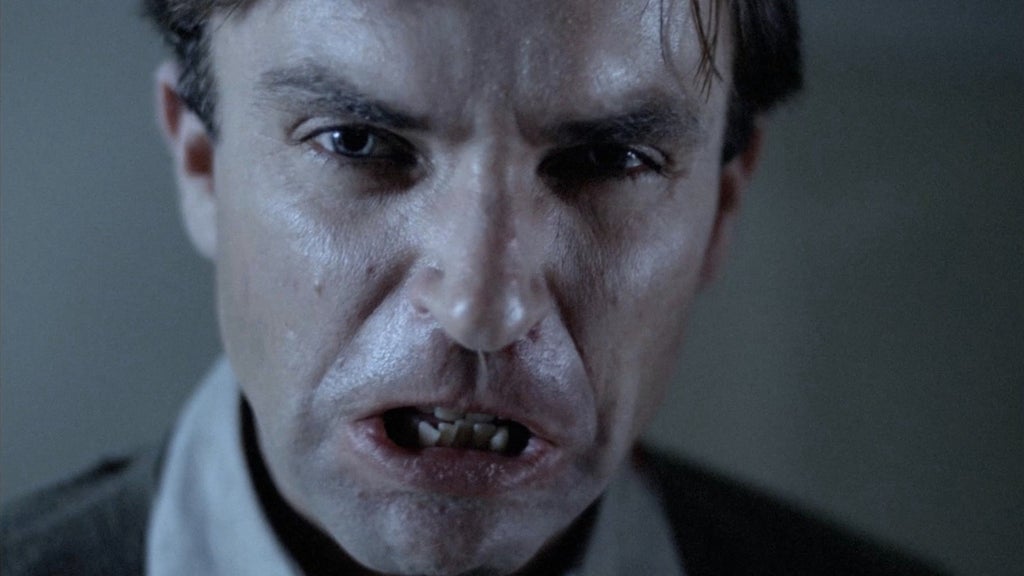
“Possession” (1981)
How to even describe Andrzej Żuławski’s “Possession,” a film whose esteem and standing with film fans seems to gain more ground each year, to the point that it has rightfully been assessed as a modern masterpiece? Well, it’s weird as hell. And as is often the case when Neill finds himself in strange movies, he gets assigned the straight man role. Only things in “Possession” unravel almost immediately, with Neill being allowed to show many more colors and angles than you would likely imagine.
He plays a spy who returns to West Berlin after a mission to find that his wife (a mesmerizing Isabelle Adjani) has been cheating on him. Thus begins the destruction of their relationship, which involves shouting and physical violence and then … something more. But there’s an oddly compassionate side to their relationship, brought largely by Neill’s layered, complex performance, that doesn’t make it exactly relatable but at least understandable – even when the movie descends into utter madness. With creature effects by the maestro Carlo Rambaldi (a year before he would bring the considerably cuddlier “E.T.” to life) and haunting cinematography by French DP Bruno Nuytten, “Possession” is unforgettable, largely thanks to Neill’s performance. Robert Pattinson has been tapped to play the Neill role in an upcoming remake from “Smile” filmmaker Finn Parker. We wish him well.
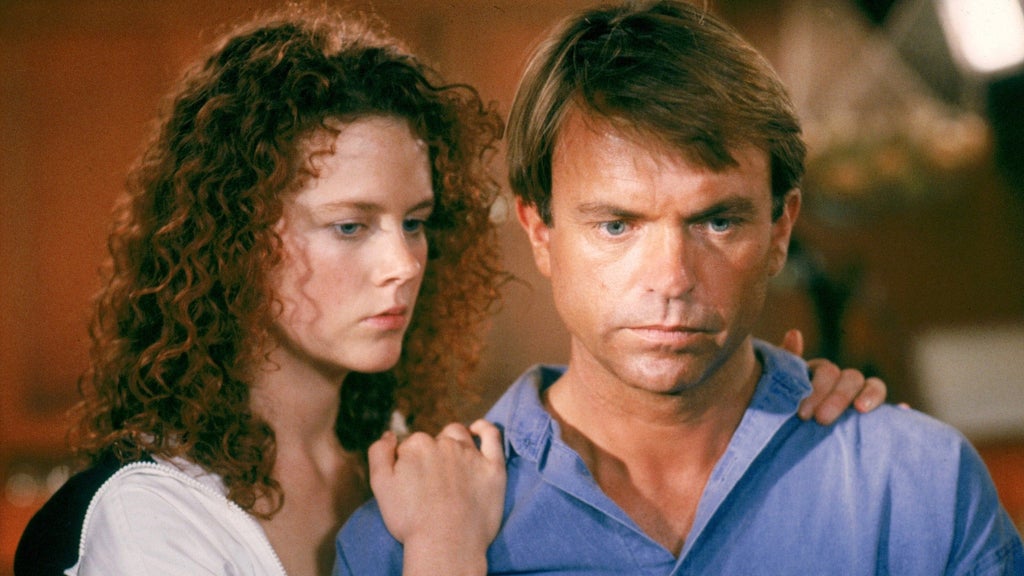
“Dead Calm” (1989)
This crackerjack Australian thriller, produced by George Miller and directed by Phillip Noyce, was based on a 1963 novel by Charles Williams that Orson Welles once attempted to adapt. (Welles’ film, “The Deep,” was produced between 1966 and 1969 but ultimately abandoned, unfinished.) Noyce and writer Terry Hayes (“The Road Warrior”) simplified and modernized the story without losing any of its elemental, Hitchcockian kick. Neill plays a man who has gone through a tragedy – his young wife (Nicole Kidman) is still reeling from a car accident that left their young child dead. To rekindle their marriage and process the pain, they board their yacht. But they soon encounter a drifter (Billy Zane) on a derelict boat. They invite him on, and all hell breaks loose.
The movie feels indebted to things like “Don’t Look Now” and other thrillers from the period like “Pacific Heights,” where the good deed of letting someone in always turns upside down. Neill doesn’t have the showiest role, but he is someone whose steely resolve masks inner turmoil, something he was very good at, which explodes in an unexpected and very satisfying way. Book a cruise with “Dead Calm.”
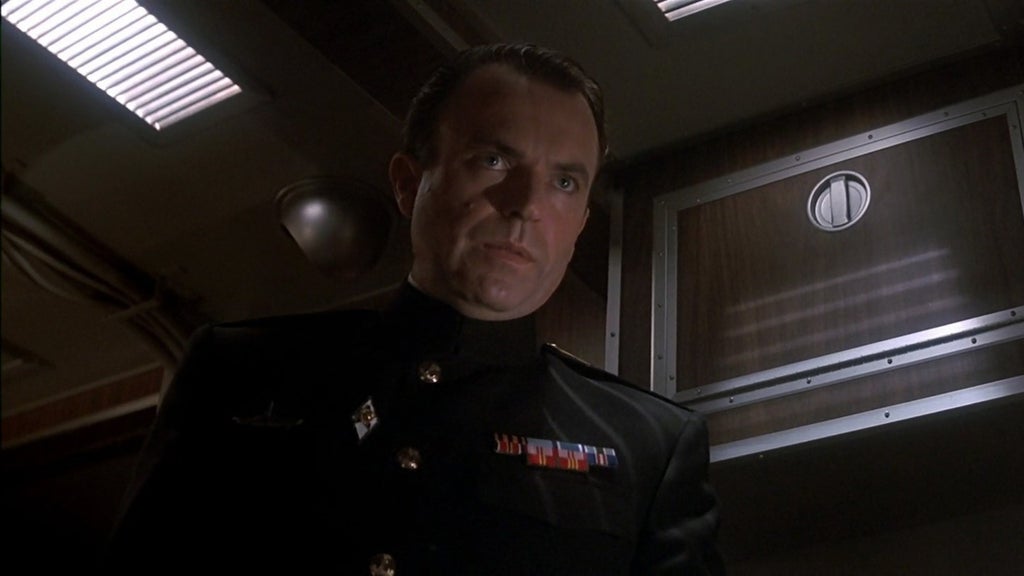
“The Hunt for Red October” (1990)
John McTiernan’s “The Hunt for Red October,” an adaptation of Tom Clancy’s naval bestseller, wasn’t just a wildly popular blockbuster that served to start a franchise that is still going strong today, but it’s also one of the best movies of the 1990’s – a film as brilliant and artful as anything else from the decade. And much of the movie’s emotional weight rests on Neill’s shoulders.
As the sturdy lieutenant to Sean Connery’s defecting Russian captain, he is thrilled by the idea of a new life in a relatively free United States. (The movie actually takes place in 1984.) You feel the hopefulness in his voice as he discusses what his new life will entail and are heartbroken when, during the movie’s chaotic climax, he falls. Neill’s dying words: “I would like to have seen Montana,” is a beautiful gut-punch and further proof that “The Hunt for Red October,” for all its spy-craft and derring-do, is a deeply human story.
If you’ve never seen “The Hunt for Red October,” with its gliding camerawork from Jan de Bont (who would go on to his own huge directing career) and snappy performances (from Connery, Alec Baldwin, James Earl Jones and Scott Glenn), or if it’s been a while, throw it on again. For Sam.
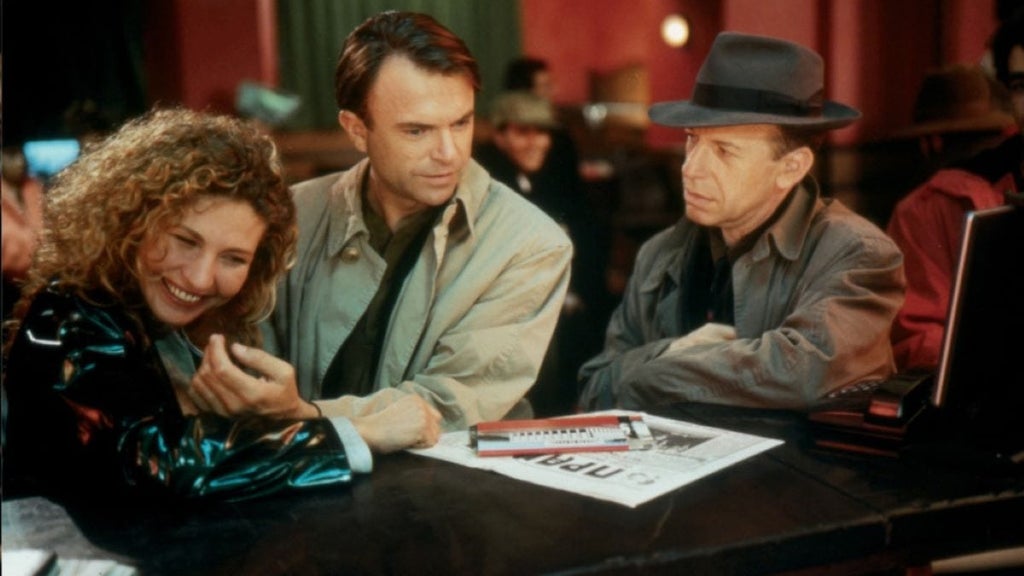
“Until the End of the World” (1991)
Wim Wenders’ maximalist road movie, set in the near future and full of prescient anxieties about the intersection of our personal lives and technology, is long as hell and overstuffed to the point of bursting (the preferred – and superior – cut clocks in at a whopping 287 minutes) but Neill is an essential part of the narrative fabric. He plays Eugene, a self-centered man who cheats on his girlfriend Claire (Solveig Dommartin, who also appeared in Wenders’ “Wings of Desire”) and sends her on an existential, technological odyssey through a world on the brink. (You can hear Neill narrate the domestic trailer for the movie.)
Neill’s Eugene darts in and out of the narrative, as Claire links up with a mysterious operative (William Hurt) and all manner of colorful characters are introduced and abandoned, ultimately writing the story that could save their relationship – and the world. As is typical of Neill’s performances, especially in oversized movies, he makes things grounded and earthy even when they get out of control, centering the narrative in ways that only he could. Watch the uncut “Until the End of the World.” Criterion put it on Blu-ray and it’s on sale during the Barnes & Noble sale right now. Don’t wait for tomorrow.
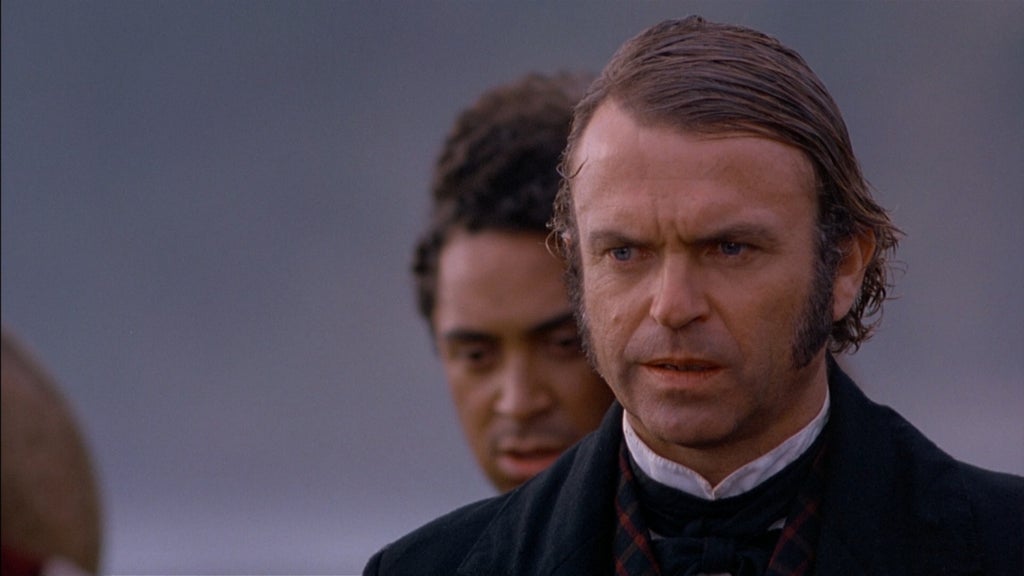
“The Piano” (1993)
Just a few months after “Jurassic Park” became the king of the blockbusters, Neill found himself in an arthouse darling as well. Jane Campion’s “The Piano,” which had won the Palme d’Or at Cannes a month before “Jurassic Park” premiered, became a word-of-mouth smash, earning more than $140 million worldwide on a budget of just $7 million and winning three Academy Awards, including Holly Hunter for Best Actress and Best Screenplay for Campion.
Hunter plays a mute woman who travels to colonial New England in the 19th century, set to wed a settler played by – you guessed it – Sam Neill. Again, this is the more low-key role – Harvey Keitel, as a sailor who has accepted Māori traditions, is the bigger, louder, more show-stopping performance. But Neill’s performance, a simmering, slow burn of jealousy and outrage, which erupts in a shocking act of violence (we won’t give it away here), feels more refined and, after all these years, burns just as brightly as Hunter or Keitel (or Anna Paquin as her young daughter, in another Oscar-winning role).
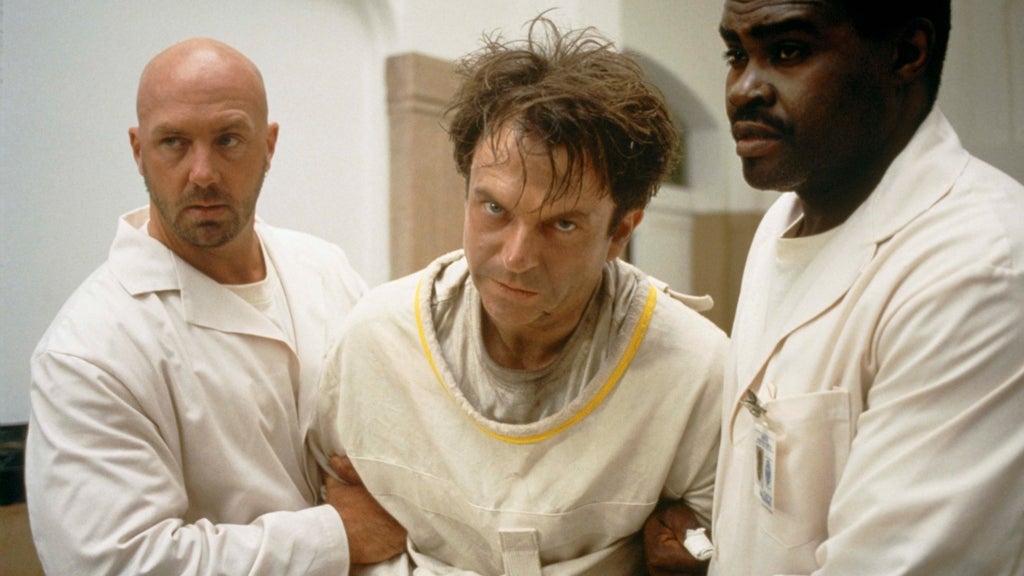
“In the Mouth of Madness” (1994)
John Carpenter had utilized Neill wonderfully once before – in 1992’s “Memoirs of an Invisible Man” – where Neill played a government operative known for throwing people down elevator shafts (there’s actually a recurring joke about it). But it wasn’t until Carpenter’s follow-up, “In the Mouth of Madness,” that he really let Neill shine. Neill plays an insurance investigator in New York City hired to track down an elusive, Stephen King-type horror novelist named Sutter Kane (played by a very game Jürgen Prochnow) who has gone missing. Along the way – wouldn’t you know it? – he finds himself drawn into Kane’s complex, monster-filled world, slowly going insane.
The capstone to Carpenter’s so-called Apocalypse Trilogy (along with “The Thing” and “Prince of Darkness”), it all rests on Neill’s performance, which slowly unravels to the point of histrionic madness. Written by Michael De Luca, then a New Line Cinema executive (he now oversees movies for Warner Bros.), and inspired by the fiction of H.P. Lovecraft, “In the Mouth of Madness” is largely considered Carpenter’s last great movie and much of its reputation comes from Neill’s performance, which is so knowing and multifaceted. If you’ve seen the meme of Neill in a movie theater, well, that’s from this movie. Watch it now. You know, as a treat.
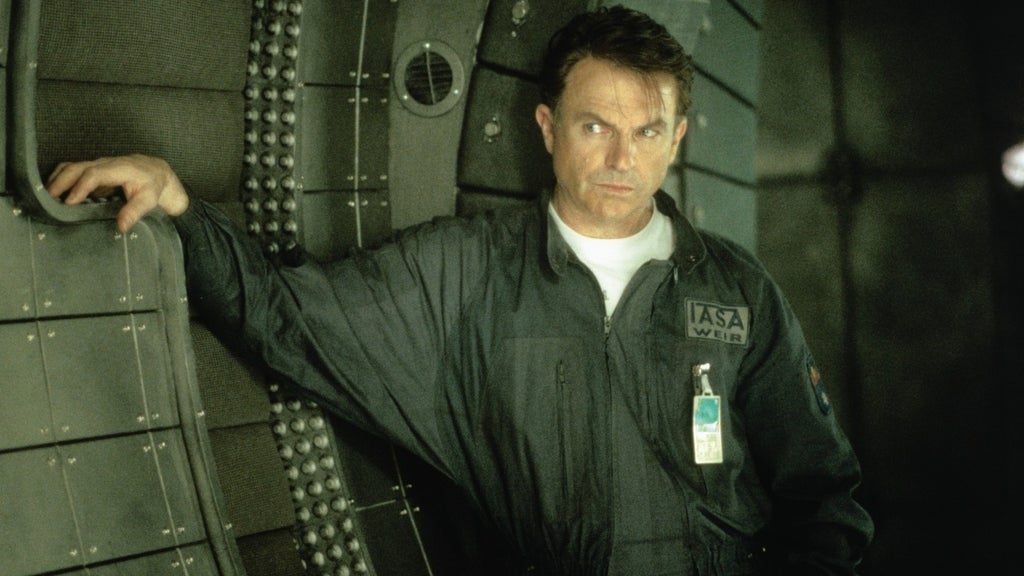
“Event Horizon” (1997)
We love watching straight-laced Sam Neill go berserk. Especially if it’s in the context of some genre trappings. And “Event Horizon” delivers on all of this. An outwardly “Alien”-esque premise, following a group of scientists and astronauts as they interface with a spaceship that had gone missing years before under mysterious circumstances, quickly evolves into something much more complicated and philosophical. It seems that, instead of another dimension or a distant planet, the spaceship has interfaced with hell itself.
Surrounded by an ace cast, including Laurence Fishburne and Kathleen Quinlan, Neill stars as the designer of the missing spaceship, who begins to transform thanks to his exposure to the ship. (There’s a dash of “Solaris” in there, for good measure, as painful memories from his past are dredged up.) “Event Horizon,” directed by Paul W.S. Anderson and featuring genuinely jaw-dropping production design and cinematography by the great Adrian Biddle, was rushed through production and didn’t make the money Paramount wanted. But in the years since it has rightfully been reappraised as a cult classic, and Neill’s performance is central to the movie’s staying power and longevity. Would make a great double feature with “In the Mouth of Madness.” Or “Possession” even.
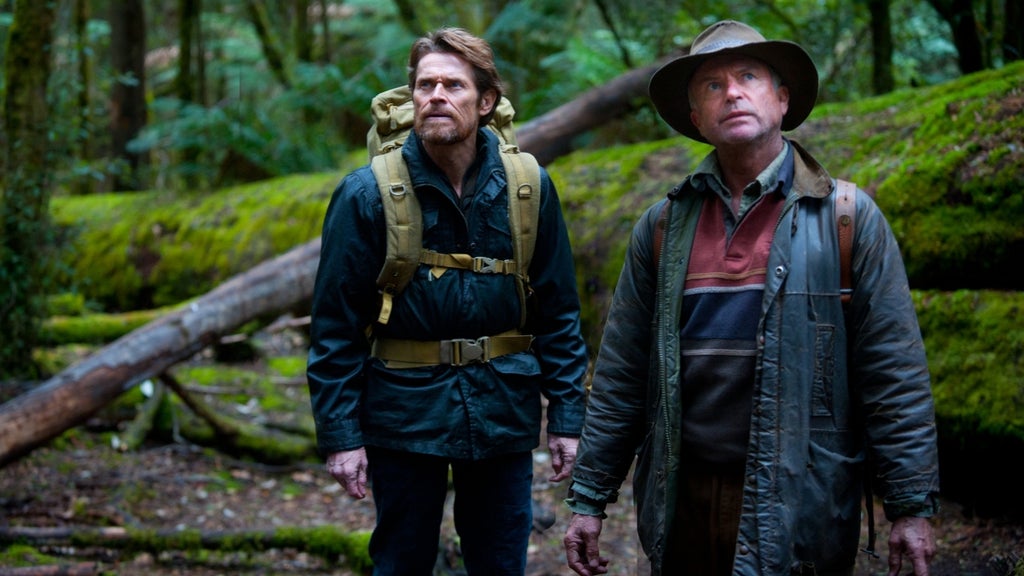
“The Hunter” (2011)
Talk about a wonderful, underseen movie. “The Hunter” has a bizarre central premise about a hitman (Willem Dafoe) tasked with tracking down the last Tasmanian tiger by a nefarious pharmaceutical company. Neill has a small role as a man who is friends with a family that Dafoe is staying with. He understands the land and the creatures that live in it, and knows that there is something not-right about Dafoe’s interest in the elusive creature (the last known thylacine died in captivity in 1936 but sightings remain to this day). Neill’s portrayal is full of depth and complexity and is an example that he didn’t need the most screen time to steal the show completely. We want to believe.
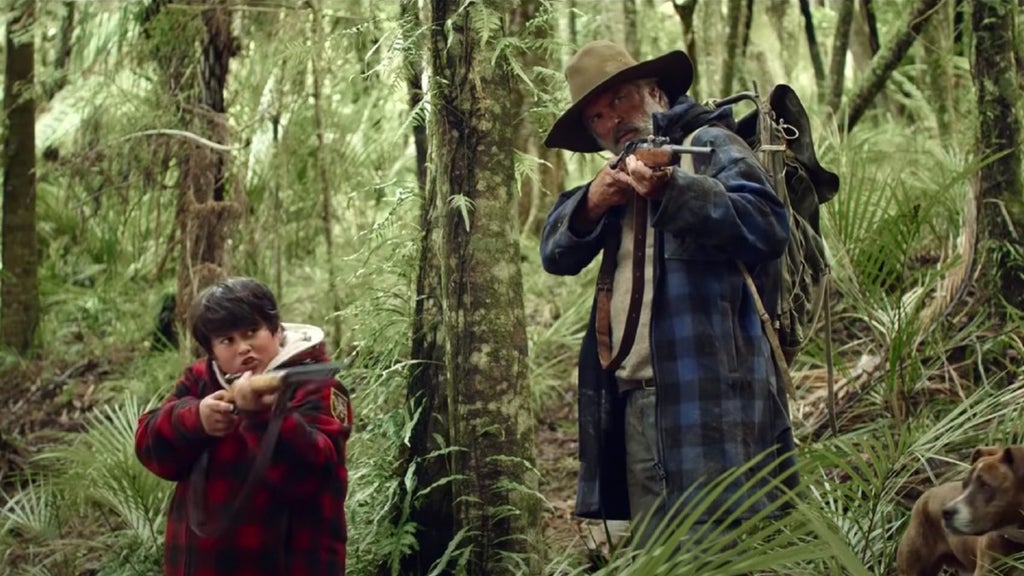
“Hunt for the Wilderpeople” (2016)
Another great film seen by too few people. Written and directed by Taika Waititi and based on the book “Wild Pork and Watercress” by Barry Crump, it stars Sam Neill as a grumpy man who, along with his wife, adopts a troubled young boy (Julian Dennison). After his wife dies, he and the young boy set off on an adventure. Whether he likes it or not.
In some ways, it’s Neill slipping into the “Jurassic Park” template of a man who doesn’t want anything to do with a child, being forced to care for one under extreme circumstances. But there’s more nuance to his character, perhaps because Neill was so much older when he made “Hunt for the Wilderpeople,” or because Waititi was allowed to luxuriate in the uncomfortable moments between the characters, allowing space for the scenes to be both painful and deeply hilarious. Rich with anarchic spirit, this is one of Waititi’s best movies and certainly one of Neill’s best performances, and led to Waititi and Neill re-teaming for “Thor: Ragnarok” and “Thor: Love and Thunder.” That’s right – Sam Neill was part of the MCU, as a minor performer on Asgard. We love it.
