

When we published our exclusive look from the set of Doug Liman’s fully-generated, studio-quality AI film called “Bitcoin: Killing Satoshi” last week, the reaction was what you’d expect: a heady mix of outrage, fear and skepticism.
You can hardly blame the Hollywood community for its apprehension. AI presents a potential existential crisis at a time when crises are becoming a usual occurrence. The industry has been rocked by mass layoffs, with 1,000 Disney employees receiving pink slips last week as just the latest casualties. Then there’s the pending merger between Paramount and Warner Bros. Discovery, expected to bring its own bloodbath.
“It’s thousands and thousands of Grips and Gaffers. Drivers and Decorators. Builders and Boom operators. Camera teams and Caterers,” “Lost” creator Damon Lindelof said in a Tuesday Instagram post on the deal. “And they’re all about to get fucked.”
So the last thing many in Hollywood wanted to hear was a new project using AI to fully generate the backgrounds and scenery around Casey Affleck, Gal Gadot and Pete Davidson.
“Slop: The Movie” coming soon to a budget streaming service near you!” said one tweet.
“Hollywood right now is broken. Movies aren’t getting made that should get made. Making original movies is impossible.” – Producer Ryan Kavanaugh
“So you just eliminated numerous jobs, like lighting, set design, props department, etc. Great job undermining your own industry. Guess what? Keep it up and there won’t BE an industry,” said another.
But, as the film’s producer Ryan Kavanaugh, who is also co-founder of Acme AI & FX, which provided the AI tools for the project, noted, this is a movie that wouldn’t have existed without the aid of AI. The film was originally budgeted in the range of $300 million, which would never have gotten a green light at a studio.
“Hollywood right now is broken,” Kavanaugh told TheWrap after our initial story came out. “Movies aren’t getting made that should get made. Making original movies is impossible.”

His comments underscore the potential opportunities that come from the embrace of AI, whether it’s new projects that otherwise never would’ve been made, opportunities created for artists that wouldn’t have had access to the traditional tools of filmmakers, and potential new jobs — even as some older ones get replaced. That dynamic speaks to the nuances of AI, which should be treated less like a boogeyman and more the next wave of technological change — for better or worse.
“Every major shift in entertainment has created anxiety around jobs, and AI is no different,” said Kevin Reilly, CEO of AI company Kartel and former studio executive who worked at HBO, Fox and NBC. “But what tends to happen is the work doesn’t disappear, it shifts. New roles emerge around managing, guiding and shaping the technology. While the displacement of the people supporting production is no different than the ‘re-skilling’ that’s occurred in other industries, it doesn’t make it an easy pill to swallow.”
But what about those immediate jobs?
Paid ‘full freight’
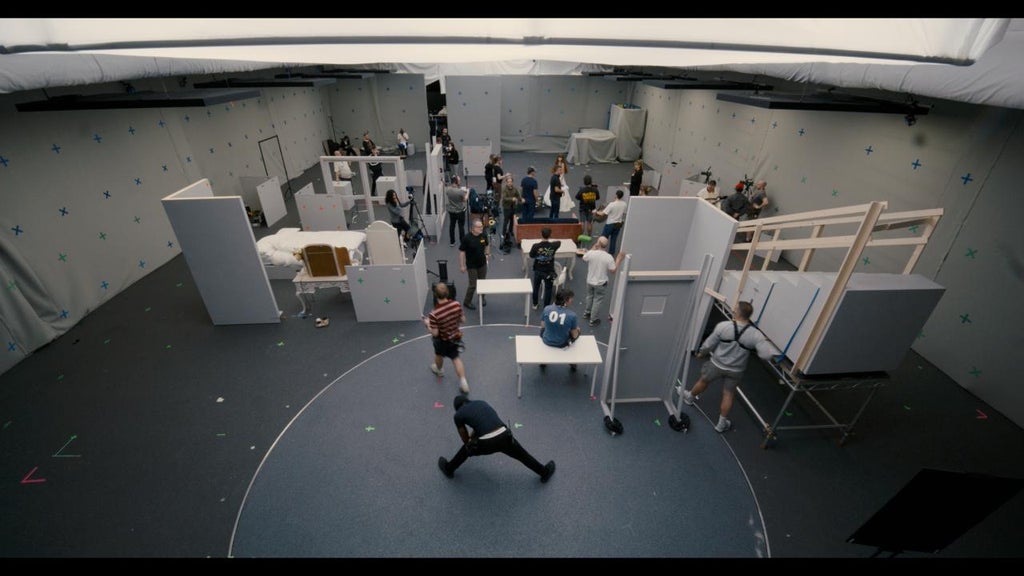
For all the talk of AI taking jobs, Kavanaugh noted that “Killing Satoshi” had a full crew complete with production and costume designers, grips and gaffers. In total, it employed 107 cast members, 100 shoot crew and 54 non-shoot crew — fairly on par for an independent feature.
He emphasized that the cast and crew was paid “full freight,” or what they would’ve made on a standard-length shoot despite the filming on this project lasting only 20 days.
As Kavanaugh stressed, using AI doesn’t mean just typing out a prompt and expecting fully fleshed out scenes to materialize out of thin air.
“The thing about AI is that it’s not a human, everything you do in the AI requires a specialist in their field to both inform and direct the AI meaning every department is still needed — sometimes even more so than in a traditional (film),” Kavanaugh said.
For example, while the lighting would be added using AI, it would be a human lighting technician working with the director to direct how the technology would be employed, from the angle to the intensity.
But the threat of AI on a film like this, at scale in Hollywood, would still disproportionally affect the blue collar workers who have made movies a reality for over a century. The lack of traditional sets means fewer set builds and fewer craftspeople employed, there’s a smaller camera team, smaller transportation team, etc.
The producers’ claim that this film would’ve cost $300 million also garnered plenty of scrutiny.
“How in the world would a movie about bitcoin staring (sic) friggin Pete Davidson cost 300 million? I’m frankly shocked it cost 70 million with AI,” The Popcast Brothers tweeted. “None of this makes sense.”
The producers talked about the 200 locations in its ambitious script, but keep in mind that a blockbuster like last year’s “Jurassic World: Rebirth” cost $180 million to produce. And that film has dinosaurs! While Kavanaugh declined to break down the $70 million budget, presumably a significant chunk of it went to the stars and director — showing that the big names in Hollywood will likely be okay regardless of the disruption.
Kavanaugh, however, did clarify that AI opened the scope of what was possible with factors like locations and settings, and that if the same movie utilizing the technology had been shot by traditional means, it would’ve cost $300 million, chalking up a lot of the overhead to additional time and travel and logistical resources.
“It’s not a function of cutting jobs,” he said. “It’s a function of cutting time.”

AI at a crossroad
This film is emerging as there’s a debate about what role AI plays in the entertainment world. There are two schools of thought here: One camp that sees AI as an assistant that can help with menial or time-consuming tasks like basic pre-visualization, color correction or simple background swaps, like Ben Affleck’s InterPositive. The other extreme is looking at AI to replace everything, generating actors, scenes and dialogue.
Liman’s film sits somewhere in the middle. The producers stressed that the performances and costumes will be real, even if everything else, from the background to the lighting, will be filled in with AI after the fact.
But, as Kavanaugh’s comments illustrate, there are subtle shades of gray between those two black-and-white paths.
When discussing the project, “Killing Satoshi’s” other producers were open about acknowledging the concerns people had.
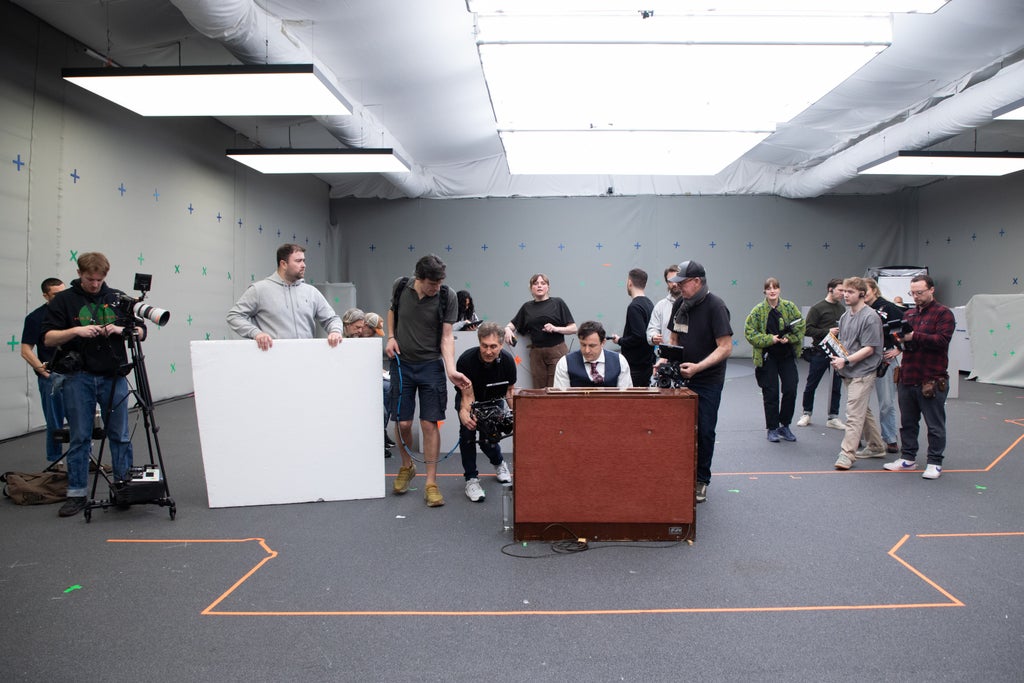
“Generally, the community was apprehensive,” producer Lawrence Grey said of the reaction to their decision to make the film using AI. “Everyone projects their insecurities and fears into AI: It’s going to steal jobs in Hollywood. It’s going to kill the business.”
“But what we started noticing as we were making outreach to the community is that people were saying one thing publicly, but underneath everyone was understanding that, yeah, this is inevitable. It’s here. And it actually can help. It’s actually a tool to democratize filmmaking, and so there was a real openness and warmth as long as they knew we were doing it in the right way.”
As evidenced by the dialogue that our story spurred, there are massive disagreements over whether what Liman and Co. are doing constitutes the “right way.”
But to Kavanaugh, a lot of the criticism misses the opportunity AI creates at a time when Hollywood could use all the help it can get.
“The fear is blocking them from looking at the prospect that more movies will get made,” he said.
