
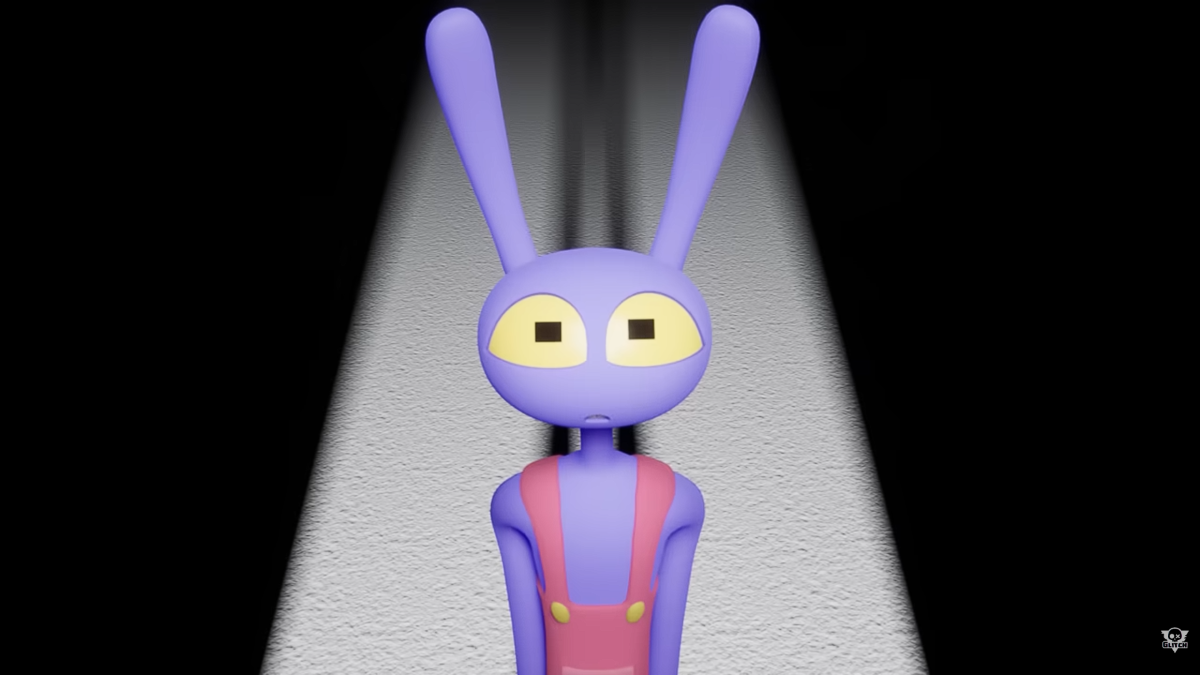
Curry Barker and Kane Parsons have captivated Hollywood thanks to both their hit films, “Obsession” and “Backrooms,” as well as their YouTube roots as filmmakers. This weekend, another YouTube sensation kept the box office momentum going: “The Amazing Digital Circus,” an indie animated miniseries from YouTube animator who goes by Gooseworx.
Two months ago, the series’ producer, independent animation company Glitch, announced that the ninth and final episode of “The Amazing Digital Circus” would screen in theaters two weeks before its release on YouTube. In the United States, Glitch partnered with specialty distributor Fathom Entertainment to release “The Amazing Digital Circus: The Last Act” in 2,221 theaters starting this past Thursday, where it grossed $20.2 million over four days.
While its shorter window and its status as the final chapter to a series put a ceiling on its box office grosses that’s far below what “Obsession” and “Backrooms” made, “Digital Circus” was the top-grossing film on its opening day on Thursday, beating the eventual top movie at the box office, “Scary Movie,” by grossing $7.8 million from fans eager to be the first to see how the series ended.
Moreover, the $12.4 million Friday to Sunday total was enough to push “Digital Circus” into the top 5 for the weekend, topping the $10 million third weekend total of the “Star Wars” film “The Mandalorian and Grogu.”

After racking up a combined 1.2 billion YouTube views since 2023, the series marks yet another example of how online fandom built organically over several years can be leveraged for box office success. Not only did Fathom respond to fervent fan interest to expand the distribution footprint of “Digital Circus” after it was first announced, but the spoiler-averse crowd led to a surprising surge in walkup business that proved there’s longevity in these kinds of releases past one weekend.
“Fathom is not a studio. We don’t want to be a studio. But we’re also not just an event cinema company anymore,” Fathom CEO Ray Nutt said. “We’re a company that has found its own niche in the marketplace thanks to our team’s openness to go out there and search for all forms of entertainment that can draw a theatrical audience.”
YouTube origins
So what is “The Amazing Digital Circus?” It’s a fusion of many of the interests of its creator, Cooper Smith Goodwin, or “Gooseworx,” who developed webcomics and animated short films online and provided music for the first season of the Amazon/A24 adult animated series “Hazbin Hotel.”
The series follows a group of people who find themselves inhabiting the bodies of cartoonish creatures in a virtual world called the “Digital Circus,” one from which they can never leave. Their host/captor is Caine, a corrupted AI program that tries his best to keep the Circus’ residents occupied, but isn’t equipped to handle the existential crisis they face from being pulled out of their lives with no way out.
Inspired in part by early CGI animation from the ’90s and the sci-fi horror short story “I Have No Mouth and I Must Scream,” “The Amazing Digital Circus” has captivated fans with its mixture of dark humor, slapstick, existential horror and, perhaps most of all, its psychological drama.
Episodic series getting a theatrical release isn’t a new phenomenon. Fathom has grown its footprint as a distributor by identifying titles outside of the Hollywood sphere that have cultivated an audience that is underserved theatrically. The most famous recent example is Dallas Jenkins’ indie Gospel streaming series “The Chosen,” which has grossed more than $140 million worldwide from screening its episodes in theaters and which has now been picked up by Amazon MGM.
And Netflix, of course, screened the series finale of “Stranger Things” in theaters on New Year’s.
Fan demand
But what makes “The Amazing Digital Circus” stand out is not just its origins as a YouTube series, but the intense theatrical demand that came from the fans once Glitch made the announcement about the big screen rollout. Initially set for release on around 500 screens in the U.S., “The Last Act” got a boost after fans urged theaters to add it to their slate, similar to how Markiplier fans pushed his debut feature “Iron Lung” to a wide release.
There was a clear motivating factor at play: spoilers. Fans feared that with a more limited theatrical release, they might have the finale spoiled for them by the privileged few lucky enough to live near a theater screening the film two weeks before its online premiere.
And that fear of spoilers was global.
In the days following the announcement, Glitch announced that dozens more countries would get “Digital Circus” in theaters, including 38 European countries via distributor Piece of Magic Entertainment. In total, “The Last Act” has made approximately $34 million from theaters worldwide this past weekend, and will continue to run in theaters until the finale’s YouTube release on June 19.
For both Nutt and Piece of Magic CEO Caspar Nadaud, “Digital Circus” was a perfect fit for their distribution model, remaining “content agnostic,” as Nadaud put it, as they search for alternatives to mainstream Hollywood that might not have an audience big enough for several weeks of theatrical play, but can bring a substantial amount of moviegoers to cinemas for at least one weekend. And with the right title, that turnout could last even longer.
“What we focus on is whether we can define an audience for a certain title, and if it can draw an audience across multiple markets, and ‘Digital Circus’ did both,” said Nadaud. “What’s interesting is that we saw a lot of presales in the first few days that tickets went on sale, and then those presales plateaued, and then in the last couple days before release the presales spiked again and carried over into walkups that were about 35% of our box office across Europe, and that’s something we weren’t expecting.”

Nutt said that Fathom saw a similar trend with higher walkup tickets than expected, something that he attributes to the strong word-of-mouth that came from fans who attended the first wave of screenings on Thursday night. Along with fans who will want to watch the finale a second time, Fathom is seeing demand from those who were unable to buy a ticket this weekend but still don’t want to wait until the YouTube release, hence the decision to extend the run past its initial four days.
“On Thursday, our walkup was about 38% of our audience, and on Friday that shot up to 55%,” he said. “So we think there’s going to be more to this than just one weekend.”
Glitch, which did not respond to TheWrap’s requests for comment on this story, has developed a reputation among animation fans as a place for independent creators to show off their stories outside of the Hollywood system.
Currently sporting 21 million YouTube channel subscribers, the company recently launched its second web series, “Gameoverse,” and has other series in development like the hand-drawn psychological thriller series “Knights of Guinevere.” The company greenlights shows based on viewership and response to pilots released on its channel, and makes its revenue primarily off of merch sales.
Given the long production timelines that come with indie animation, it may be some time before Glitch works with Fathom and Piece of Magic on another theatrical release attached to one of their series. But then again, “Backrooms” wouldn’t have become the highest grossing film in A24 history with more than $200 million grossed and counting if director Kane Parsons hadn’t spent four years prior to his feature debut building an online fandom around his YouTube horror shorts.
Similarly, it took three years from the pilot release of “The Amazing Digital Circus” to get to this point, building up a combined 1.2 billion YouTube views since 2023. As Hollywood starts digging through YouTube for new creators and IP to mine, Nutt and Nadaud think it is worth remembering that there are no shortcuts.
“There has to be a strategy, and a special connection between the creators and the audience,” Nadaud said. “It was really the fanbase that mobilized this whole thing. We were just sort of the mortar that brought ‘Digital Circus’ to cinemas.”
