
The Looney Tunes characters have been a part of our lives for so long, it’s odd to think of a period of time without them, in some form.
The animated shorts debuted back in 1930 and, along with the spinoff series “Merrie Melodies,” introduced the world to characters like Bugs Bunny, Daffy Duck, Porky Pig and countless others. They have inspired feature films and television specials, theme park attractions and video games, attracting new audiences along the way, perhaps most bolstered by when the short films, originally meant for theatrical exhibition, were packaged and shown on American television. They have appeared in movies with Michael Jordan and Brendan Fraser and John Cena.
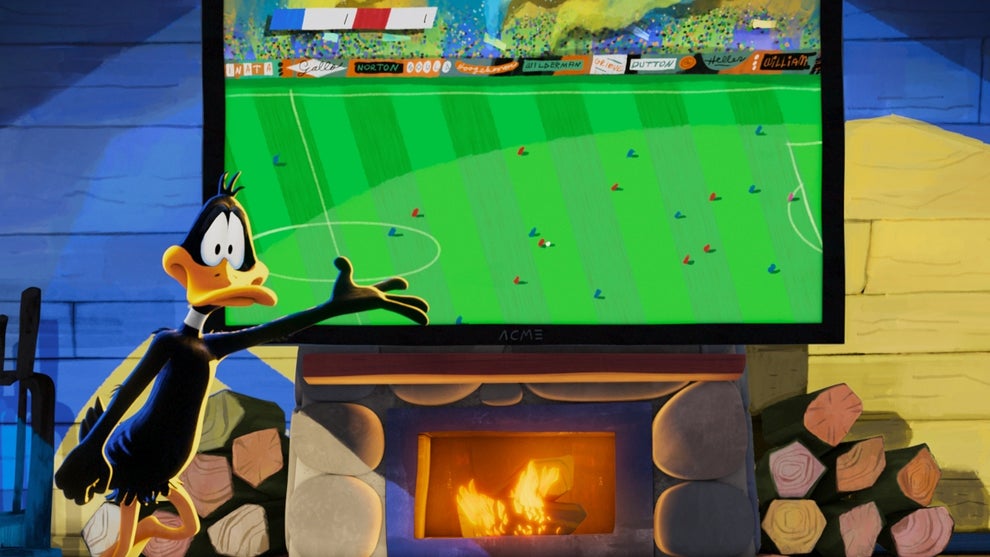
But with “Daffy Season,” a wonderful new short set to debut with “The Cat in the Hat” later this year, the characters are returning to the big screen the way they are meant to be – without any human actors and with an emphasis on the characters that audiences have loved for decades, in all their chaotic glory.
“Daffy Season,” which premiered earlier this year at the Annecy International Animation Film Festival, follows what happens when rabbit season turns into duck season, a concept introduced in Chuck Jones classic 1951 short “Rabbit Fire.” Only this time Daffy enters the woods and … nobody is there. Instead, Elmer Fudd and the rest of the gang is too busy watching soccer. Hilarity, as you can imagine, ensues.
Bill Damaschke, the president and CCO of the newly formed Warner Bros. Pictures Animation, said that having a new Looney Tunes theatrical short was his mission since walking through the door.
“We had these wonderful characters and there’s a lot of it done. Like there’s great stuff done all the time. But it’s been a really long time since they’ve been in like a really premium format, not relying on human actors. And I thought that that we have to get back to that. We have to get back to the DNA of it,” Damaschke said. “I wanted them to be the stars of their own thing again, and not treat them like they actually are celebrities or stars, which was another thing that happened for a big chunk of time.”
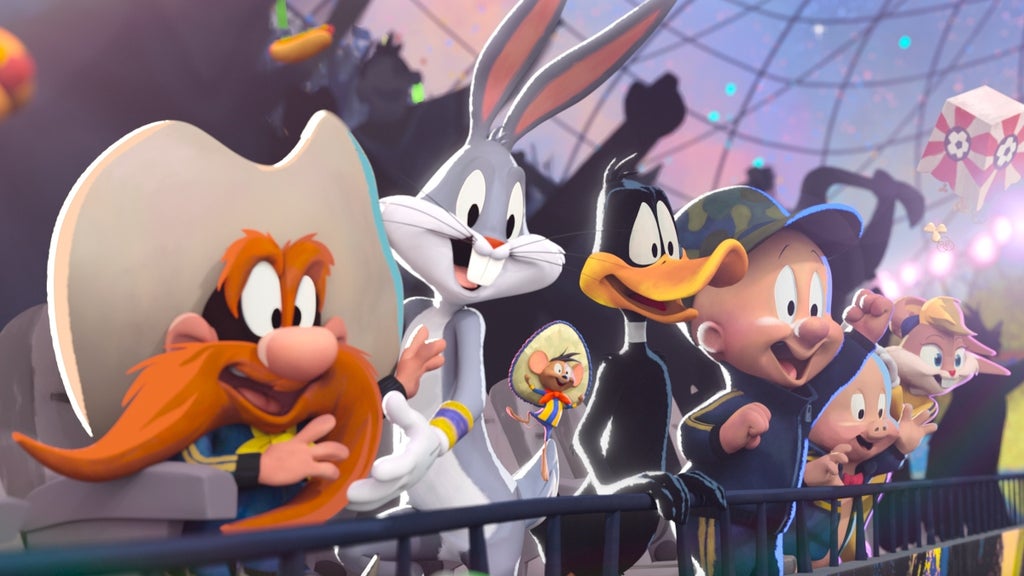
Damaschke gathered a group of Warner Bros. Pictures Animation filmmakers, including eventual “Daffy Season” directors Todd Wilderman and Hamish Grieve, and spent several days brainstorming concepts for what could be the new short, which incidentally is the first theatrical short since 2014, when “Daffy’s Rhapsody” was attached to “Journey 2: The Mysterious Island.” They came up with four or five viable ideas, because the idea was that there would be several Looney Tunes shorts that would lead to an eventual Looney Tunes feature. (Damaschke said the decision to sell off both “The Day the Earth Blew Up” and “Coyote vs. Acme” to Ketchup Entertainment were made “out of my purview.”)
“We are very committed to these characters. We love them and we should put them exactly where they need to be in a really premium way in front of our first feature film,” Damaschke said.
“Daffy Season” edged out the other ideas to be the first short out of the gate. It had to do with the fact that it “stood on the shoulders of the things that people love and know about the characters, without assuming that everyone knows,” according to Damaschke. Because, as he points out, “I do think some younger people don’t really know. They know who Bugs is and they know who Daffy is, but they actually don’t necessarily know the dynamics between them.”
The team knew, from the two “Space Jam” movies, that audiences respond to what Damaschke calls “the sports element of the Looney Tunes,” which served as a creative springboard for the new short.
“We thought, why don’t we pick up this conversation that’s going on right now about football versus soccer, and put that into a debate between Bugs and Daffy. There were many different versions of it. They were actually a soccer team at some point, but it turned into a whole a whole thing about fandom and people who are fans and how much they love sports and especially soccer,” said Damaschke. “And it was the World Cup was coming, and it just felt like it was in the air.”

For Wilderman and Grieve, they never dreamed they’d actually be given the assignment of making a new Looney Tunes short. They were part of that initial brainstorming session but didn’t think they’d actually get picked to make “Daffy Season.”
“We batted some ideas around and walked out the room with each other and went, Well, good luck to whoever gets that. That’s going to be impossible. And then when they said, ‘Hey do you guys want to do it?’ We were both like, ‘Do we want to do a Looney Tunes short? Absolutely.’ That’s the dream,” said Grieve. “We’ve worked in animation for 25 years and it’s definitely a bucket list job.”
“To get a chance to do one is an incredible like opportunity, but you know it’s got to stand up to that history. We don’t want to just come out and do something that people are going to be like, That’s what they’re doing with the Looney Tunes now?” Wilderman said. “We really wanted it to feel like an evolution from the things that we loved about them.”
Both Wilderman and Grieve both love Daffy, and fought hard to have him be the lead in the new short. (In an earlier iteration that was being batted around, it was Porky who took center stage on the great soccer debate.)
“I think for us it was like, Daffy’s our way into this. If anybody’s going to be anti-soccer, it’s going to be Daffy. He just feels like the perfect foil for something like this,” said Wilderman.
Grieve, who is British and a massive soccer fan, modeled Elmer’s tracksuit after an Arsenal Away tracksuit. “But we say it’s Looney Tunes colors,” Wilderman added.
“It was just a weird thing where the idea started to take on a life of its own,” said Grieve.
“This one started to really fit because when we start, it’s one thing to have a concept, but it’s another. Like, okay, it’s a shore. What’s the? What’s the guy want? What’s the problem? And what’s the twist in the end? And just keep it simple like that, and to have it be Daffy and revolve around duck season versus soccer season,” Wilderman explained. “It’s one of those things where you don’t want to be hunted, but if nobody’s paying attention to you, your ego gets the best of you, even if it’s the worst thing for you. It took off with that.”
The animation style employed by the short, from British studio DNEG, which combines the style of traditional, hand-drawn animation with the fluidity of computer animation, evolves as the short goes on – when the short starts, the audio is in mono and the animation is very locked off (“It’s desaturated, there’s no depth-of-field,” said Greive). As “Daffy Season” progresses, the camera is constantly moving, there’s depth-of-field, the colors have become bold and expressive (with a surreal horror interlude inspired by Dario Argento’s original “Suspiria” and recent cult favorite “Mandy”) and the sound has transitioned to a full, Dolby Atmos mix.
“We really threw every trick we’ve learned in the last 25 years into this seven-minute short,” said Grieve.
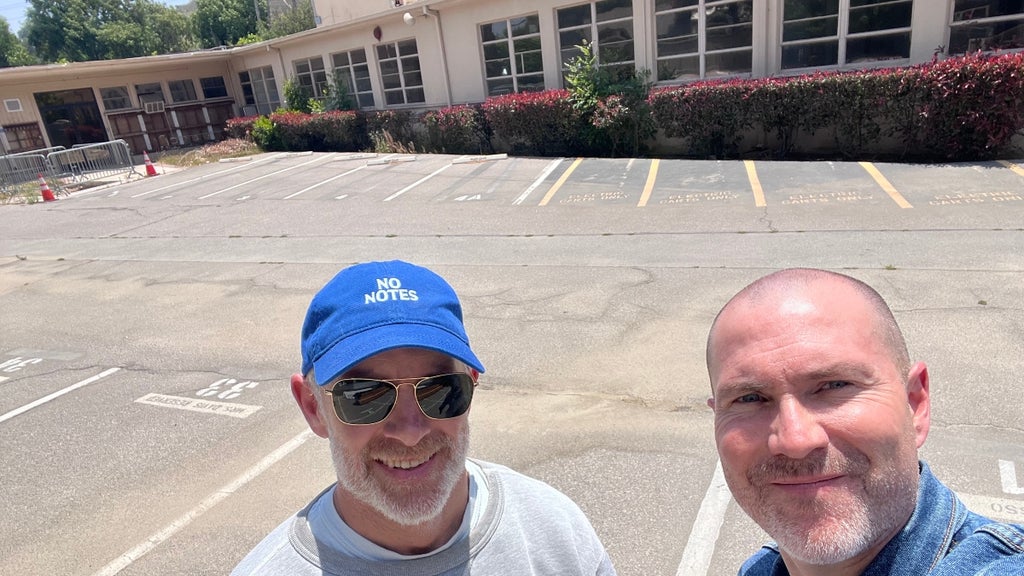
For inspiration, they turned to the original shorts by Jones and Maurice Noble, even making a pilgrimage to Termite Terrace, the notoriously ratty animation building where the original Looney Tunes and Merrie Melodies were produced, which still stands (sort of) on the Warner Bros. lot. They asked for the blessing of all the incredible animators that came before them. They got it. See the photo below.
“We wanted to honor that but we also wanted to think about what they would do now if they could,” said Grieve. “Because they would not be doing the same thing.”
“They were always evolving, and we want to do the same. I think the bar was always like. What makes it cinematic as well? Because it’s one thing to come up with the jokes and do the thing, but what’s going to make it feel cinematic when you’re in the theater? What makes it that event?” said Wilderman. “And I think that’s all the stuff that kept pushing us to hopefully surprise the audience with some of these choices, like the ‘Suspiria’-driven descent into madness that he has, things like that. We wanted to feel experimental with it, and but also deliver the classic feel. Because if you look at the Looney Tunes, when they’re in the heyday, it’s some of the most amazing artwork you’re ever going to see. Of course, there’s gags and all that, but I mean, it’s gorgeous. It’s a masterclass. These artists were incredible and we wanted it to feel the same.”
To that end they pushed the animation team to really have fun with the short – to add multiple limbs, something that is typically not a part of the computer-animation pipeline, and “smears” across certain actions, a painterly flourish that adds so much. Spike Brandt, a longtime keeper of the Looney Tunes flame, was instrumental in helping out the team, both in terms of making sure that the essence of the short remained in line with the franchise, but also in terms of animation – he would hand draw the spittle that was coming out of Daffy’s mouth when he was really enraged or adding dry brush strokes to shots that had already been rendered.
And while it was obviously a daunting task to live up to the legacy of the Looney Tunes, the filmmakers felt relieved following the Annecy screening.
“We were watching it from behind the screen backwards, but just to hear that response was so great. We felt all the love,” said Grieve.
“It was a little bit like If we build it, they will come. Everybody knew we were making it, but we were making it as a way to really test the characters and build a look on a journey towards eventually making the feature, and I think actually it was a great R&D tool, the way shorts used to always be used,” said Damaschke. “While we were making it, we’d screen it, and everybody loved it, and we started screening it for more people, and people was like, Oh my God, it’s super funny! It’s really great! But everything else has so much expectation on it. It didn’t sneak under the radar. We were going to Annecy, and I was like, ‘We have to honor our heritage and show our future, let’s start with the short and end with ‘Cat’ and fill in with everything else we’re doing.’ And hopefully by showing the work this year, people got to see it all, but I hoped and thought the Annecy crowd would be into it and see how great it is and how beautiful it is, and really see how much love and respect went into.”
“Daffy Season” will be attached to Warner Bros. Pictures Animation’s “The Cat in the Hat,” which is opening in theaters on Nov. 6.
