
Rod Davis Lurie’s World War II drama “Lucky Strike” is a throwback to the good old days when men were real men, movies were real movies, and you could just name a film after a brand of cigarettes and nobody cared. I mean that. Nobody cared. Nobody remembers “Harley Davidson and the Marlboro Man” now and nobody noticed when it came out in 1991 either.
The title isn’t a coincidence. “Lucky Strike” is a film about John Castle, a soldier played by Scott Eastwood, who gets stuck behind enemy lines at the Battle of the Bulge. He’ll try to make his way back to the Allies, and along the way, there are a lot of cigarettes. But don’t worry: Only the good guys smoke Lucky Strikes. Nazis hate Lucky Strikes. They say it out loud, right at the beginning, just in case you missed it. If you hate white supremacists, I guess you gotta smoke Luckies.
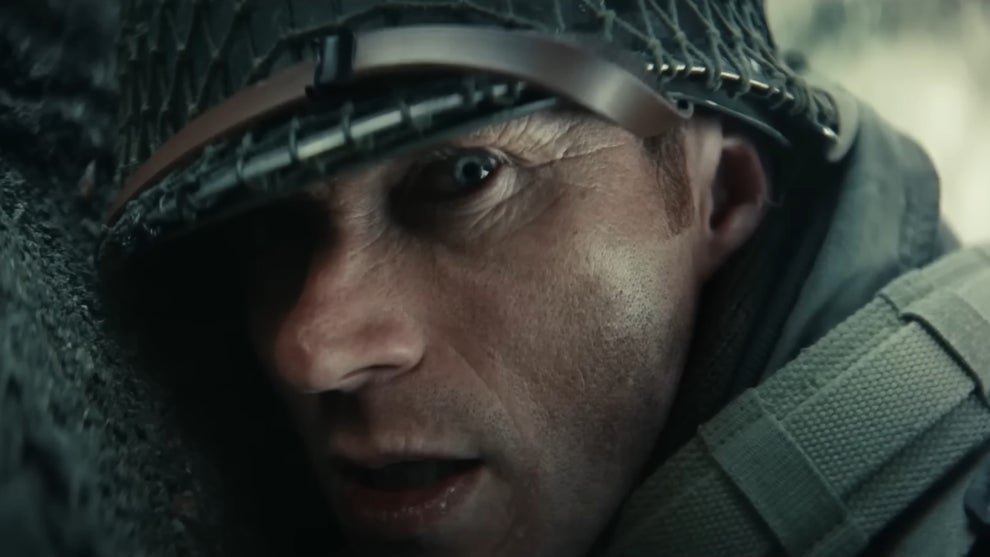
If you can get past how distasteful that is (it tastes almost as bad as Lucky Strikes), Lurie’s film is a muscular tale of survival, and casting Eastwood was a smart choice. He’s got the presence of a silent movie star, carrying one scene after another with a chiseled jaw and emotional eyes. Eastwood plays Castle like a nice guy trying to stay nice, probably because that’s the only justification for the scene where he’s fleeing the Nazis in a stolen tank and drives off a precipice just to avoid hitting a dog. You have to like a guy like that. Whatever brand of cigarettes he smokes, people should probably buy them.
The plot is thin by any reasonable standard. Castle’s unit has to blow up a Belgian road to stop the progression of German tanks. It doesn’t go as planned, and now Castle is the only one left. All he’s got is his radio, a heavy mechanical beast named “Lassie,” named after the famous fictional dog. I guess that’s the other reason Castle t-boned a Panzer. Who doesn’t love “Lassie Come Home?”

When it’s nothing more than an act of propulsion, pushing Eastwood’s stalwart hero from one dangerous situation into another, “Lucky Strike” is a capable World War II thriller. Lorenzo Senatore, who also photographed Lurie’s modern war film “The Outpost,” places extra emphasis on focal length, so outstretched enemy arms take on monstrous dimensions as they reach out to throttle Castle to death. Everything is an exaggerated threat to our hero. It’s hard not to root for him.
But it’s also hard to get past the screenplay, co-written by Lurie and Mark Frydman, which struggles to find a point. The prologue features a truck full of Black soldiers who are ambushed by Nazis, a flash-forward which “Lucky Strike” eventually catches up to, a framework which suggests Lurie is going somewhere and we should all be patient. Kwame Patterson steals the show in that opener, and it’s disappointing when he doesn’t turn up again for two-thirds of the run time. It’s extra disappointing when his return is anticlimactic, and does little to justify Lurie’s decision to tell his film out of sequence.
The point, it turns out, is revealed in the final moments. “Lucky Strike” is a story Castle tells to a civilian woman, played by Aunjanue Ellis-Taylor, over a spiked cup of coffee. She’s wildly overqualified to listen to Eastwood talk for nearly two hours, mostly off-camera. And while Lurie eventually reveals why she’s in the film and why Castle made a special visit to this stranger to tell his story, it’s not a natural conclusion to the movie we were watching. It’s a natural conclusion to a better, non-existent movie that would have placed more emphasis on key story elements, setting us up for Lurie’s emotional wallop. Instead, the film we get drops its message at the last minute like an afterthought, easily dismissed and forgotten.
And what about the cigarettes? They’re a plot point, they really are. Without them, Castle would be in deeper trouble. Pay attention to the first few scenes, when one soldier explains to another that he should always light the end of a Lucky Strike which carries the logo. Then pay attention to the climax, where it’s important to know that only a German soldier would burn the wrong end. Then remember the beginning again, where Lurie introduced the idea that no American soldier would ever burn the wrong end by [checks notes] showing an American soldier burning the wrong end.
Whoopsie-daisies, I guess. “Lucky Strike” falls apart at many key moments, revealing narrative flaws Lurie planted (or failed to plant) much, much earlier in the film. But between those missteps it’s a solid World War II action movie, anchored by an impressive lead performance by Eastwood, with an excellent presentation. Whether that’s a fair trade depends, I guess, on how much you love World War II movies. And how much you love those sweet, sweet, cancer sticks.
