
The messiness of “Supergirl,” DC’s second film in its new era after last year’s successful “Superman” redo, is reflected in the conflicting feelings one may take away from the film. It’s competently directed by Craig Gillespie, but inelegant and lacking the visceral action that made “Superman” so thrilling — most of the fights are blurry or marred by flying-related CGI or lazy fight tracking that follows along the edge of the action rather than the meat of it.
Ana Nogueira’s screenplay is generally thoughtful, but the ill-fitting inclusion of Jason Momoa’s Lobo character is borderline offensive, shoehorned into the narrative because the filmmakers don’t believe audiences will deign to show up for a superhero movie about a girl.
But despite its faults, the heart of the film remains intact through Milly Alcock’s Kara Zor-El, a girl pushing to do good, carrying a load of emotional baggage.
We think of the last two living Kryptonians as saviors rather than survivors. It’s easy with Clark — he came to Earth as a baby and, in a way, experienced the loss of his people second-hand. Kara Zor-El has never been as lucky. “Supergirl” explores the impact of experiencing that kind of devastation so young, and how it would create a different hero from Superman, like the comic run “Supergirl: The Woman of Tomorrow” before it. Not without some significant changes, though.
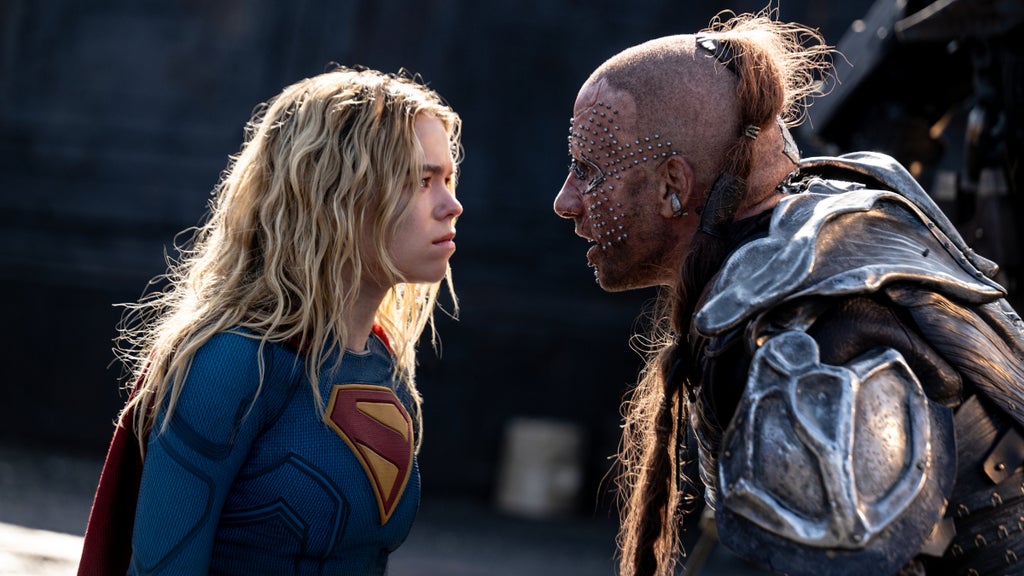
What doesn’t change is the impetus for the story. Kara (Alcock) stumbles across young Ruthye Marye Knoll (Eve Ridley) while on yet another bender — this time for her birthday. Ruthye is out for revenge after the evil Krem (Matthias Schoenaerts) ruthlessly slaughters her family for no other reason than that he can. Kara has no interest in being a hero, Ruthye is persistent… you know the drill.
Amidst the hubbub, Krypto is shot by a poison dart that will kill him in three days, which means the Girl of Steel has exactly 72 hours to save her dog and convince the young ward she didn’t ask for not to get blood on her hands so young.

Unlike his brother, Kara’s father Zor-El (David Krumholtz) and his wife Alura (Emily Beecham) chose preservation over destruction. When the rest of Krypton fell, Zor-El quickly activated a forcefield that created Argo — an arc for the surviving Kryptonians that would eventually poison them all. Before they send Kara to Clark on Earth, they tell their daughter to be good. Not necessarily nice, just good.
It’s the guiding light of the film, a stark contrast to the message Jor-El (Bradley Cooper) left his son in “Superman” and why “Truth. Justice. Whatever,” was a terrible tag line for “Supergirl.” You’re meant to head into the film believing that Kara Zor-El just doesn’t care when, in reality, she cares just as much as her belovedly oafish cousin. She just doesn’t know where to put it all.
The flashbacks to the moments on Argo are interspersed throughout the film rather than vomiting exposition on you all at once early on, which plays to varying degrees of success depending on the scene. They’re still exposition-heavy, sure, but they’re saved by Alcock’s performances of everything from youthful joy to debilitating grief as Kara realizes the last survivors of her people are crumbling around her, all succumbing to kryptonite poisoning.
Performances of the present play out just as well, with Ridley’s precocious Ruthye keeping everyone on their toes while Schoenaerts shoulders the weight of the endlessly vile Krem with ease. Jason Momoa is also as good as Lobo as everyone expected him to be. Problem is, he doesn’t go here.
Lobo is not a fixture in the “Woman of Tomorrow” comic storyline in any capacity, which is fine! There are plenty of reasons to shift from the source material. But if your way of doing so in a “Supergirl” movie is to have your title character saved by a god who will then calls her “ditz” before going about his day, you’ve misunderstood the vibe. It’s not an issue that Supergirl needed saving — Clark spends half of “Superman” on his back in one capacity or another — but it is a problem that your female-fronted film that also goes out of its way to treat the word “girl” with disdain features a scene where the lead woman is treated as less than and then as an object such glee.
The warts are apparent here, from the muddy fights to the Lobo nonsense, but if you’ll grant this critic the grace to contradict herself a bit: The final battle of “Supergirl” still brought me to tears. Kara steps into her own, there’s a clever needle drop that’ll get you right in the heart, and if you let yourself be swept away by the heroics of the moment, some of the ugly CGI slips away long enough for you to connect with the two girls fighting to discover who they want to be and where they go now that the universe has ground them down to nubs. It doesn’t excuse the technical errors of the filmmaking, but it does make it a fun finale in spite of it.

Because of the needle drop mention, it feels necessary to call out that yes, there will be “Guardians of the Galaxy” comparisons. Broadly speaking, though, those comparisons are lazy. There’s music and ugly space rogues that traffic kids (in this case, specifically girls, and for all of the horrific reasons you assume), an animal in peril, and some found family stuff if you squint, but vibes — especially on the whole “nice is different than good” and “learning what kind of hero you want to be” fronts — are much different.
Ultimately “Supergirl” is a competent continuation of the DCU, even if it isn’t as well made as “Superman” before it. A lot of the frustration stems from potential that it just can’t seem to reach in its action sequences, and the casual and unanswered sexism that has no business existing in a film centering on the Girl of Steel. Now that we have her origins out of the way, though, Kara Zor-El’s future looks quite bright.
And boy oh boy are she and Clark going to fight over their ideals so far as the dispensing of bad guys are concerned…
“Supergirl” opens exclusively in theaters on Friday, June 26.
