
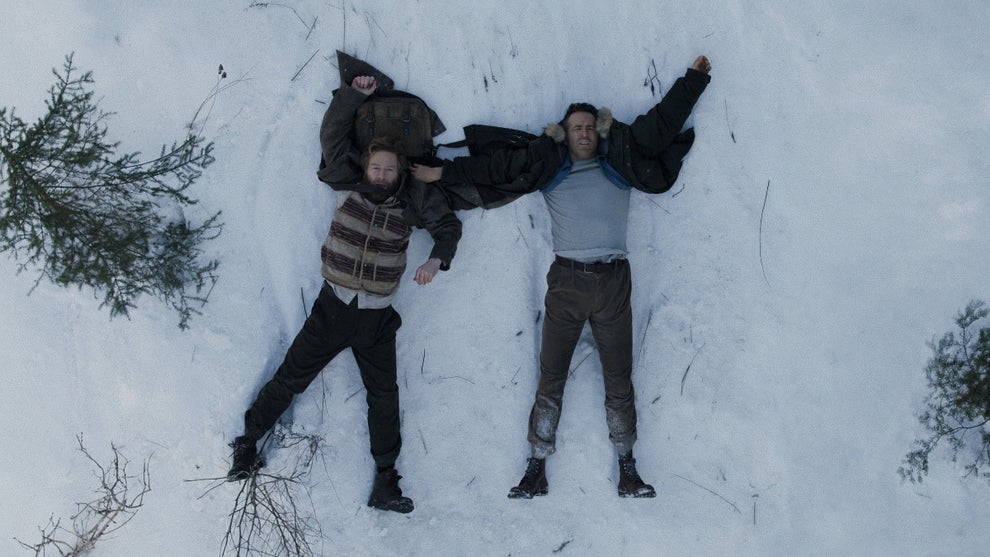
“Mayday,” now streaming on Apple TV, feels like an anomaly among modern blockbusters. Not only is it starry (led by Ryan Reynolds and Kenneth Branagh), but it’s just as smart and stylish. And unlike most Hollywood extravaganzas, it’s based on an original concept, not relying on some preexisting property or any well-established lore. And it’s one of the best, most entertaining movies of the year. (It was the #1 movie on Apple all weekend long.)
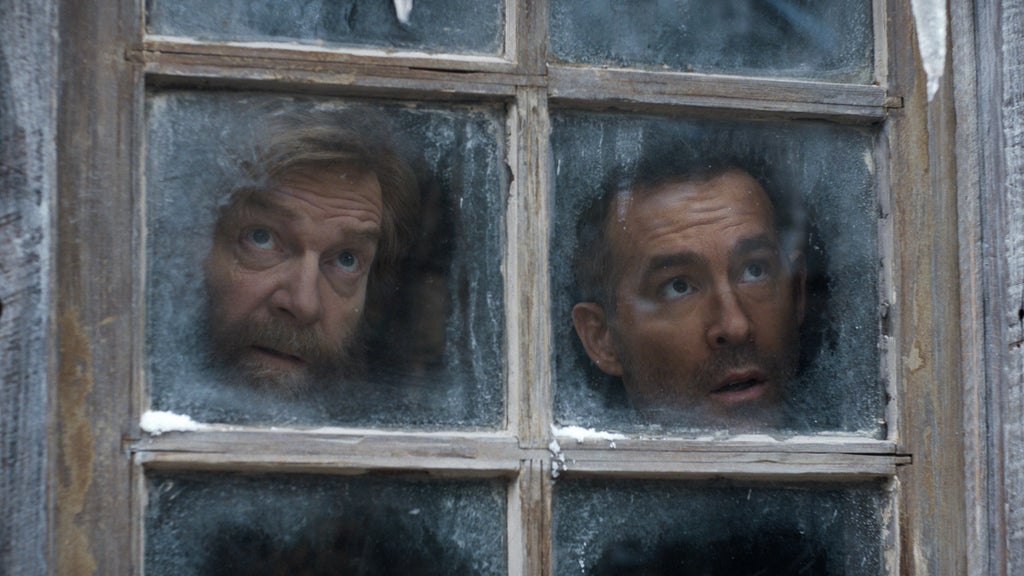
Reynolds stars as a U.S. Navy pilot (who has the very cool, “Maverick”-ish callsign of “Assassin”) who is shot down over Soviet Russia during the height of the Cold War, 1987. He falls into enemy territory when a former Russian spy (Branagh) stumbles upon him. Lucky for the American, this Russian wants to defect – and is obsessed with western pop culture. This leads the two on a wacky, madcap, somewhate desperate adventure through the USSR to get to safety. It’s a hoot.
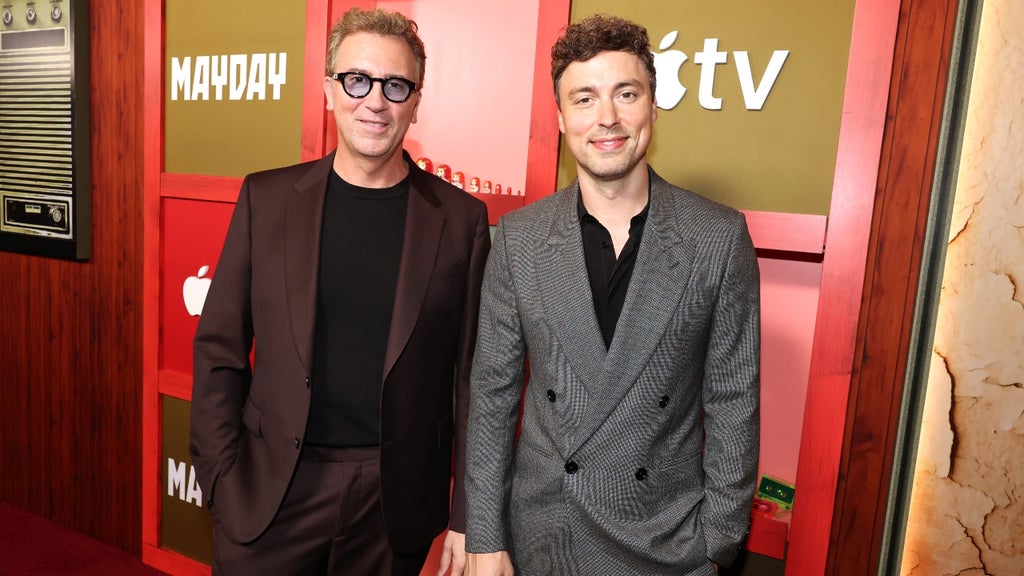
“Mayday” was written and directed by John Francis Daley and Jonathan Goldstein, the team behind 2015’s underrated “National Lampoon’s Vacation” reboot (simply titled “Vacation”) and 2018’s “Game Night,” which has rightfully taken its place as one of the best comedies in recent memory. They are filmmakers who make comedies and know a good punchline but also know the value in staging that punchline in a way that is exciting and fun for the audience to actually watch. (How many modern day comedies could be radio plays or podcasts they are so flatly directed?)
With “Mayday,” they are pulling off their greatest magic trick yet – a movie that is as big and elaborate as their last movie, 2023’s “Dungeons & Dragons: Honor Among Thieves,” but based on a fresh premise – one that harkens back to the mismatched buddy comedies of the 1980s, another type of movie that they simply don’t make anymore.
Had “Dungeons & Dragons” become the smash that it deserved to be, the duo would have been making a series of those movies (based on the astoundingly popular tabletop boardgame series). But things didn’t go that way.
Clearly, “Dungeons & Dragons” was a tough situation. It was a difficult shoot, made during COVID (it “had hit right as we were in our soft prep of the of the movie,” said Daley) and at a tumultuous time at the movie’s corporate parent Paramount.
“We went through about three regime changes at Paramount, which could have killed the film, but I think might have actually allowed it to thrive because nobody had that much of a sense of ownership over it, aside from us,” said Daley.
“We would just convince each new regime that they needed to continue making the movie, and they seemed to go along with it,” said Goldstein.
Shooting during COVID, Goldstein said, “took away a lot of what’s fun about movie making.”
“You just did your job and went back to your sequestered home,” said Goldstein. “It was sort of like government-mandated propaganda films,” said Daley.
“Then the post-production process was equally challenging, due to the fact that we were dealing with multiple companies and brands, and there was this very understandable mandate by all of them for this to establish itself as something new and fresh and different from the early 2000s film that was arguably not very good, and obviously the same challenge lay with us in trying to deliver something that we were very proud of,” said Daley.
When the movie came out, it got great reviews and an enthusiastic response from those who saw it. But there just weren’t that many who did. It grossed $208 million against a $150 million budget.
“I’m not ashamed to say that we didn’t love how it was marketed and we’re very proud of the movie,” said Goldstein. They also faced external headwinds like the juggernaut that was “The Super Mario Bros. Movie” opening around the same time and the fact that there was a nationwide boycott of the card game due to a change in the game’s licensing.
Goldstein said that the duo wrote a sequel that they would have loved to have made – and still might, should any studio want to put up the money for it. “They’re expensive movies and we understand the practical realities of it,” said Goldstein.
“Mayday” was born during the “Dungeons & Dragons” editing process, undoubtedly when the pair were reviewing the same shot of an overweight dragon for the 900th time.

“We had this idea for a comedic slant on the conceit of ‘Misery,’ or at least the setup of ‘Misery,’ and the idea of someone being stuck with the sycophant of that person and not really knowing their true intentions – that’s how the idea started to form for us,” said Daley. “Obviously, then we knew we needed to build it out and make it just bigger, and that’s when we added this ‘Midnight Run’-style buddy adventure action movie component from the second act to the to the end.”
Goldstein said that he gives a lot of credit to Skydance, which produced the movie, and Apple, for backing a movie that isn’t based on a bestselling book series or videogame.
“It’s just like in the old days where you got to make a movie based on nothing more than an idea, which shouldn’t be as rare as it is. But it’s increasingly harder to get those made, especially at this scale. It was a big, ambitious movie,” said Goldstein. (The success of the Skydance-backed “Top Gun: Maverick” must have eased some of their concern, said Goldstein, since “we’re playing in that same sandbox.”)
Reynolds’ involvement also helped a lot. They had a meeting with Reynolds because Reynolds, like any sensible person, is a huge fan of “Game Night.” Goldstein and Daley realized that if they got the star attached, they could probably get the movie made. “He liked the idea enough to attach himself,” said Daley. They took it to Skydance with the star’s involvement and Skydance “greenlit it shortly after we finished the script,” said Daley.
A bigger question mark was whether or not “Mayday” would get a theatrical release, given that a handful of Apple titles (including “Napoleon,” “Fly Me to the Moon,” “Killers of the Flower Moon” and, most successfully, “F1”) have had wide theatrical runs.
“We knew going into it that there wasn’t any certainty as to whether this would get a theatrical release, but I think their mandate shifted a little bit in the last year or so in terms of what they wanted to roll out to theaters. I think that’s kind of what informed the decision to make it a purely streaming film,” said Daley.
“Obviously, it’s fun to watch something in a theater with the group mentality, but there is also an upside to the fact that this is a streaming film. It takes, for one thing, a lot of the pressure off of relying on a smash release. But also, it’s unclear if a movie of this size would have been able to get made without the backing of a juggernaut like Apple.”
Daley and Goldstein are both quick to point out what great partners Apple were in making “Mayday” – that they were supportive but also hands-off. We wondered if the movie could have been rated-R, which would have more closely aligned it to the movies that it riffs on like “Midnight Run” or “The Last Detail.” The filmmakers said they didn’t get an edict one way or the other.
“They really did believe in what we had pitched, what we wrote and what we were shooting, and got behind it. It wasn’t like we were every butting heads or coming at the movie from different directions or anything like that,” Goldstein said. Daley said Skydance was just as supportive.
Perhaps the biggest feat of “Mayday” is the fact that it’s a studio comedy that actually looks good. You can feel them using everything they learned on “Dungeons & Dragons” and “Game Night” to craft something that has a real style to it – a tactility and texture that is gone from most mainstream studio comedies (particularly those released by streamers). They reunited with their frequent cinematographer Barry Peterson on the film.
Goldstein said that they shot actual fighter jets in the south of France, zooming over the Mediterranean and digitally re-skinned the planes to be period-appropriate American fighter jets. “Everything you see the fighter pilots doing in our movie, real planes did,” said Goldstein.

“I would say that it sadly has become a bit of a low bar with comedies in terms of the visual aesthetic,” said Daley. When they made “Game Night” they decided to shoot it like a proper thriller, even though it was a comedy. “Dungeons & Dragons” is shot like a fantasy epic, even though it is also a comedy.
“We decided to employ the same level of preparedness and attention to detail that we possibly could on this film as well. And when you have the resources and you have a crew of people that are all incredible at their jobs, why not spend the time trying to make the film as good as you possibly can? That’s the bizarre thing to me about so many comedies is it doesn’t mean it has to look bad,” said Daley.
“I think part of what John and I do is we work really hard on getting the script to a place that we have confidence in it before it ever goes to the actors,” said Goldstein. “And then, of course, we want to hear from the actors and make sure it’s comfortable for them and natural and in their voice and all that, but we don’t rely on a lot of improvisation because allowing improvisation is kind of directly opposed to pre-planning your shots and your writing and all that.”
Daley jumped in: “That being said, we also don’t want to stifle our actors in any way, so it is always a finding a healthy balance between getting done what we had planned on and also finding something new on the day.”
A lot of the lousiness of studio comedies has been blamed on the nature of improvisational comedy, which is weird because, as Daley points out, many of Judd Apatow’s films look incredible. (Spielberg’s regular cinematographer Janusz Kaminski shot “Funny People” for crying out loud.)
“I think people took that formula and abused it since, where there was a lot of improv-heavy performances that required cross coverage, so the lighting isn’t as good, the blocking isn’t as interesting,” Daley said. “It created this sense that comedies are lesser than other films, and that is a travesty to me because I still consider comedies to be probably the hardest genre to pull off.”

Something else that was hard to pull off – licensing the various pieces of pop culture and 1980s ephemera that is sprinkled throughout “Mayday.” A prominent use of a clip from “Top Gun,” for example, had to get Tom Cruise’s approval.
“I don’t know how much he watched or read but he was comfortable enough to say, ‘Sure, go use it,’” said Goldstien.
“I think he wanted to make sure we weren’t making fun of the film, understandably, and we treat the film with as much reverence as Kenneth Branagh’s character does. It is a touchstone in American pop culture and one that truly inspires Kenneth’s character to go on this journey with Ryan,” Daley said. “[Cruise] was totally game. There was no pushback at all.”
“We also had to get Springsteen’s permission for the song,” said Goldstein.
Ah, yes, Bruce Springsteen songs. More famously easy-to-clear pieces of media. There are three songs from Springsteen’s landmark “Born in the U.S.A.” featured in “Mayday” – the title track, “I’m On Fire” and “Downbound Train.” Maybe there was a discount for buying in bulk?
“It was always Springsteen because we were thinking, Who is the most iconic American performer of that era? He was definitely the most expensive,” Daley joked.
“It also felt like something you could buy Branagh’s character listening to. He probably wasn’t listening to the Bangles or something,” said Goldstein.
As for the duo’s next project, they have been tasked with reviving the “Star Trek” cinematic franchise, which has been oddly moribund for more than a decade, with the last theatrically released feature 2016’s “Star Trek Beyond.”
“I think we, for better or worse, tend to gravitate toward things that are difficult to pull off, ‘Star Trek’ being one of them – that it has been established so permanently in the minds of the public as this this entity, and we knew we wanted to do right by the fans of the franchise, but we also knew we wanted to tell a story that hadn’t been told before from a lens that hasn’t been portrayed before,” said Daley. “Without saying much, I think it is probably the most dramatic thing we’ve ever written. Certainly the least comedic, but obviously our sensibility is still there, and it does not have anything to do with Kirk or Spock or any of the legacy characters that have been established.”
“In the same way that we took on ‘Dungeons & Dragons’ because we loved it and we wanted to try to bring it to people who don’t necessarily see themselves as the target audience. That’s kind of how we feel about ‘Star Trek,’” said Goldstein. “I watched the original ‘Star Trek’ series endlessly as a kid, and then I discovered ‘Next Generation’ when I was older. I would describe myself as a true Trekkie, but I also don’t want to just make this movie for Trekkies. I want it to be something that crosses the blood brain barrier of the audience and gets some non-sci-fi people.”
“I think we’re driven to challenge a little bit of the preconceptions of what Starfleet represents in the Trek world, and how an institution like that could face corruption, if overlooked for too long,” added Daley.
We wondered if having to resuscitate the “Star Trek” brand was a daunting proposition. Or if it was freeing because there hasn’t been a big screen event in so long. (It will be over a decade since the last feature by the time their “Star Trek” film comes out. The previous longest gap between movies was in between the last of the “Next Generation”-era films, “Nemesis,” in 2002, and the first of the J.J. Abrams era, in 2009. And that was only 7 years.)
“It’s a little bit of both,” said Daley. “It’s the same challenge we faced when we wrote ‘Spider-Man: Homecoming,’ where it was breathing new life into something that had existed for a long time, but also trying to stay true to the DNA of what had come before.”
“We don’t see our job as like we’re going to do it better than anyone has done it before. We just want to make something that’s great and that will appeal to modern audiences,” said Goldstein.
In other words – they will boldly go.
“Mayday” is on Apple TV right now.
