
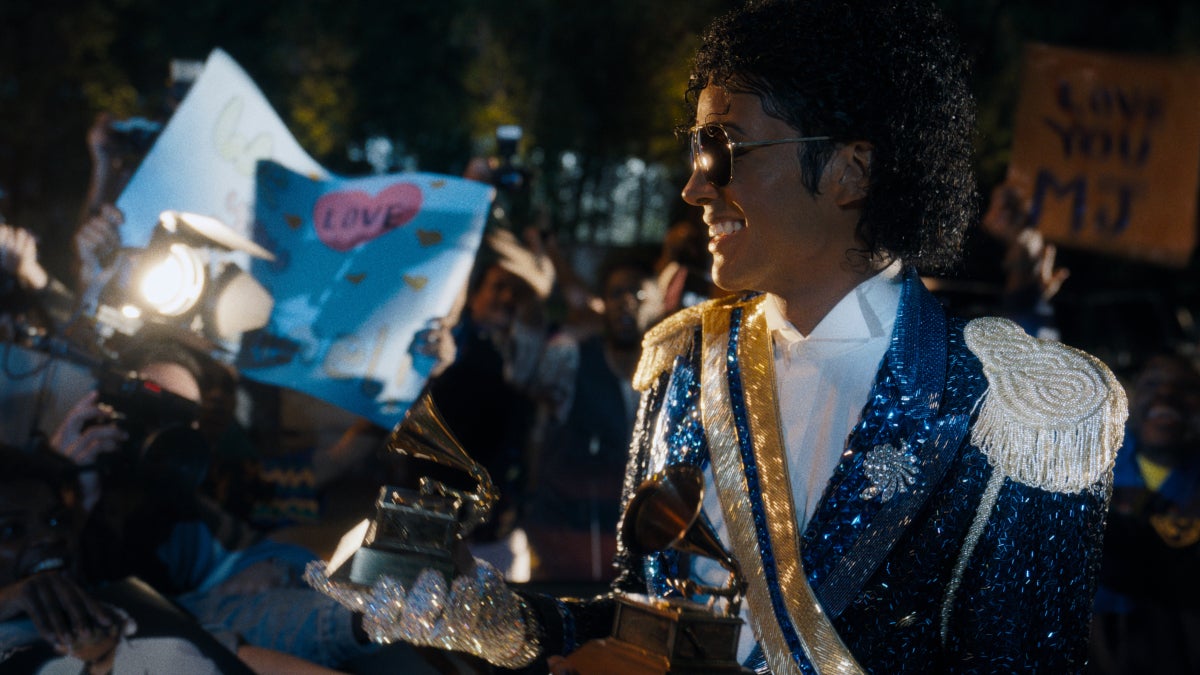
In “Michael,” pop star Michael Jackson’s family and confidantes tell him repeatedly about his destiny of reaching an audience of millions.
The Lionsgate-Universal biopic, directed by Antoine Fuqua, has achieved a destiny of its own, fulfilling the hopes of its distributors and exhibitors of becoming a tentpole box office hit and giving the theatrical market a perfect springboard for the summer season.
With a $97 million domestic and $217 million worldwide launch, “Michael” now holds the opening weekend record for any biopic in film history before inflation adjustment, as well as the biopic record for 64 of the 83 global markets in which it was released.
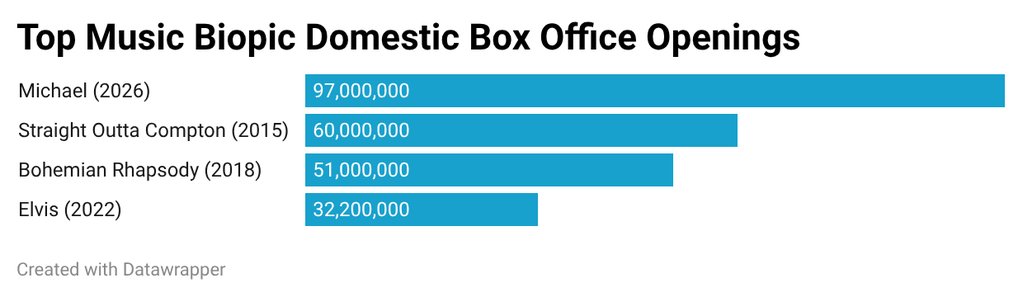
That global record previously belonged to Christopher Nolan’s “Oppenheimer,” which opened to $174 million worldwide in July 2023, while the domestic biopic record belonged to Clint Eastwood’s “American Sniper” with a $90.1 million 3-day opening in January 2015.
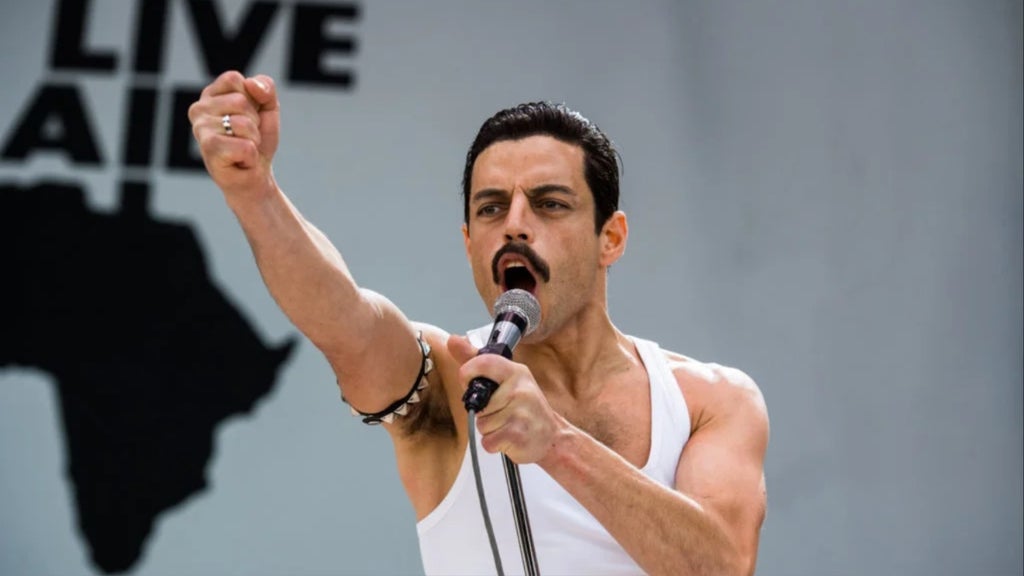
But the closest comp to “Michael” is another Graham King production, the Freddie Mercury biopic “Bohemian Rhapsody.” The film was roundly criticized for downplaying Mercury’s sexuality and battle with AIDS in favor of running through Queen’s catalogue of hits, but it was a box office behemoth, grossing over $910 million worldwide. It even picked up four Oscars.
The release of “Michael” came amidst a majority of negative reviews from film critics, who were impressed by Jaafar Jackson’s performance as his famous uncle but not much else. The tumultuous production also had to weather costly reshoots paid for by the Jackson estate after it had discovered a clause from a settlement with Jackson’s 1993 sexual abuse accuser forbidding the mention of the accuser in any way in a film, forcing the removal of any mention of the case — which played heavily into the original version’s third act — from the film.
But that meant nothing to audiences, who gave the film an A- on CinemaScore, a 97% Rotten Tomatoes audience score, and a 90% PostTrak survey score. Though “Michael” will get some competition for its primarily female audience from “The Devil Wears Prada 2” next weekend, the recent success of “The Super Mario Galaxy Movie” and “Project Hail Mary” alongside each other shows that the public has gotten so much into the habit of moviegoing that the market’s capacity to support multiple hits may be increasing.
What this weekend shows, above all else, is the disparate views of what fans, critics and the estates and catalog owners want from these music biopics. Namely, the key to success with audiences when making a music biopic is simple: play the hits. Estate approval meant the use of all of the King of Pop’s music within the film, which spurred videos on TikTok and YouTube of audiences singing along and dancing in front of the screen. Even with the controversy that will forever surround Jackson’s legacy, the fundamentals of the genre’s appeal played out with a fanbase that stands larger in 2026 than any musician that has gotten the biopic treatment, from Elton John to Bob Marley to even Elvis Presley.
The success was also good news for Lionsgate, which has been shaking off an abysmal 2024 box office run with a spate of wins lately: “The Housemaid” was a huge hit in December, climbing to $402 million worldwide and spurring an immediate sequel that will bring Sydney Sweeney back to the fold; “Now You See Me: Now You Don’t” successfully revived the magician franchise in November with $244 million worldwide; and the Lionsgate-produced Netflix movie “War Machine” is one of the streamer’s biggest films of the year so far, inching towards the all-time chart.
And now there’s “Michael,” which not only shattered the biopic box office record but now has Lionsgate thinking they wanna be startin’ a franchise with a sequel that could continue the story — and include some of the scrapped footage from the original third act.

The critic/audience divide
As the early signs of a huge weekend came in for “Michael,” two of the late star’s nephews, TJ and Taj, gloated with fans over the divide between the critical and audience reception towards the film.
“Don’t ever listen to ‘professional’ critics when it comes to my family,” TJ Jackson said on social media. “Ever.”
The most caustic charge leveled by Jackson’s nephews and fans towards critics is that their reviews are part of a years-long effort by the media to turn the public against MJ, and their dislike of the film is simply because of the removal of any scenes referencing the abuse allegations. For some critics, that was indeed a major criticism.
“Most movies about musicians follow an artist’s rise, fall and eventual redemption,” wrote WBUR’s Sean Burns. “‘Michael’ is all rise — the ascension of a holy being to the top of the universe. The movie ends in 1988 with Jackson’s triumphant solo ‘Bad’ tour, which is kind of like ending an O.J. Simpson biopic with him winning the Heisman Trophy.”
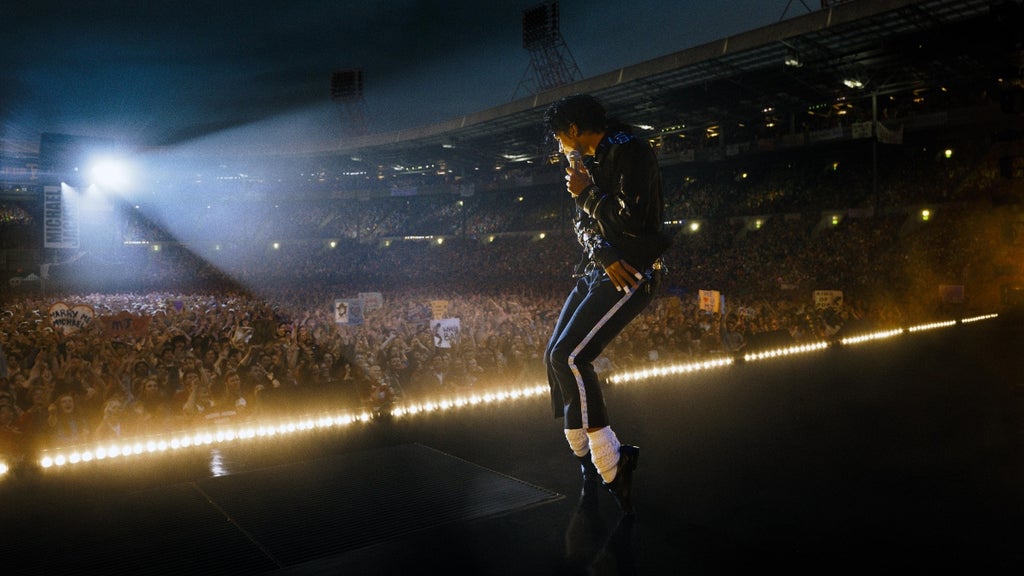
But for other critics, their issues with “Michael” weren’t what unsightly details were excluded from the film but the quality of what was left behind. Some reviews lamented that despite Jaafar Jackson’s strong performance, “Michael” did little to reveal anything new about its subject as an artist or a person, a common checkbox of quality that other biopics have earned critical praise for ticking off.
“Jackson was one of the most transformative artists of his era but you never really get any sense of that here,” wrote independent critic Peter Sobczynski. “You would think, for example, that the ambitious production of the ‘Thriller’ album would be a key element of the film, but it is yet another chunk of his life reduced to a montage that offers no insight into his creative process.”

But what we’ve seen time and time again, not just with “Michael,” is that the core appeal of music biopics no matter who the subject is or what the skeletons in their closet may be isn’t the insight into the human behind the music, but simply seeing and hearing the greatest hits play out on the big screen.
Like “Wicked” fans eagerly waiting to hear Ariana Grande sing “Popular” or Taylor Swift fans gathering in theaters to sing “Love Story” when “The Eras Tour” hit the big screen, the songs are what matter most. Seeing MJ come back to life through his nephew’s faithful recreation and the power of movie magic was all the fan-heavy opening weekend audience needed to turn auditoriums into a dance party.
Sometimes, biopics find a way to hit that balance between critics and audiences. The 2004 Ray Charles biopic “Ray” got Jamie Foxx an Oscar for a performance that included crowd-pleasing renditions of “Hit the Road, Jack” and “Georgia” but also explored the singer-songwriter’s struggles with heroin addiction.
“A Complete Unknown” stands as Searchlight Pictures’ highest-grossing film since the Disney-Fox merger for Timothee Chalamet’s performance as Bob Dylan that included performances of “Like a Rolling Stone,” “It Ain’t Me, Babe” and “Times They Are A-Changin’” but also pulled no punches in showing how Dylan’s fight to preserve his artistic freedom in the face of folk music fame alienated him from his peers and many of his fans.
But we’ve also seen films try to depart from the formula of playing the hits and suffer at the box office for it, most recently “Springsteen: Deliver Me From Nowhere,” which had a couple performances of The Boss’ “Born to Run” and “Born in the U.S.A.” but otherwise focused on Springsteen’s trauma from an abusive childhood to an even greater degree than “Michael,” which made Jackson’s own fear of standing up to his domineering father Joseph its main source of conflict.
“Deliver Me From Nowhere,” with Jeremy Allen White as The Boss, ended up being a bust, making less than half of what “A Complete Unknown” made with just $45.2 million worldwide.
Putting aside the decades of animosity that MJ fans feel towards the media, the disparity between critics and audiences on Rotten Tomatoes isn’t that different from the one for “Bob Marley: One Love,” a biopic about a far less controversial musical icon that was similarly criticized for not delving deeper into Marley’s artistry, but got a thumbs up from fans who enjoyed the musical performances.
The same was true for the glossy version of Freddie Mercury’s life in the global smash “Bohemian Rhapsody.”
Combining the “greatest hits” formula with a global fanbase that has endured years of scandal and an abrupt death, “Michael” found the path to biopic box office success and sprinted at an unprecedented pace.
These biopics don’t often get referred to as franchises due to the lack of sequels — though “Michael” may still get one as Fuqua’s film had been intended as the first half of a two-parter — but the core appeal isn’t all that different from something like the “Mario” films, driven by fans who value faithful adaptation of a known IP and want the dopamine rush of recognizing something they love on a big screen.
And when Hollywood supplies that rush, they are rewarded with a windfall.
