
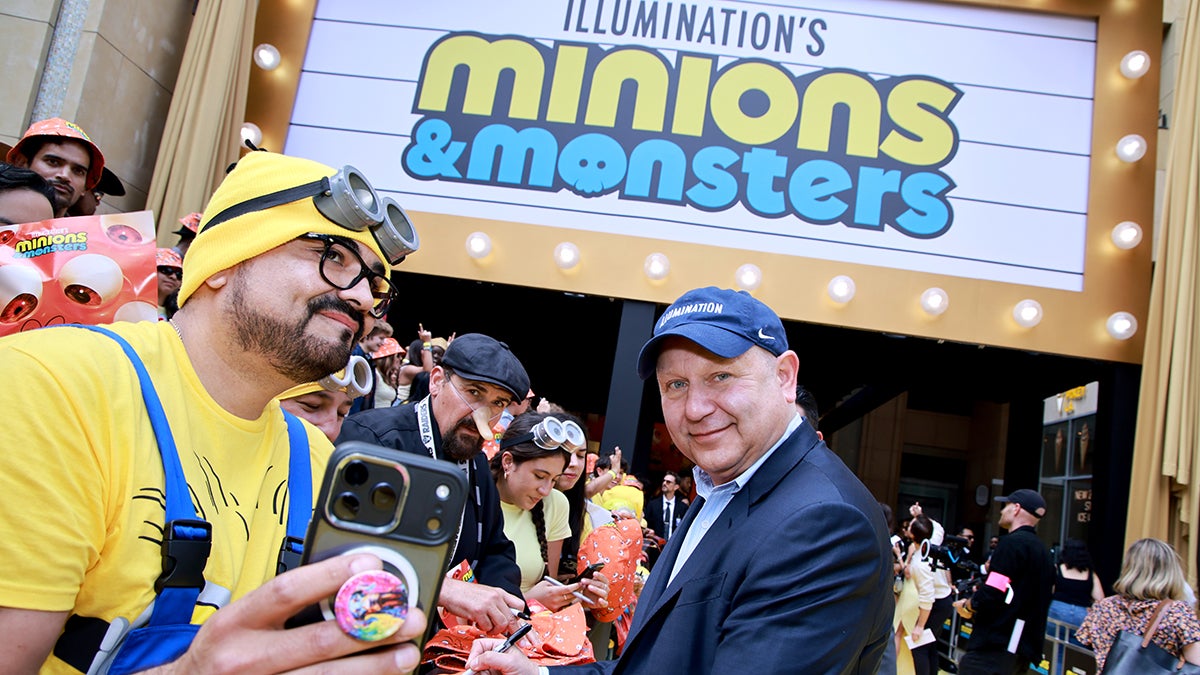
Illumination is one of the undisputed kings of modern animation.
The studio was founded in 2007 by producer Chris Meledandri. Earlier in his career, he had worked with producers Mark Gordon and John Hughes and run an animation division for 20th Century Fox that, following the costly Don Bluth failure “Titan A.E.,” eventually led to the highly profitable acquisition of Blue Sky Studios, which birthed the successful “Ice Age” franchise. After he left 20th Century Fox Animation, he founded Illumination under Universal Pictures, and embarked on a truly unprecedented spree of hit animated titles, beginning with the studio’s first film, 2010’s “Despicable Me.”
Since then, Illumination has become one of the core pillars of Universal, with an impressive batting record of hits vs. misses, including April’s “The Super Mario Galaxy Movie,” the first $1 billion hit of the year. This week, the latest film in its “Despicable Me” franchise, “Minions & Monsters,” hits theaters just in time for the Fourth of July holiday.
There’s a certain recipe for success that Illumination follows. Its movies are responsibly made, with each one costing around $75 million (compare this to Pixar’s “Toy Story 5,” with its rumored $250 million budget) out of Illumination’s studio in Paris (formerly known as Mac Guff), with an average gross of around $651 million.
“Minions & Monsters” cost slightly more (around $85 million) but it’s arguably the studio’s best movie yet — funny, for sure, in that whip-bang Illumination way, but also more sensitive and steeped in film history. This is an unexpected layer to a franchise whose consumer products line has popularized a “fart gun.” Yes, there is a “fart gun” being sold in connection to “Minions & Monsters,” even though no such weapon appears in the actual film. Hey, whatever works.

Meledandri, who has a more warm, open demeanor on the press tour for “Minions & Monsters,” sees it as something of a breakthrough film for Illumination, and called it the ideal template for his movies going forward. And it’s easy to see why. Illumination has made 16 animated features but only one (“Despicable Me 2”) has ever been nominated for the Best Animated Feature Oscar. “Minions & Monsters” could be the second.
“What I meant by that comment is that at a moment in time when we can look backwards and be tempted to reside in the comfort of past success, that we shake that off and do things – whether they’re continuations of past films or new stories or adaptations — that are surprising,” Meledandri told TheWrap in an interview in a hotel room in Annecy, France, the night before “Minions & Monsters” had its jubilant world premiere.
Meledandri continued: “I find that the best pathway to that is through the creative expression of a filmmaker. And so to me this movie embodies what I think is actually a very personal film for Pierre. Yes, these characters have existed before, and they’re quite popular, but the journey of this film to me is utterly surprising and it’s filled with discovery.”
He’s referring to Pierre Coffin, the visionary French animator who directed the first three “Despicable Me” films and the first “Minions” spinoff film who also voices the Minions. For years, he’s been away from the franchise, eventually pulled back to direct and co-write (with Brian Lynch) “Minions & Monsters.”
He’s also sitting on the couch next to Meledandri during the week of the annual Annecy International Animation Film Festival.
A fresh take on the Minions
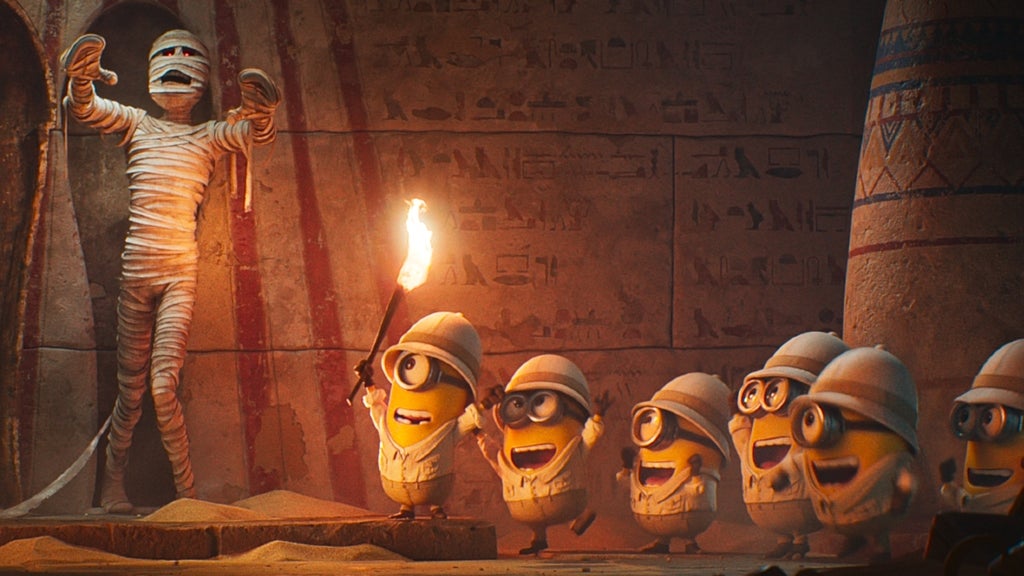
Coffin said that Meledandri pitched the central concept of “Minions & Monsters” — about a group of new Minions who are in Hollywood in the 1920s and decide to make a monster movie, with actual monsters — over a weekend a few years ago. The idea sparked something in Coffin. “I just had so many ideas, I thought, Oh maybe,” Coffin explained.
In addition to ideas about the movie’s story, he started thinking about how he could make the movie different — light it differently, with more classical Hollywood lighting; design it differently by giving the Minions more expressive mouth shapes; animate it differently, empowering the animators to push for different expressions, more nuanced emotional takes.
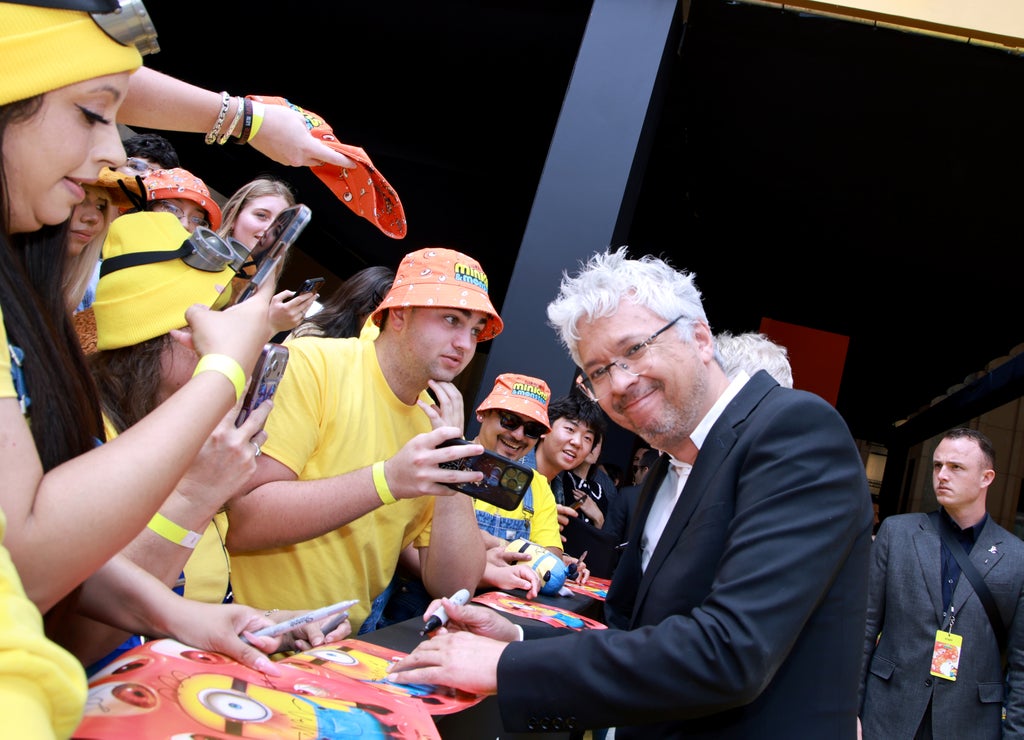
He gave the example of asking the animators to do something different when making the Minions wait instead of just looking at their watch. “The idea is to find another idea than the watch thing to show how impatient he is, how he’s been there for hours. That’s my goal in life is to try to find those other ideas and to find the proper project to do it in,” Coffin said.
“Minions & Monsters” was that proper project.
“This Minions movie was just perfect – it arrived at a perfect time, it arrived with the perfect idea, the subject matter was an instant yes,” Coffin said.

The film came together quickly for an animated movie, taking just three years. For comparison, Pixar’s recent “Hoppers” took six years to make.
“Each film has their own rhythm and at some point they declare themselves,” Meledandri explained. He said that COVID “did a number on our schedules.”
“We were used to a certain cadence of output and then, all of a sudden, three-quarters of the studio was remote and you’re pausing work and you’re changing the nature of how you do it. The schedules have become quite irregular,” Meledandri said.
Future slate
As for what the studio is percolating on, he knows a few things – there will be subsequent installments in the “Sing” and “The Secret Life of Pets” franchises, along with likely sequels in the “Super Mario Bros.” and “Despicable Me”/”Minions” sagas (though they haven’t announced anything yet). They are working on an animated “Barbie” movie with Mattel. And it just announced an original film for next year, “Not Alone,” starring Timothée Chalamet and Selena Gomez.
Meledandri also teased that Benjamin Renner, who made “Migration,” is working on something at the studio. And that they are in frequent contact with Spanish animation legend Sergio Pablos, who had the original idea for “Despicable Me.”
“We have a pretty good idea, given how long this all takes, of what the next four years look like. Not exactly, but we have a pretty good sense of it. I love what Pierre, you’re saying about how you approach the animators, from that standpoint of going for what’s unexpected, because I find myself as an audience member recoiling from predictability,” Meledandri said.
“Predictability can come in many different forms — it can certainly be narrative predictability, but it is also, as Pierre is saying, behavioral predictability too. There are lots of tiny decisions that can add up to a very special experience. What I find, because I spend a lot of time watching audiences watch movies, especially with our movies, is that you can actually see it in the audience. They reward you for those unexpected choices.”
Visual variety is something that can obviously engage an audience, as we’ve seen over the past few years with movies that have looked quite different than traditional animation and different than other, similarly experimental movies, everything from “Spider-Man: Into the Spider-Verse” to “The Mitchells vs. the Machines” and “The Wild Robot.”

In “Minions & Monsters,” the movie starts out with rubber hose versions of the characters before launching into a title sequence that places the Minions in different classic films.
“The success that we’ve enjoyed on the ‘Despicable Me’ and ‘Minions’ films have let us completely cut loose on this film,” said Meledandri.
But is visual adventurousness something that will be key to the studio’s output moving forward?
“When I made the decision to come to France, a lot of that decision really came down to work that Jacques Bled, who runs Illumination Studios Paris, who was the founder of the original studio Mac Guff that has become Illumination Studios Paris, and he showed me Pierre’s work that I just immediately connected with,” Meledandri said. “I think that if there’s anything to me that creates continuity of style, it’s the French influence that you see throughout our different films, but we’re not making an effort to maintain stylistic consistency. Even if you just look at ‘Migration’ or ‘Super Mario’ or ‘Minions & Monsters,’ visually each one is quite different.”
Original bets
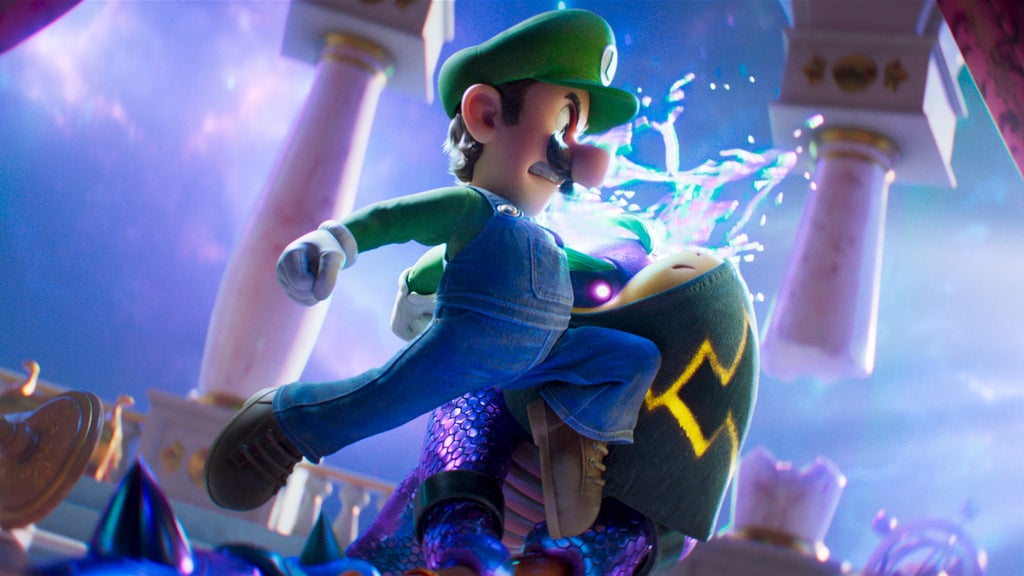
Over the past few years, the emphasis at Illumination has been on sequels and IP-based projects like the “Super Mario Bros.” partnership with Nintendo. That’s something that Meledandri acknowledges and plans to address.
“If I had to be self-critical, I would say that we haven’t really dedicated enough time to really thinking about how we continue to make original films, because what ends up happening is movies, they take energy, and so there are so many things that are happening right now at the studio that demand not just my energy but the collective energy,” Meledandri said.
“But we have to continue to tell original stories, no matter how much the current theatrical film world makes it easier to make films that are based on preexisting intellectual property. The nature of marketing has changed so much that trying to take something that no one’s ever heard of and get it to work theatrically in such a short window, you have to come out of the box on opening weekend on a level that will support continued attendance. With the changing nature of marketing, it’s made original filmmaking for theatrical box office or for theatrical exhibition harder.”
Part of the studio’s philosophy is attracting great filmmakers, like Coffin (“The movies are always going to be, at the core, a reflection of the talent of the filmmaker,” Meledandri said), and also giving new filmmakers a chance — Meledandri estimates that over the past 15 years, they’ve given around 40 filmmakers the chance to direct or co-direct a short or feature. He said developing filmmakers in-house has been “a big push,” oftentimes through the short films that Illumination develops.
“Many of our films are directed by people who have tremendous talent and expertise but are directing a feature or a CG feature for the first time. It’s a process of exploration,” Meledandri said.
Even with all the excitement around “Minions & Monsters,” including that rapturous response at Annecy, Meledandri said that he hasn’t started thinking about what’s next for the “Despicable Me” or “Minions” movies — yet.
“There’s always conversations going on. I think it’s about waiting for something to fall into a place where all of a sudden you go, Oh my gosh, that’s it. Sure, it’s exciting, and you don’t know when that’s going to come,” Meledandri said.
I asked if he would put a movie into development just because the schedule demanded it.
“We’re not going to do that. I can’t say that in the past I didn’t do that,” Meledandri said. “It was never anybody asking me, it was really just that I was so excited. I was excited that we were making movies that audience was loving.”
At the time that we spoke, he guessed that there were between 800 and 1,000 people working for Illumination. “Keeping them working is important to us,” the CEO said.
Still — he wouldn’t just make a movie to fill a date. Or sell more fart guns.
“At this point there’s no chance of that and certainly, for me, at this stage of my life, would I just make it to make it,” Meledandri said.
