
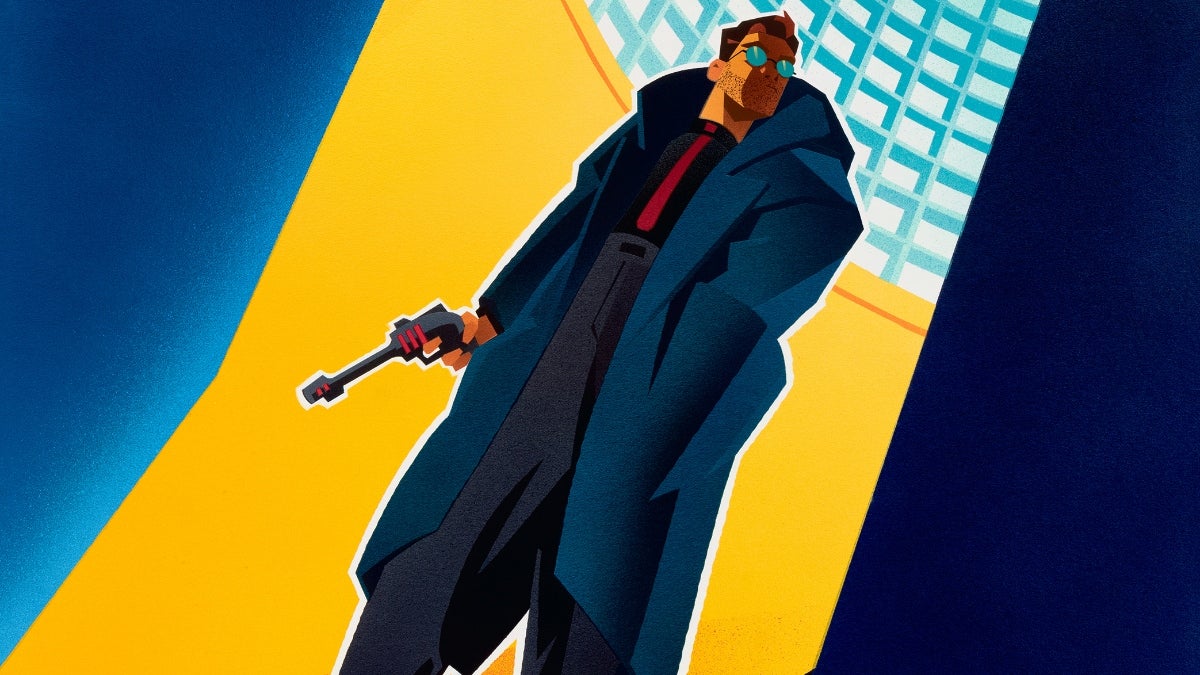
Earlier this spring, the team behind “Ray Gunn,” Brad Bird’s original Netflix animated film that’s set in a sprawling alternate history 1930s where jet packs, flying cars and, yes, ray guns, are everyday objects, saw an opportunity. Greta Gerwig’s highly anticipated “Narnia: The Magician’s Nephew,” had secured a Netflix-first theatrical Imax presentation but was running late.
The streamer had shifted Gerwig’s movie to February 2027 and awarded it an even bigger theatrical run, leaving the spot previously held for “Narnia” – a two-week Imax slot at Thanksgiving before a December premiere on the streaming service – open and available for the right suitor.
“Ray Gunn,” the team argued, was the perfect candidate.
Bird was well-versed in Imax exhibition, having lobbied successfully for Paramount to open his “Mission: Impossible – Ghost Protocol” in Imax theaters for an exclusive “roadshow” run before the movie opened wide a week later. It was a move that was so popular that all subsequent “Mission: Impossible” films have had an Imax component to their release. Animation is also hugely popular at the box office, another marker in “Ray Gunn’s” favor.
But instead of “Ray Gunn,” which features Sam Rockwell as the voice of the titular private eye, Netflix went with David Fincher’s still-untitled “Once Upon a Time in Hollywood” sequel, with Brad Pitt reprising his Oscar-winning role as former stuntman Cliff Booth.
Fincher, according to two individuals with knowledge of the situation, was not lobbying for the big theatrical release; his last two movies were for Netflix and he is currently developing another movie for them. He knows that they will be streaming movies, first and foremost.
But the “Ray Gunn” camp was advocating for a theatrical release – for this theatrical release, specifically, according to those same individuals.
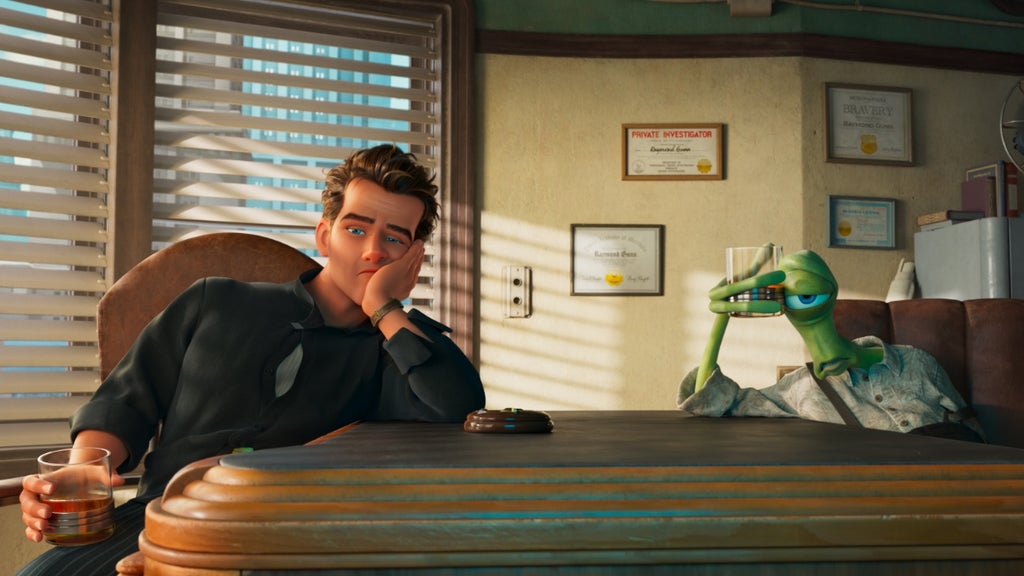
It probably doesn’t help that “Ray Gunn” is a Skydance Animation production, part of an extensive, multi-year Netflix deal signed in 2023, and that Paramount Skydance and Netflix are in a tense place, with Paramount forcing Netflix to walk away from its attempted acquisition of Warner Bros., and now accusing the streaming giant of launching a “scorched-earth campaign” against it. When it came to getting “Ray Gunn” the theatrical exhibition that the team behind the movie thinks it deserves, neither company was able to put the movie on Imax screens (or anywhere else, really, beyond a perfunctory awards-qualifying run).
In effect, “Ray Gunn” has become a “hot potato” according to someone close to the project, being uneasily passed between two warring mega-companies, which is the impression that TheWrap got from talking to folks on all sides. But the push to get “Ray Gunn” a theatrical release raises questions about why, as Netflix dips its toe further into the theatrical waters, animated films — which historically drive some of the most viewership on the platform and are dominating the box office — aren’t among the few Netflix features getting theatrical play.
Those who have followed Bird’s career or worked with him are starting to feel a sense of déjà-vu, as the situation with “Ray Gunn” uncomfortably resembles the general apathy that greeted Bird’s feature debut “The Iron Giant.” That film, too, was beset by a similar pass-the-buck attitude, as the production studio was shutting down while the team was rushing to finish the film and Warner Bros.’ marketing department didn’t know what to do with it once it was done. “The Iron Giant” was a massive box office disappointment when it opened in 1999; hardly anybody saw it the way that Bird and his collaborators meant for it to be seen.
It is now considered one of the greatest animated features of all time.
Now, with more than three decades of filmmaking experience under his belt (toggling between live-action and animation), two Academy Awards and over $3 billion in worldwide box office revenue (including, for a period, holding the belt for biggest opening for an animated feature in history), Bird has found himself in the same place as he has at the beginning of his filmmaking career – begging for the powers that be to take him seriously and exhibit his movie in the way that he intended.
Netflix and Skydance declined to comment.

The Imax decision
There are a few reasons why Netflix chose Fincher’s Cliff Booth movie, which is written and produced by Quentin Tarantino and co-stars Elizabeth Debicki, Scott Caan, Carla Gugino, Yahya Abdul-Mateen II and Peter Weller, for this first-of-its-kind Imax Netflix slot.
It is a sequel to a hit film that connected both commercially and critically (it made $394 million worldwide and was nominated for 10 Academy Awards, including Best Picture). But according to people familiar with Imax’s thinking, the Cliff Booth film appealed to the company because it would hit that same demographic of film-obsessed theatergoers that made “Sinners” and “One Battle After Another” such sensations when they played on Imax screens last year.
Imax, for its part, was also wooed by the exclusivity of the exhibition – something that a similar arrangement for “Ray Gunn” would have also afforded, since the Fincher/Pitt film will also get the standard, awards-qualifying run.
But animated films continue to dominate the box office year-in and year-out, so why wouldn’t the streamer test out an animated movie in theaters? Especially in the wake of last year’s “KPop Demon Hunters” sensation, which blew up as the most-watched Netflix movie of all time and was exhibited in theaters twice, topping the box office its first time out.
Netflix animated features – from the Adam Sandler-led “Leo” to licensed titles like Sony’s “Goat” or DreamWorks’ Minions films – consistently perform. Nearly half of the 20 most-watched movies on the streamer in the first half of 2025 were animated films. Plus, Netflix has shown a willingness to platform animated features aimed at different audiences (it just picked up French coming-of-age drama “In Waves” out of Cannes), which makes “Ray Gunn,” with its slightly harder-edge, a natural fit.

Given the data showing so much demand from its subscribers (like the newly shared fact that “KPop Demon Hunters” has been one of its most in-demand titles for a full year), one might think putting a Netflix animated film in theaters would be a no-brainer. And according to filmmakers who spoke to TheWrap for this story, that’s always the hope when they’re putting one of these movies together.
“Nobody is making their movie thinking, I’m going to make this for a TV set. Because none of the people directing these movies are TV folks. There’s this hope, from everybody, that there’ll be some sort of exhibition,” said a director who has made an animated feature for Netflix. “It’s why we do a full Atmos mix. One of the best advertisements for getting people to watch a movie on Netflix is by putting it in the theater.”
On the awards campaign trail for Netflix’s stop-motion “Pinocchio” in late 2022, Guillermo del Toro kept reiterating something every chance he could get – “animation is film,” a variation on something Bird had been saying for years before that. “Pinocchio,” which had a limited theatrical release that year, ultimately won del Toro the Oscar for Animated Feature.

Caught in the middle
The Netflix/Skydance situation is a tricky one, even beyond the current battle of words playing out via the press and a letter to the Justice Department.
The Skydance Animation/Netflix deal, forged in 2023, has only produced two movies for Netflix: 2024’s musical fantasy “Spellbound” and this year’s “Swapped,” which, it should be noted, is the fourth-biggest Netflix original movie of the year (it even set viewership records for an animated feature in its first week on the streaming giant and was the quickest Netflix animated feature to hit 100 million views).
The deal between Netflix Animation, currently overseen by Hannah Minghella, and Skydance Animation, led by former Pixar bigwig John Lasseter, is occasionally quite touchy and the intricacies of the deal are arcane. For instance, Lasseter has to be exclusive to the Skydance Animation/Netflix partnership; if David Ellison had tried to install him as the chief of Paramount Animation (which Skydance now owns), it would negate the deal. Skydance would then have to pick up the production costs and the marketing spend that Netflix was covering. Skydance doesn’t want to do that.
Some close to Netflix and Skydance suggest that, had Skydance taken “Ray Gunn” back and released it theatrically, that it could have also jeopardized the preexisting arrangement. But according to one source with knowledge of the situation, the Skydance Animation/Netflix deal is so air tight that even if Skydance had wanted to release the movie theatrically, they couldn’t. Netflix is the only entity that can release “Ray Gunn.”
There is also the fact that no Netflix animated feature has ever received a theatrical push outside of the limited stint that is required to qualify it for awards, as films like Guillermo del Toro’s “Frankenstein” played in theaters for three weeks last year on a wider spread throughout the country.
Netflix typically suggests that the exclusivity of its animated offerings is what make them so appealing to viewers, but animated features from DreamWorks, Illumination and Sony Pictures Animation routinely wind up on Netflix’s most-watched movies list. The fact that all of these movies were in theaters is a feature, not a bug.
“Steps,” the upcoming animated fairy tale that Netflix produced and is quite bullish about, according to someone at Netflix with knowledge of the situation, is also due this fall. No wide theatrical launch has been discussed for that either, which suggests that the problem with “Ray Gunn” may not be that it’s a Skydance co-production. The problem with “Ray Gunn” is that it’s an animated feature.
Animation rules
Animation is the undisputed king of Hollywood, on streaming and in theaters. And it’s not even close.
Last year at the global box office, the two highest-grossing movies were animated – the Chinese adventure “Ne Zha 2” (with $2.26 billion globally) and Disney’s “Zootopia 2” (with $1.86 billion). The third highest grossing movie on the list, “Avatar: Fire and Ash” ($1.48 billion) had enough animation to qualify for the Best Animated Feature Oscar nomination, were it not for James Cameron’s dogged refusal to classify it as animated. A Japanese animated feature (“Demon Slayer: Kimetsu No Yaiba Infinity Castle”) was No. 7 on the list, with $742 billion worldwide, and two more of the highest-grossing movies were live-action but based on animated movies – “Lilo & Stitch” at No. 4 with $1.03 billion and “How to Train Your Dragon” at No. 8 with $636 million.
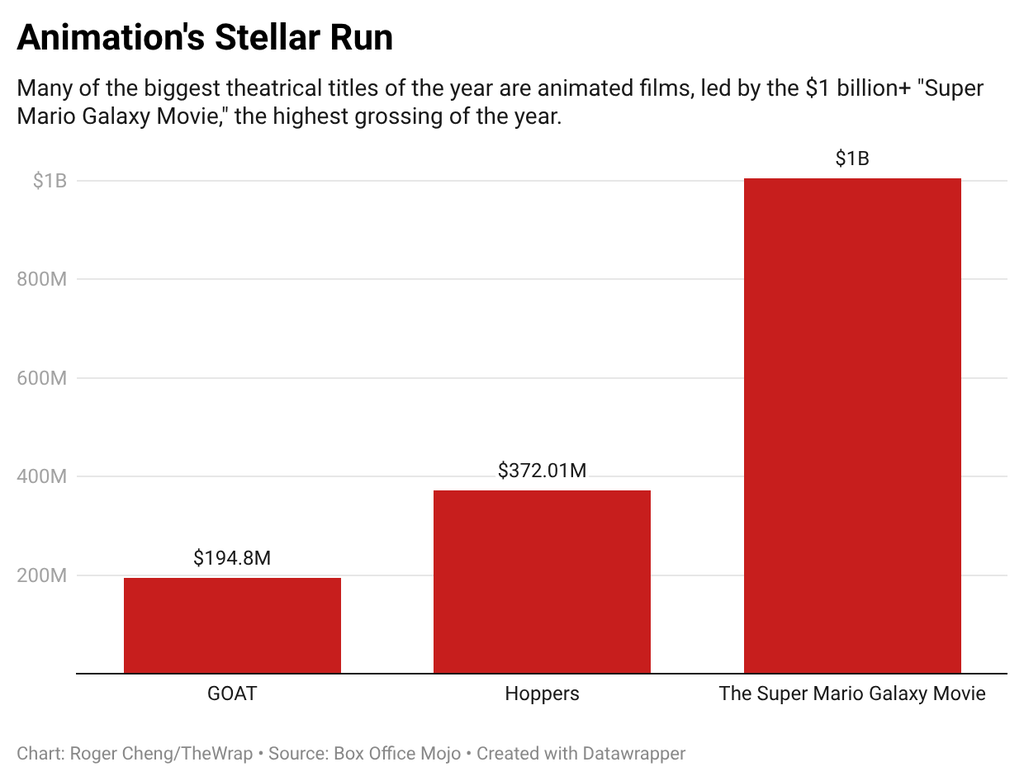
Only one film so far in 2026 has crossed the $1 billion threshold. And wouldn’t you know it? It’s an animated title – Illumination and Universal’s “The Super Mario Galaxy Movie,” which crossed $1 billion this month after being released in early April.
On streaming, “KPop Demon Hunters,” from Sony Pictures Animation and Netflix, became the most-watched Netflix original movie ever just two months after it originally landed on the platform. By the time Netflix stopped reporting on its numbers (91 days after release), the movie had racked up over 500 million views.
In late August, Netflix briefly put “KPop Demon Hunters” into theaters for a sing-along version, with the movie getting the widest rollout ever for a Netflix movie. It arrived on 1,700 screens and made close to $20 million, even though Netflix didn’t officially report the numbers, outgrossing the previous biggest Netflix theatrical release “Glass Onion” (which made $13 million in around 700 screens in 2022). In its lone weekend, “KPop Demon Hunters” made more than “Weapons.”
Later, of course, “KPop Demon Hunters” would win Academy Awards for Best Animated Feature and Best Original Song; it was the first time a non-Disney or -Pixar animated movie had ever won two Oscars. The film is such a hit, it is slated to be released on 4K Blu-ray later this year from the Criterion Collection (a rarity for Netflix movies) and a number of projects, including a sequel, are in the works.
And what about “Ray Gunn”? Bird has made pulse-pounding hits in both animation (“Incredibles” and “Incredibles 2”) and live-action (“Mission: Impossible – Ghost Protocol”), and his six movies combined have grossed more than $3.5 billion at the global box office.
Additionally, “Ray Gunn” tested positively with a preview audience in Arizona (in a theater!), even with the movie being largely unfinished (“rough shape” is how it was described), according to two individuals with knowledge of the test screening.
With its futuristic cityscapes and laser gun shootouts, “Ray Gunn” would look great on a towering Imax screen, and giving the movie that platform could have helped push the medium forward, insiders argue. Netflix could have used it as a way of saying, quite loudly, that animation is not only for little kids; sometimes it can be an edgy mystery, made by one of the medium’s true geniuses. With a theatrical release, “Ray Gunn” had the potential to be a trailblazer and a box office titan.
“If it’s purely about money for them, then they’re leaving it on the table,” said the filmmaker who spoke to TheWrap. “I don’t make films to be screensavers. I make films to be immersive stories.”
Not that Netflix is backing down from its anti-theatrical stance, at least not publicly.
In a recent New York Times profile Netflix film chief Dan Lin took a hardline position against releasing its films theatrically – and the filmmakers who push for theatrical exhibition. Lin, known for his blunt approach, said, “There is a group of filmmakers who still want theatrical. Those are filmmakers that we’ve accepted we just won’t work with.”
Steven Spielberg, in an interview published in the New York Times just a few days after Lin’s, said that streaming “is not my definition of a motion-picture experience.” Instead, he told the paper, you need “an audience to be the accelerant of that experience, to be the contagion of making the experience even more profound for the individual in that crowded theater — or what we hope is a crowded theater.”
But Netflix has changed its mind before, as the filmmaker who made an animated feature for the streamer pointed out to TheWrap.
“You once said you would never do commercials ever. You’ve now decided there’s an ad-tier. You also never considered doing wider releases for your film and you’re doing it with ‘Narnia.’ It’s sad that you have some of the best directors in the world, not just in live-action but in animation, and their films aren’t shown on the screens that these guys are so good at playing to,” said the filmmaker. “It’s crazy to me. Otherwise, get out of the movie business and just make series.”

Another dream
There’s a crushing anecdote on “The Giant’s Dream,” a brilliant, hour-long documentary that was included on the home video release of Bird’s “The Iron Giant.” Directed by Anthony Giacchino, brother of Bird’s go-to composer Michael Giacchino (and an Oscar winner himself for a documentary short called “Colette”), it traces the production and ultimate abandonment of “The Iron Giant.”
“The Iron Giant” suffered through indifferent executives, bungled marketing and an animation division at Warner Bros. that was shutting down as they were attempting to finish the film. Even after it received oversized test scores (much like “Ray Gunn”), the studio dumped the movie in an unglamorous August date, with only four months to roll out the marketing. This meant that most of the “levers” associated with a large summer movie – like brand partnerships and merchandise deals – were simply not there.
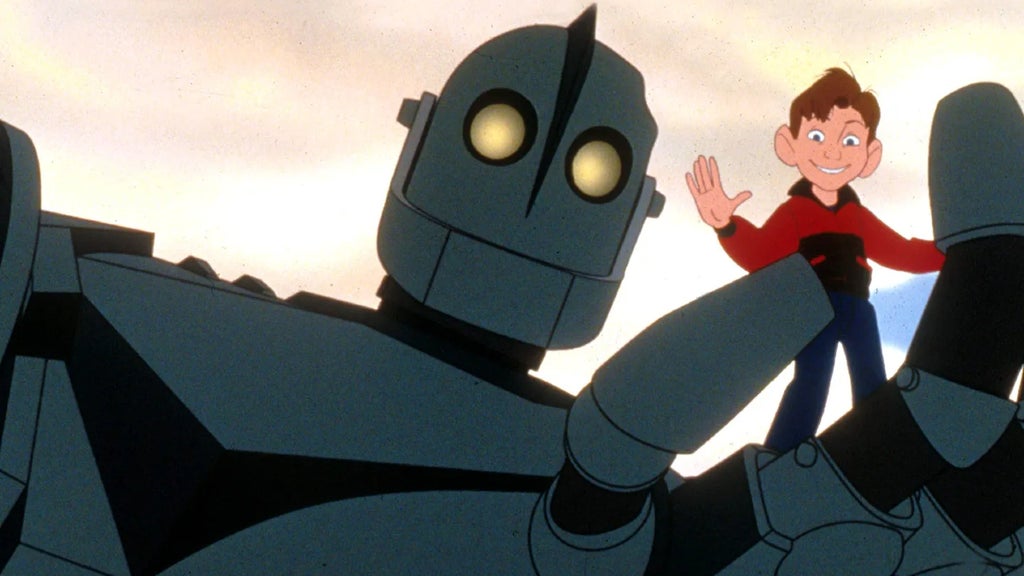
In the documentary, Bird recounted how he went to see the movie at a big theater after reading a glowing review in the Los Angeles Times. (Kenneth Turan gushed that “the film echoes earlier efforts like ‘King Kong,’ ‘Frankenstein’ and ‘E.T.,’ but with a refreshing spirit of bemused, nonaggressive hipness that is completely, and delightfully, its own.”)
Next to the theater entrance was a Johnny Rocket’s, which was meant to be a promotional partner for the film. “I’m checking out Johnny Rocket’s … they don’t have a poster up,” recounted Bird in the documentary. When he got to the theater, he saw that all of the other movies playing had “these nice logos, backlit of each movie, in the type font of the original advertising.” But where the “Iron Giant” was showing “it was a piece of white paper taped up there.”
As he made his way to the theater, he noticed that there were big banners for the other big summer movies that were playing but nothing for “The Iron Giant.” He finally found a standee for the movie but it was on the opposite side of the theater, towards an exit. “And one of its legs has been torn off,” Bird said, which added insult to injury. When he finally got to the theater playing “The Iron Giant,” it was mostly empty.
By the end of the first weekend, Warner Bros. had surrendered hope for the movie.
Is history repeating itself? There have already been struggles about the movie’s length and potential rating (nothing has been decided on the latter but most parties are pushing for a less tactile PG).
In that same “Iron Giant” documentary, Dean Wellins, a storyboard artist and supervising animator on the movie, remembers how he went and saw the movie a few times on opening weekend.
“Even if it was 10 people, every time they’d stand up and clap at the end,” Wellins said. “And you were like, Man, I wish more people experienced it.”
