Paging PTA — another legend is on the line.
Building on collaborations with Oliver Stone, Martin Scorsese and Quentin Tarantino, cinematographer Robert Richardson (“JFK,” “The Aviator,” “Once Upon a Time in Hollywood”) has a clear message for this year’s reigning Oscar champ: “Call me.”
“He already knows,” Richardson told TheWrap when asked about his next dream partner. “I met [Paul Thomas Anderson] on the set of ‘Kill Bill’ and he’s said that if he doesn’t shoot it himself, he’d want to work together, so I know there’s interest. It just hasn’t happened yet.”
Still, the three-time Oscar winner is hardly short on work. With David O. Russell’s “Madden” already wrapped, Richardson is planning upcoming projects with Ben Affleck and Antoine Fuqua, all while envisioning future collaborations with his partner from “The Hateful Eight” — “If Quentin and I make another movie, we’re shooting on film,” Richardson said.
Richardson likens his approach on Russell’s football biopic — which sees Nicolas Cage as legendary coach-turned-broadcaster John Madden — to his earlier work with Oliver Stone, using archival material as a visual foundation for the film’s world-building.

“We had access to archival material, including some of those 16mm NFL specials they used to put out,” he explained. “We pulled that, worked with it, and thought: OK, that’s the look for the movie. It’s similar to going back to ‘JFK’ and the Zapruder film; it becomes a kind of centerpiece. You take those reference points and build outward from there.”
Still, he admits, Russell’s notoriously haywire approach — and a cast of adept comedic talents — made for a “very hard” shoot.
“[We had] too few days,” Richardson said. “David’s a great improviser, and when he improvises, the pages grow. So you start with a 123-page script and you really end up with something closer to 176 pages, even before the first cut. And he’s pretty much willing to put anybody anywhere to get the shot.”
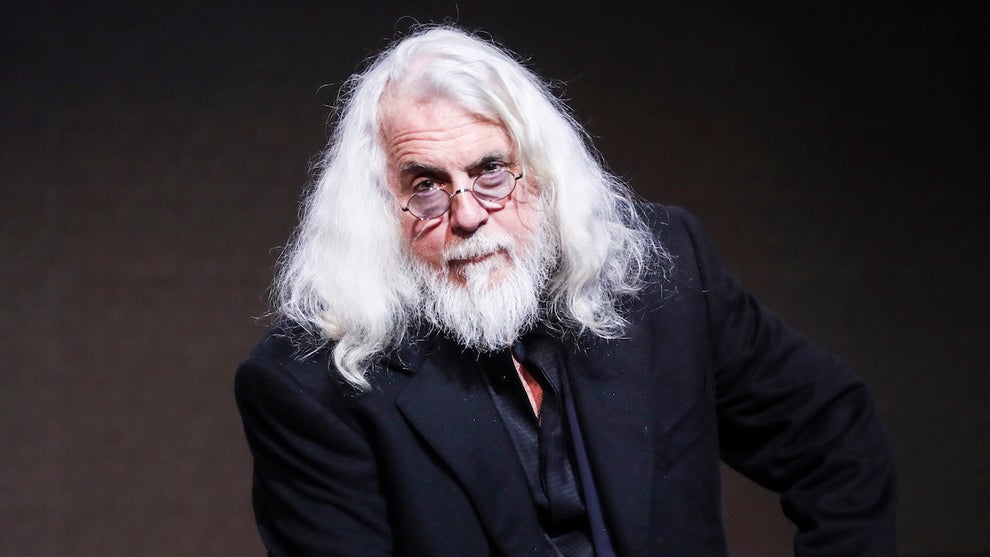
In the meantime, the acclaimed DP is on hand at this year’s Karlovy Vary International Film Festival for the world premiere of Jana Hojdová’s “Robert Richardson: The White Devil,” an intimate biographical documentary that honors the lighting maestro by rarely keeping him in the shadows.
Comparable in key ways to Terry Zwigoff’s “Crumb,” Hojdová’s unvarnished portrait starts from the premise that professional brilliance often comes at significant personal cost. Featuring wide-ranging interviews with Stone, Scorsese and Tarantino, the documentary is also remarkably candid and introspective about those familial trade-offs.
“As an issue of work-life balance, as they call it, the work and the life should be the same,” Scorsese says at one point. “The problem is dragging other people into it.”
“[Bob] was a worker, like I was,” adds Stone. “We had children and we loved them, but we weren’t, like, the greatest fathers.”

Richardson is the most candid of all, though getting him to open up didn’t come easily for director Hojdová. While the Czech filmmaker and the DP had begun work on the project years earlier, she found herself with an unexpected level of access when pandemic-era travel restrictions forced her to spend much of 2020 locked down at Richardson’s Cape Cod home.
What emerged was an often testy battle of wills between a director determined to take the full measure of her subject and a cinematographer who would much rather have remained on the other side of the lens.
Echoing Scorsese, the film often overlays Richardson’s personal and professional lives, finding traces of the DP’s unhappy childhood and wild, drug-taking years in his subsequent artistic choices. But the doc goes even further, playing as a kind of philosophical and psychological investigation into photography itself and the ways a troubled soul might use a camera to better escape or enhance the outside world.
“When you look through a viewfinder, one eye closes as your attention focuses on a single point,” Richardson noted. “[And when you’re shooting a war zone as in ‘Platoon’] you get pulled in. It enters you, and you become so immersed that you are it.”
That lens might also mediate reality, especially in moments of acute emotional distress. In one deeply personal stretch, we see footage Richardson shot of his mother’s final days, up until the moments just after her death.
“With my family, I was always shooting, always capturing moments — even to my wife and kids’ annoyance — because you don’t know when those moments will happen again,” he shared. “But with my mom, it became something else. The camera was a way of not having to actually go in there. It let me stand back, because I also wasn’t ready to let myself break down. I wasn’t shooting my mother’s death to create something for the future. I was doing it to protect myself from something I didn’t know how to process, but knew was coming.”
