
Natalie Erika James sees a lot of horror in the world.
The director’s first feature, “Relic,” depicts the fear of a parent’s deterioration through a battle with dementia. For her follow-up, James entered the world of “Rosemary’s Baby” with “Apartment 7A,” tackling the same conversations around bodily autonomy as the 1968 classic.
Now, with “Saccharine” (released in theaters by Independent Film Company and Shudder on Friday), James makes a horror film out of the struggle of disordered eating.
“As a filmmaker, it’s important to me to tackle the big questions that I’m grappling with in my own life, and there’s a kind of joy of discovering the answer through the process of filmmaking,” James told TheWrap. “There’s a level of honesty that I tried to bring to this film in particular because eating disorders, weight stigma, and everything that goes along with it is a touchy subject for so many people, so I felt like I owed it to the audience to present it through my lens with my own experience.”
Actress Midori Francis added that “there’s been some tears” at early screenings of “Saccharine” because how elements of the movie reflect viewers’ “personal experiences with eating disorders.”
“As we know, food brings up a lot for people, issues of body image,” Francis said. “I’ve had a few of those very deep, deep conversations after.”

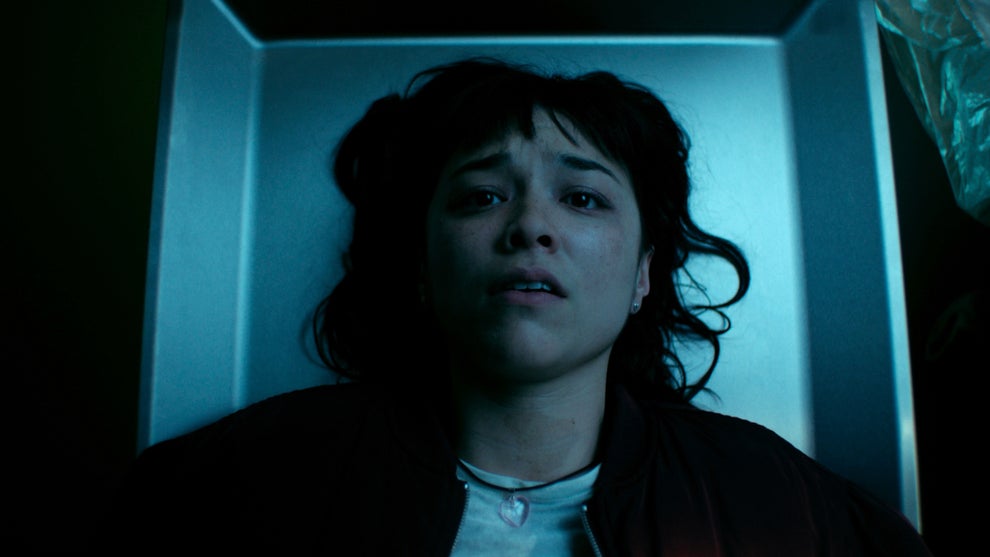
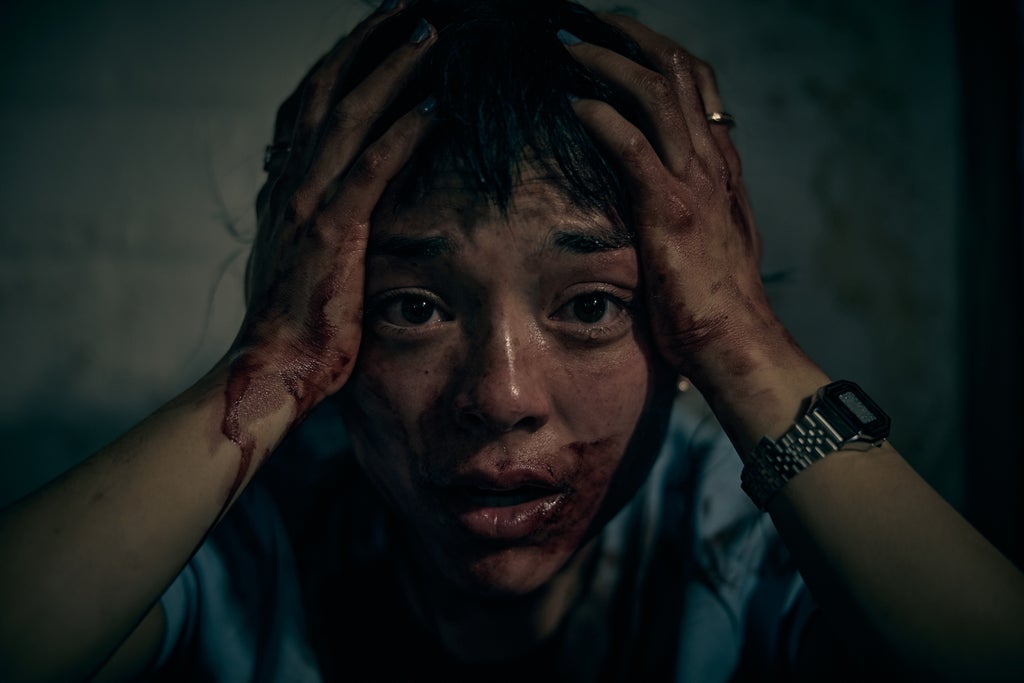
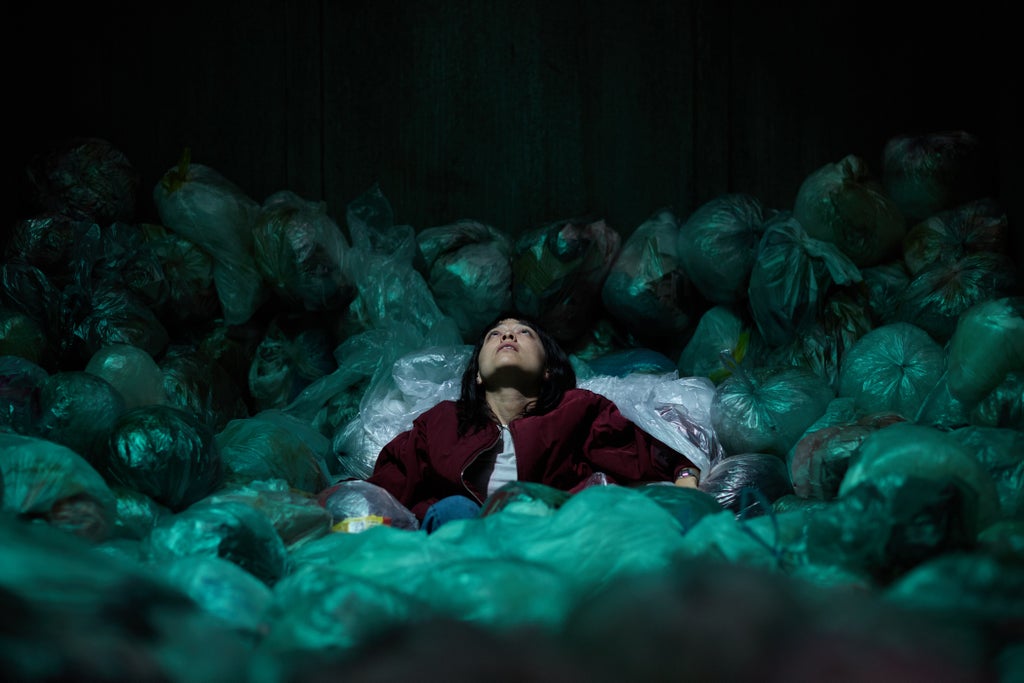
Francis leads “Saccharine” as Hana, a young medical student who begins eating human ashes as a means of quickly losing weight (and hopefully gaining the affection of gym crush Alanya, played by Madeleine Madden). Things soon take a turn for Hana as the weight loss continues at a dangerous pace — and she finds herself haunted by the person she’s consuming.
“When I was reading the script for the first time, I just remember thinking, How perfect a vehicle to discuss a topic like this, especially the internal landscape of having an eating disorder or suffering from any kind of addiction or compulsion,” Francis said. “It is such a lonely feeling, and in a way, horror captures that intensity quite well.”
Thankfully, Francis came into “Saccharine” with some on-screen medical experience. The actress, who’s appeared in such series as “Dash & Lily” and “The Sex Lives of College Girls,” previously starred on “Grey’s Anatomy” as Dr. Mika Yasudafor for nearly 40 episodes from Season 19 to Season 21.
“Being on that show too you learn to say things with confidence, even if it was wrong. That’s more the skill,” Francis said. “I think for timing purposes it was hard to schedule a scalpel rehearsal, and I was like, ‘Guys, guys, I got this. I can hold it.’”
“It was so good for you to have that,” James replied. “You were able to tell us, ‘Well, I should have my gloves on here.’”

But Francis still had plenty of challenges ahead of her. James shot “Saccharine” over the course of about two months, with Francis’ character present for every scene of the film. The actress noted that some of the longest days of the Australia shoot could last for 17 hours with 10-hour turnarounds.
“That means by the time you’ve gotten driven home, you’re showering, you’re prepping,” Francis said. “After a certain point, you just can’t sleep the amount that is needed, but it was what was required, you know?”
Per the film’s premise, she also had to film numerous scenes that involved eating a lot of food on camera.
“We really treated it like it was a stunt. A lot of preparation with the art department and Midori in terms of what exactly we’re eating and if, for the candy bars, there are alternatives that we can use,” James said. “With every scene, there’s always one take where she’s actually eating, and we’re trying to be as economical as we can with the number of takes or using spit buckets or all manner of working around it.”
“It’s incredibly vulnerable,” Francis said. “Generally, we don’t want people looking at us when we’re eating, not looking closely. I guess it depends on the type of eating we’re doing. I think in its most healthy form, eating can be an incredibly social activity, but as we know, eating disorders, in particular, do the opposite of that. It really isolates you to the point where it makes you more and more alone. What a juxtaposition to film that very solitary act. Hana would probably not want anyone to see, and obviously the actor has to show that. How do you have that private moment but film it?”
A notable feature of James’ latest work, “Saccharine” features a cast made up almost entirely of female actors. The filmmaker, who’s always placed women at the center of her movies, considered this an important element to a story about the horror inherent in modern conversations around weight loss, eating disorders and body image.
“There’s a certain joy in writing characters who you share life experiences with,” James said. “I knew that it was going to be very woman-focused just because of the pressures. Men face pressures too, but they’re quite different from the pressures that women face. In terms of eating disorders and whatever aspirational ideal body is projected into the media currently, the object of desire should be a woman as well as the protagonist through which we’re experiencing the story.”
“There’s something beautiful and amazing I find, in particular, about instances of being directed by a female director. I’ve had probably the more rewarding experiences in terms of communication style, depth and intimacy, rigor,” Francis added. “As the actor, what I’m really doing is bringing to life somebody else’s imagination. It’s a precious gift, like someone’s handing me the keys to their heart and their brain and their words, and I take that very seriously. It brings me a lot of joy when it happens to be a woman, but I imagine those connections can happen regardless of gender.”
With the film picking up distribution right at the start of Sundance 2026 (where it had its world premiere soon after), “Saccharine” marks a big first for James. “Relic” had its theatrical release interrupted in 2020 by the COVID shutdown, while “Apartment 7A” would be a Paramount+ and VOD release. Though both films screened at various festivals (and, in “Relic’s” case, some drive-ins), “Saccharine” marks James’ first horror feature to get a true theatrical roll-out.
“Horror is particularly suited to the cinema experience. There’s something when you’re sitting in the audience where there’s a sense of surviving the terrors together and sitting in this dark room and how much it heightens that experience,” James said. “One of the reasons I fell in love with horror was going to the cinema with my friends when I was 11 and being terrified out of my mind and the sense that we all had to experience that together with the roller coaster thrill of that.”
