Chatter invariably turns to one subject as Cannes dwindles to a close — the Palme. But this year brought a curious twist, as the subject of greatest speculation was … well, the Queer Palm.
Blame it on a dispiriting competition that only found its footing late, with the final-stretch premieres of “La Bola Negra,” “The Man I Love” and “Coward” injecting much-needed energy. Or credit the broader reality that, by several clear metrics, this was the queerest Cannes on record.
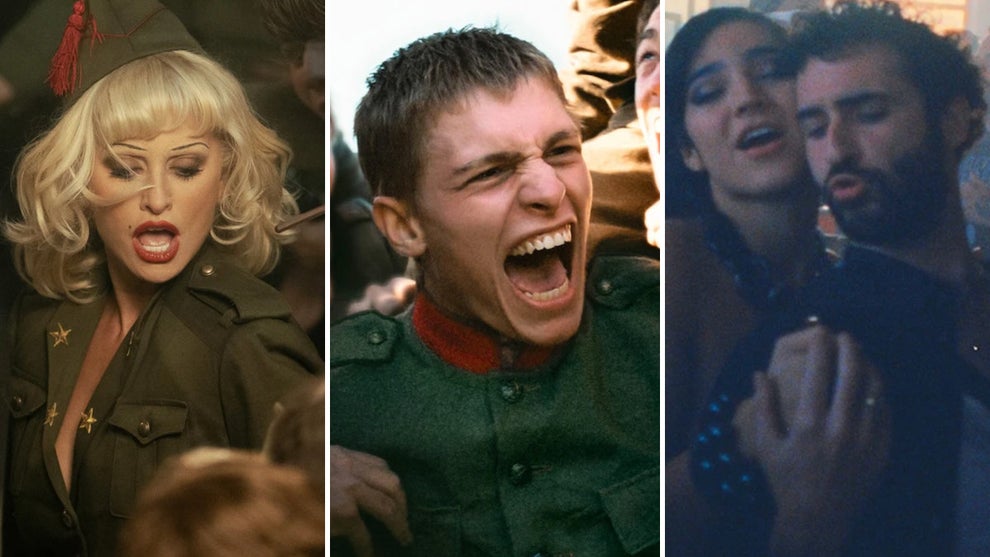
Javier Calvo and Javier Ambrossi’s “La Bola Negra” won Best Director amid a fierce bidding war. Emmanuel Macchia and Valentin Campagne shared Best Actor for “Coward.” Jordan Firstman’s “Club Kid” sold to A24 for $17 million. Marine Atlan’s “La Gradiva” took the top prize at Critics’ Week, while ranking among the festival’s most acclaimed titles. And Jane Schoenbrun had perhaps the most remarkable Cannes of all — opening Un Certain Regard with “Teenage Sex and Death at Camp Miasma” and closing the Queer Palm ceremony in triumph.
None of this surprises Queer Palm founder Franck Finance-Madureira, who sees this edition as “a pivotal moment” for queer cinema.

“The films we’ve seen this year — more and more, the fact that the characters are queer is not the crux of the story,” he told TheWrap. “The film doesn’t build its plot around that. In a way, characters no longer need to justify their queerness — it’s treated as something revealed incidentally.”
The milestone feels especially resonant for the parallel prize Finance-Madureira launched in 2010. It has since grown steadily in scope and prestige, weaving itself deeper into the Cannes ecosystem — including the market — as artistic perspectives have diversified and queer voices grown louder.
This year, its competition — drawn from every section and sidebar — expanded to a record 22 titles, matching the main competition in number (with seven films overlapping). That buzzed-about entries like “Clarissa,” “Jim Queen” and “Tangles” also featured in the lineup only reinforced the Queer Palm’s place at the festival’s unofficial cool kids’ table.

“Queer films aren’t only made for queer audiences,” Finance-Madureira said. “That idea needs to be repeated less and less, because we’re now seeing these films everywhere, across sections and genres, speaking to audiences far beyond any single community. We’ll keep promoting that idea while building out a hub for queer film professionals.”
In 2024, the organization launched the Queer Palm Lab, a program supporting emerging filmmakers from around the world on their first features. It has also built partnerships with other festivals — including Clermont-Ferrand, home to the world’s largest short film showcase and market, and the Morelia Festival in Mexico — while expanding its Queer Market footprint at Cannes.
Looking ahead, Finance-Madureira envisions a fuller slate of pitch sessions, roundtables and industry forums, part of a broader effort to nurture the next generation of queer filmmakers and safeguard their work at a challenging cultural moment.
“We need this now more than ever,” he says. “And Americans are very aware of it, given what they’re living through under Trump. They know it falls to us to build the bulwark — to mobilize so these projects come to fruition, even if they grow less and less aligned with the spirit of the times.”
Still, if Cannes’ 79th edition proved anything, it’s that deeply rooted artists can withstand political winds. One need only look to the titles that got people talking — and sent buyers into frenzied bidding wars. Cannes is now shut. Let’s see what next year brings.
