
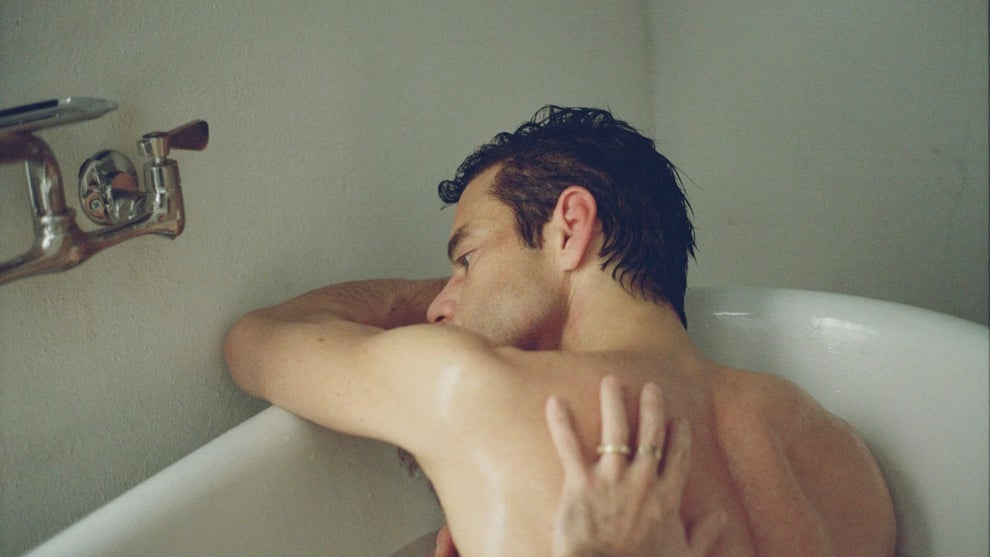
What will our lives look like when we all come to the inevitable end? How will we fill up the precious remaining seconds, minutes and hours before they’re gone forever?
In filmmaker Ira Sachs’ poetic, profound and patient portrait of an artist, “The Man I Love,” he fills a single life all the way to the brim with rich pleasures, invigorating creativity, joyous community, passionate exploration and the knowledge that soon all this will be gone.
In Sachs’ spectacular, shattering vision, which he co-wrote with his longtime collaborator Mauricio Zacharias, we witness the stories and the memories that we can only hope our own loved ones will tell of us when we’re gone. It’s a film about the ways we continue to dance, to love and to live, even with death ever present.
Premiering Wednesday in competition at the Cannes Film Festival, it stars Rami Malek as Jimmy George, a larger-than-life though not widely known performer still wanting to create even after being brought face-to-face with death, only barely surviving AIDS-related pneumonia. Now recovering and being cared for by his loving boyfriend Dennis (a terrific Tom Sturridge of the recent “The Chronology of Water”), there’s still so much he wants to do.

Some of this involves his creative pursuits, with the film refreshingly letting us sit with him as he runs lines for a play so we glimpse his passion as well as his insecurity. The others include new romantic desires — complicating his relationship with Dennis — and a longing to spend more time with his family while he still has it.
The film, set in a wonderfully textured 1980s New York, is about more than just the destruction of AIDS on the queer community. The director is intentional about how he goes about depicting the epidemic, never losing sight of the world that Jimmy is still deeply a part of and the joys that these people create for themselves through hardship. Beautifully captured by cinematographer Josée Deshaies, who previously shot last year’s underrated and under-seen stunner “Urchin,” it’s a film of wondrous little snapshots that sneak up on you.
Be it at a delightful dinner party where Malek’s Jimmy struts his stuff as if he’s up on stage or when he sings a sorrowful cover of “Look What They’ve Done to My Song, Ma” (“Bohemian Rhapsody” was just the opening act for his vocal work here), it’s all so alive that you can practically feel his voice echoing through you.

Even when Malek is not saying much at all, the film is so perfectly attuned to what he and those around him are feeling that you don’t dare look away. The actor brings a rich physicality to the part that makes even just him walking along the street alone feel revealing. Every moment you get with him and the characters that surround him, no matter how deceptively mundane or simple they are, is precious precisely because of how Sachs slows down to see the humble beauty that’s there in each of them. Malek’s performance is at times forced, but ultimately moving.
It’s all part of how “The Man I Love” is a film of small details and grand feeling. It finds itself somewhere in the middle of Sachs’ recent “Peter Hujar’s Day” and “Passages,” bringing the first’s willingness to let electrifyingly extended scenes of characters talking with each other play out uninterrupted while also emphasizing the latter’s honest, heartbreaking eroticism. It doesn’t shy away from how Jimmy, hungering to live for as long as he can, is also a deeply flawed person. But the beauty of Sachs’ portrait is that it can be all these many multitudes of things.
It seeks to honestly reflect the life of this single character inspired by the likes of Ron Vawter of The Wooster Group, performance artist and playwright Ethyl Eichelberger and comedian Frank Maya, who kept performing all the way through to the end. The film seeks to embrace that same energy, closing with an astounding final scene that only makes you wish you could go back to dance with it for a few more precious seconds.
You can’t, none of us can. But for a handful of fleeting moments, Sachs reminds us of the enduring beauty of the pursuit. Be it through monumental art like his latest film or just in the community that surrounds it, we all can find the thing that remains one of life’s greatest privileges to love and lose.
