
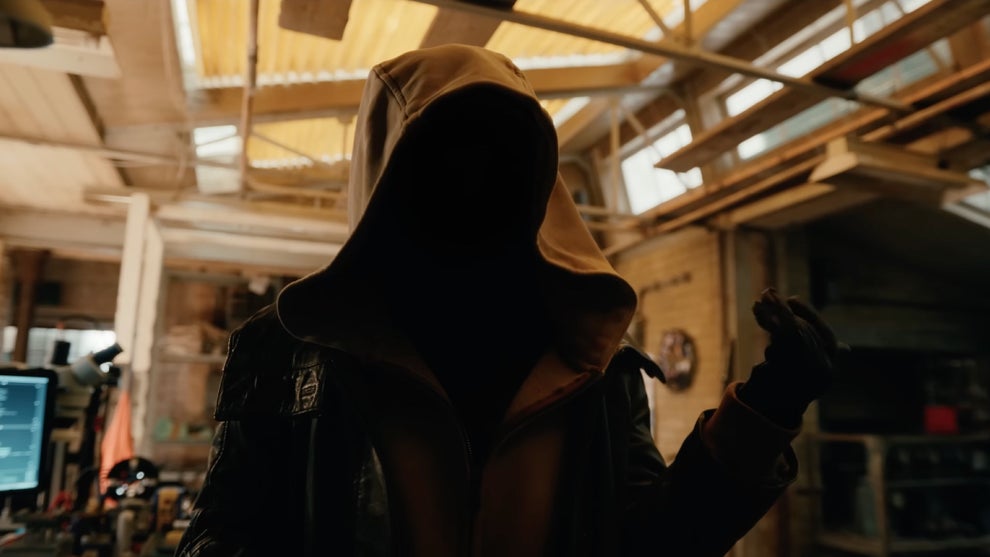
When it comes to mainstream, billion dollar blockbusters like “Spider-Man: Brand New Day” there’s an argument to be made that, perhaps, the critics don’t matter.
We’re not raising the profile of a film that needs more support. “Spider-Man” seems to have enough support already. If we celebrate the movie (as I did) we’re only adding our voices to the throng. If we find something to criticize we’re shouted down by angry readers or, more often, by people who glanced at our headlines and made snap judgments without actually doing the homework. I’ve learned it’s easier to complain about an opinion than to engage with a well-reasoned argument.
I don’t agree with those philosophies. (Except the part where it’s easier to judge a headline; that, sadly, is true.) Film critics provide a variety of services and raising awareness of potentially overlooked movies is one of them, but it’s also our responsibility to take a serious look at the most popular art. While most audiences are free to enjoy the ride, critics figure out what makes that ride work in the first place, and start a conversation about how it reaches those wonderful heights. We also have a responsibility to point out every time the ride breaks down, to warn the people who care about such things, and to expose everyone to diverse and complex perspectives about this infinite Rorschach test we call art.
You may find it hard to believe that anyone disagrees with your point of view about a movie. But there’s always someone approaching the same artwork from a different angle. Seeing a film through those other eyes expands our understanding of the art form and, more importantly, each other.
So whether critics love a movie or hate a movie or just think it’s “meh,” we have to discuss it in detail. That’s where films like “Spider-Man: Brand New Day” become a thorn in our sides. Watching a superhero movie on opening weekend is an experience studios would like us to treasure for the fans, so they ask — and often practically beg — film critics to play nice, and not reveal anything about the plot. Or the characters. Or anything else.

Since a film critic’s whole job is to talk about the film in detail, this ties our hands behind our backs. I wrote about something similar last year regarding the hit horror movie “Weapons,” a film I criticized for a variety of reasons. But since all those reasons had to do with the conclusion to its mysteries, I was forced to write an early review that danced around everything I wanted to highlight.
“Spider-Man: Brand New Day” has a different problem. I greatly admire the latest live-action Spider-Man film, but the things I love most involve a character who wasn’t named in the publicity, so critics weren’t supposed to talk about them either.
Now that “Brand New Day” is finally out, and now that it’s already made over a billion dollars and I can reasonably expect anyone reading this to have either seen it or at least heard the news, I can finally talk about why the best part of the movie wasn’t the Spider-Man parts, as much as I loved them. The best part of this movie was Jean Grey.
“Spider-Man: Brand New Day” does an impressive job of incorporating Spider-Man into the larger Marvel Cinematic Universe. Multiple recognizable characters make an appearance, but they’re not cameos; they’re serving vital functions in the story. The Hulk doesn’t show up out of fan service, the Hulk shows up because the narrative required Peter Parker to seek advice from a scientist, and Bruce Banner is a scientist. The Punisher isn’t there because it’s a cool gimmick, he’s a co-star with his own perspectives and impact on the story.

But that’s just mechanics. More importantly, all the other superpowered characters who turn up in “Brand New Day” have wrestled with the same problem: loneliness. Spider-Man chooses to isolate himself from his loved ones, compensating for the loss of personal support by becoming a workaholic, feeding off the appreciation of strangers he can’t confide in. Even in front of a cheering throng he’s alone. The Hulk no longer isolates himself but he did, for a long time, and still lives in perpetual fear that he’ll endanger more lives. The Punisher doesn’t have a choice. His only loved ones were murdered and he resents Spider-Man for not taking advantage of the opportunities he no longer has: to love and be loved.
The Marvel Cinematic Universe version of Jean Grey is also isolated, and not by choice. Unlike the comics version, Jean is introduced as a villain, violently lashing out at a world that has taken everything away from her. Jean’s mother disowned her, and her sister was abducted and denied human rights by the United States government. Jean is all alone, so she uses her powers to become literally everybody, a phantom in the crowd. She’s not afraid to hurt people because she’s been hurt. She’s not afraid to warp Peter’s feelings for MJ because she doesn’t believe love conquers all, or can even be trusted.
Jean’s motives, like the motives of many great villains, are understandable and sympathetic. Her methods are harder to justify, especially since, with her powers, she has less violent means at her disposal. She could easily enter Damage Control by hitchhiking into the mind of one of its employees and open the vault where she thinks her sister is imprisoned by simply… opening it. That’s an old-fashioned, honest-to-goodness plot hole, since she’s motivated by a singular goal and ignores the most obvious way to achieve it.

But, since “Brand New Day” portrays her like a Spider-Man villain, she’s not thinking rationally. She’s thinking emotionally. She’s not only trying to solve a puzzle, she’s also trying to hurt the monsters who hurt her and her sister, as badly as possible. Spider-Man works with Damage Control, so from Jean’s perspective he’s basically another corrupt cop, or at least a hopelessly naive one. Either way, he’s a willing tool of a fascistic organization, and he stands in the way of Jean’s pursuit of real, albeit extrajudicial justice. (As for that extrajudicial justice: The costumed vigilantes of the Marvel Universe, many of whom have killed their own villains, aren’t in a good position to judge.)
Jean Grey is one of Spider-Man’s most psychologically complicated villains, and also one of his most dangerous. Much of “Brand New Day” plays like the classic Denzel Washington horror movie “Fallen,” about a cop trying to catch a demonic serial killer who leaps from one body to another. You can’t put handcuffs on a guy like that. And you can’t web up a villain with the power to be incorporeal.

Spider-Man can’t defeat Jean Grey in a fight. All he can do is try to connect on a human level. But he’s spent the last several years of his life avoiding any human contact, so he’s ill-equipped and walled off. The film suggests that Spider-Man’s powers make him immune to Jean’s telepathic abilities but it’s more likely that he’s just gotten too good at locking everyone out. It makes sense literally and thematically. (If I had a nickel for every blockbuster action-fantasy film about emotionally unavailable men, women enduring and lashing out at mankind’s injustices, featuring major subplots about memory loss, which stars Tom Holland, Zendaya and Jon Bernthal, and was released in July 2026, I’d have two nickels. Which isn’t a lot but it’s weird that it happened twice.)
The scene that breaks my heart in “Spider-Man: Brand New Day” is the climax, and the climax isn’t the ninja battle. The film culminates with Jean Grey threatening half of New York City, with only the power of her anger and suffering. Spider-Man finally lets his guard down and invites Jean Grey, intentionally, into his mind. He could show her anything in that moment. What he shows her is a private moment with Aunt May. A moment of unconditional, maternal love.
Strike that: He doesn’t just show her. Peter lets Jean experience the moment from his perspective. She’s exposed to another point of view, and she’s open to it. The experience changes the way she thinks and feels and lives. Just like great art does. (It’s no wonder film critics love this movie.) That’s a powerful moment for the characters but also for anyone in the audience who has ever felt abandoned by their loved ones, or who never heard those affirmations at all. Jean Grey will be alright — she won’t be the first superhero who got their start as a villain, and she won’t be the last — and I felt like I might be alright too.
So if you heard somebody crying in the theater at “Spider-Man: Brand New Day” it might have been me, or it might have been anyone else who felt seen — at the end of a superhero movie, in a cinematic universe that hasn’t felt personal in a long time. It depresses me that Marvel told critics not to mention why their own film is beautiful. My job is to talk about their art, whether it’s shallow corporate hackery or moving, emotional pop cinema. And I’d rather do that than pretend Jean Grey’s identity was more important than her character.
Jean Grey means something. Spider-Man means something. “Brand New Day” means something. Spoiler culture, and the vibe of an opening weekend, mean a hell of a lot less.
