
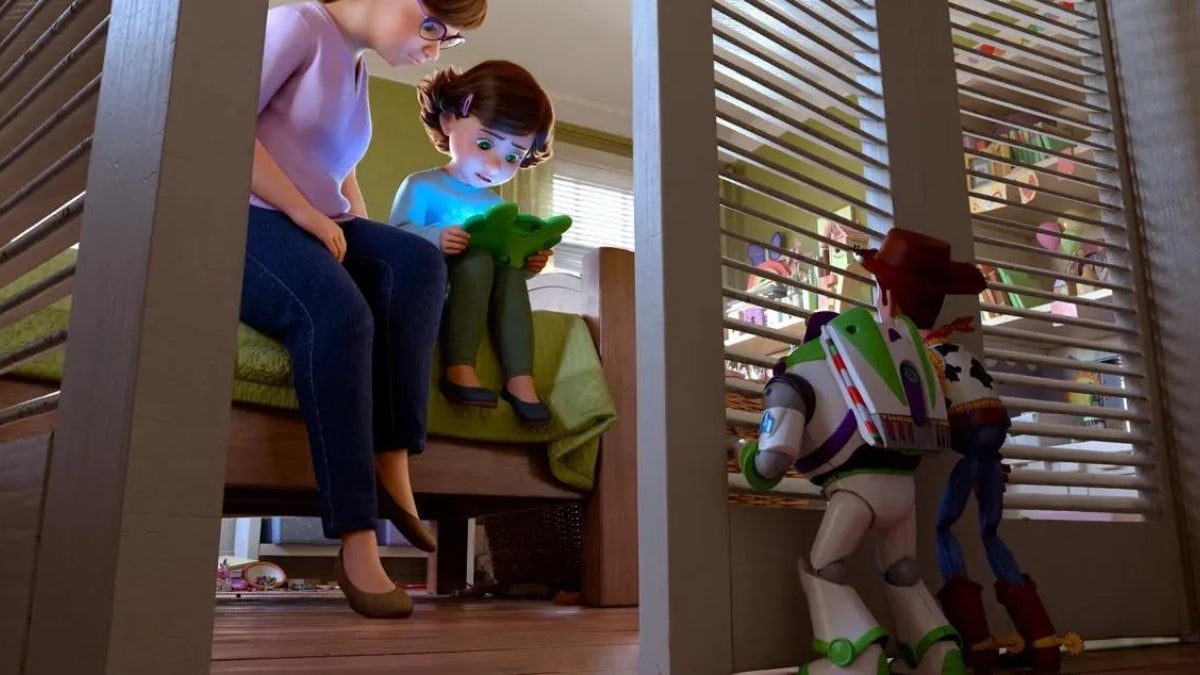
“Toy Story” is the envy of all Hollywood IP, and not just because its latest entry, “Toy Story 5,” earned a $312 million global opening that is the highest for Pixar’s flagship franchise. It’s because the series has been able to find new ways to grow its audience at a time when other attempts to revive or sustain blockbuster IP is falling flat.
It’s been more than three decades, and despite several voice actors from the original cast like Don Rickles and Jim Varney now deceased, the franchise hasn’t slowed down at all, and actually performed better than its last entry seven years ago.
In the U.S. and Canada, “Toy Story 5” opened to $160 million, 25% higher than the previous franchise record of $120 million recorded by “Toy Story 4” in 2019. The film was a true four-quadrant movie, playing fairly evenly to moviegoers both over and under the age of 25 and avoiding the heavy skew towards older, longtime fans that recent Hollywood movies like “The Mandalorian & Grogu,” “Masters of the Universe” and “Disclosure Day” have drawn.

But that’s not to say that “Toy Story 5” hasn’t completely avoided the trend of an aging fanbase. According to data provided by Disney, the percentage of opening weekend moviegoers under the age of 25 for “Toy Story 5” was 44%, compared to 59% for “Toy Story 4” seven years ago. On the upper end of the age demo spectrum, turnout from the 55+ crowd ticked up slightly from 2% for “Toy Story 4” to 6% for “Toy Story 5.”
This trend isn’t new for Pixar. In 2018, “Incredibles 2” earned a jaw-dropping $182.4 million domestic opening thanks to the potent combination of strong family turnout combined with nostalgia from young, single millennials with childhood memories of seeing the first “Incredibles” 14 years prior.
“Inside Out 2,” which opened to $154 million domestic in 2024 and grossed nearly $1.7 billion worldwide, pulled from similar nostalgia from Gen Zers who were kids when the first “Inside Out” came out in 2015 and had aged into the 18-24 demo. With sequels to “Ice Age,” “Frozen,” “Incredibles,” “Coco” and almost certainly “Zootopia” coming in the years ahead, Disney’s strategy of waiting many, many years between sequels should continue to pay off.

But it was “Toy Story” that first perfected that formula with “Toy Story 3,” a movie about a grown-up Andy ready to let go of his toys as he goes off to college as Woody and the gang come to terms with it. Released 11 years after “Toy Story 2,” Pixar spoke directly to the generation that had grown up with Woody and Buzz, and moviegoers rewarded it with a $1.06 billion run.
But depending on how well it holds against “Minions & Monsters” in July, “Toy Story 5” could exceed both that total and the $1.07 billion of “Toy Story 4,” as new kids fall in love with the series alongside their parents. Shawn Robbins, director of analytics at Fandango, credits the success of the film to a story about “tech vs. toys” that doesn’t just speak to hand-wringing parents but to kids who might feel anxious about fitting in.
“Pixar keeps finding the right audience at the right moment with the right story when it comes to these films,” Robbins said. “‘Toy Story’ has reached this point where it is now being handed down from one generation to the next, like ‘Star Wars’ was. But Pixar never forgets that these movies are first and foremost for kids, and this movie would not work if it only resonated with their parents who were kids when the earlier movies came out.”

Yes, nostalgia and familiarity remain the driving forces behind the family box office. Pixar’s well-received original film “Hoppers” made $372 million worldwide, a total “Toy Story 5” will blow past with less than a week of theatrical play. Theaters are still in search of an original animated film that can clear $500 million globally in a post-pandemic market, and the one that might have been able to pull it off became a cultural phenomenon through streaming instead.
But “Toy Story 5” isn’t a film that was content to sit on its legacy or use a hot-button parenting issue to maintain relevance. Both critics and audiences agree that even as the film transitioned Woody and Buzz to supporting roles while Jessie the Cowgirl took over as the lead, the emotional core of “Toy Story” has remained intact. While other franchises have been stamped with the dreaded label of “cash grab” by online discourse, “Toy Story” has dodged it, becoming the envy of not just the animated world, but the entire blockbuster landscape.