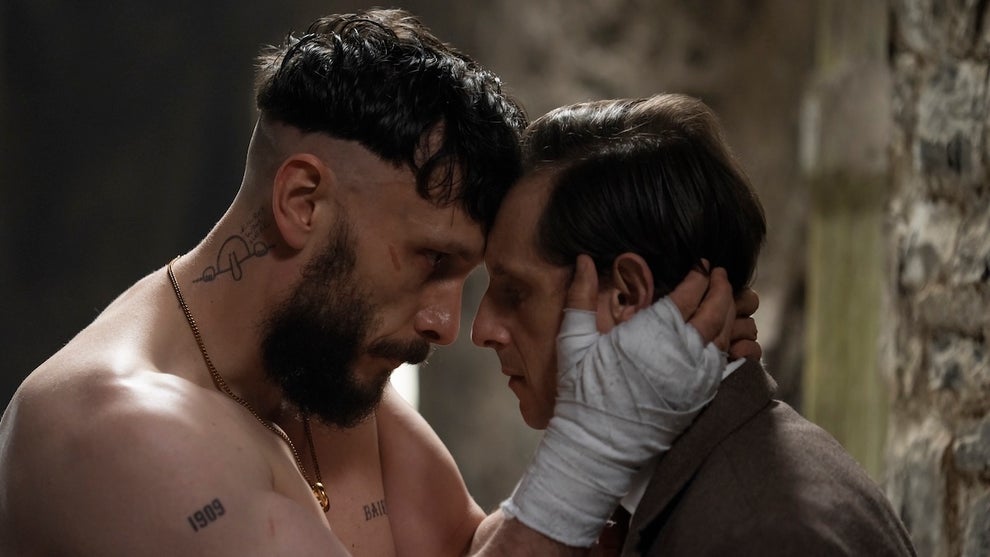
“We’re family now,” a character remarks early in the premiere of “Half Man,” Richard Gadd’s newest series. “That’s all that matters.” Turns out the impact and weight of that statement will define and shape the relationship between two brothers for decades to come.
Gadd’s follow-up after the smash success — both critically and in the awards space — of Netflix’s “Baby Reindeer” sees the Scottish multihyphenate taking his particular brand of darkly realized storytelling to HBO, thanks to a co-production with the BBC. Throughout the six-episode miniseries (all episodes were provided to critics ahead of time), Gadd, who created and wrote the show, weaves an expansive narrative about myriad topics, chief among them masculinity and the burden of family.
The potency of that last theme is what gives “Half Man” its narrative framework. On his wedding day, Niall (Jamie Bell) faces the abrupt return of his brother Ruben (Gadd), whose mere presence threatens to turn the whole event upside down. As the wedding unfolds, a series of flashbacks sheds light on how the pair ended up so estranged, through 30 years of trials and tribulations.
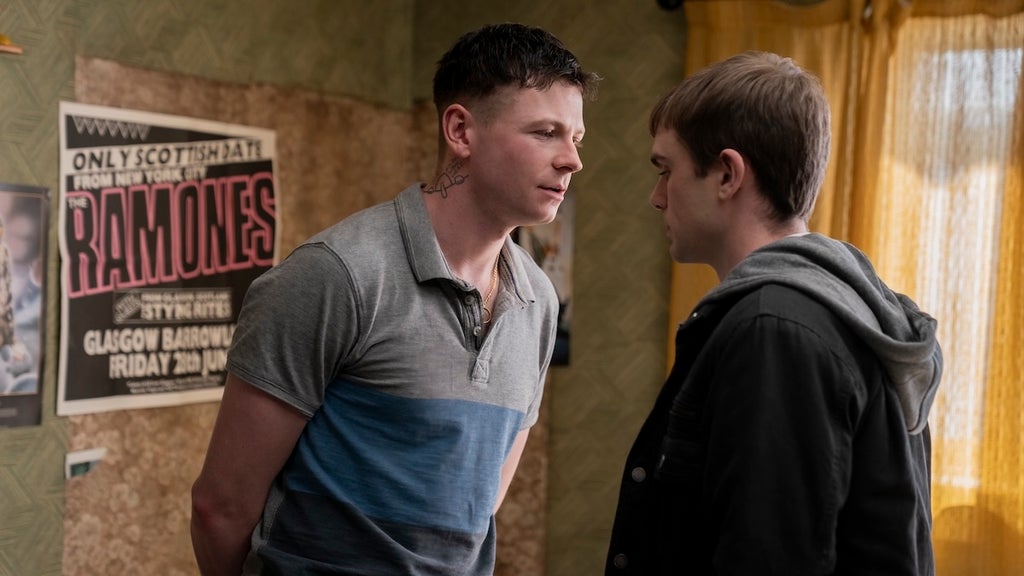
When Niall (played in his younger years by Mitchell Robertson) and Ruben’s (Stuart Campbell) mothers end up moving in together as a couple in ‘80s Scotland, the nerdy and bullied Niall is caught off guard by the sudden news that he’ll be getting another house guest. Fresh off a two-year juvenile detention sentence, Ruben soon moves into Niall’s room and quickly asserts his dominance; pitching Niall’s “Doctor Who” books is just the start of the changes Ruben implements. But his arrival has unforeseen benefits. Those school bullies are a little slower to make Niall’s life a living hell out of fear of possible retribution from Ruben. The aforementioned line about family begins to mutate, transforming the boys’ relationship into an all-consuming codependence.
As “Half Man” progresses, it becomes clear that Niall and Ruben are two sides of the same coin, both titular half men incapable of truly functioning without the other. As such, “Half Man” becomes an exceedingly rich text about the pitfalls of masculinity. Without ever uttering the phrase “toxic masculinity,” the series deep dives into the self-loathing men often have about themselves when society expects them to act and behave in specific ways.
As the series unfolds, the ways in which these young men struggle with these pressures — specifically, Niall’s identity and Ruben’s anger — are deeply considered and richly layered under Gadd’s script, presenting “Half Man” as a hauntingly effective portrait. Starting the series in the 80s and moving it through to modern times makes this subtext, text — but never in a way that calls attention to itself; rather, it uses the societal pressures of the day to foreground their respective struggles.
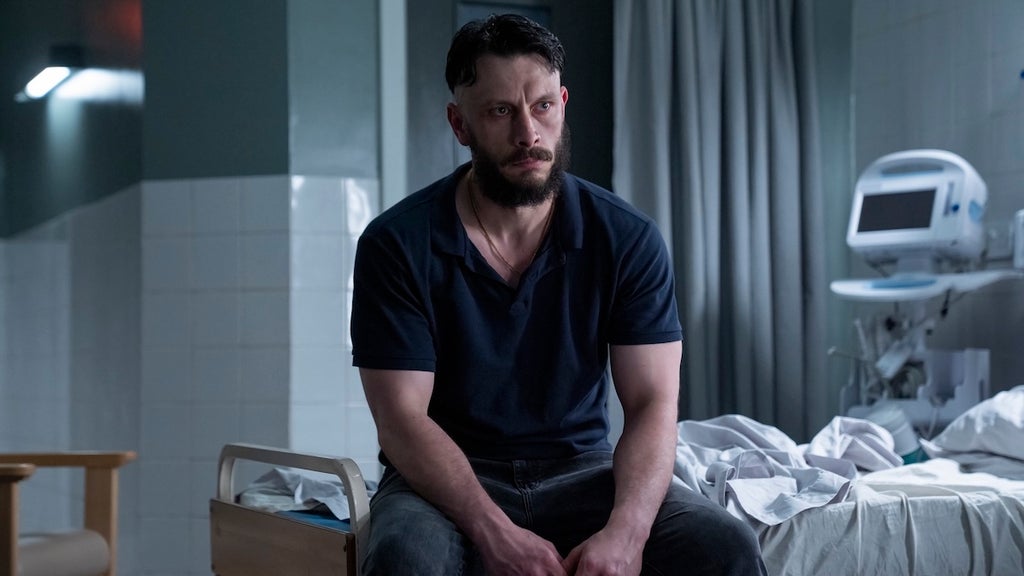
What starts to grate, however, is the repetition in Gadd’s exploration. As both men continue with their lives, they frequently fall back into patterns of their own destructive behaviors. While “Half Man” highlights the cyclical nature of these tendencies, it also creates narrative beats (particularly in the back half) where the show repeats itself. As such, what’s already an extremely heavy series can start to feel even heavier as we continue to watch both men slog through the emotional and metaphorical mud of their lives.
How Niall and Ruben’s lives are rendered are endlessly compelling, however, thanks to the quartet of performances at the center of the show. Robertson and Campbell are extraordinary finds; casting directors Kahleen Crawford and Caroline Stewart deserve all the credit in the world for landing them, as the show wouldn’t be half as effective or as affecting as it is without their performances. Robertson’s portrayal of young Niall manages to convey the doe-eyed nature of the “Bambi” nickname young Ruben gives him not long after their initial meeting. Campbell immediately brings a fierce edge that threatens to explode off the screen at any point.
As the men age, the way Gadd and Bell draw on one another’s characters creates fascinating mirrors. Bell takes on some of Ruben’s fierceness and self-righteousness, while Gadd infuses his softer edges with a deep sense of hurt and sincerity. Bell, in particular, is staggering; the performance reminds me a lot of his work in “All of Us Strangers,” another creative work that left me similarly moved. The series doesn’t work without how superlative both these men are, as they realize the core themes of Gadd’s work with stunning and staggering realism; there’s a scene in the back half of the series between Bell and Gadd that’s so brilliantly acted, written and directed that it got under my skin in a way few other series this year have.
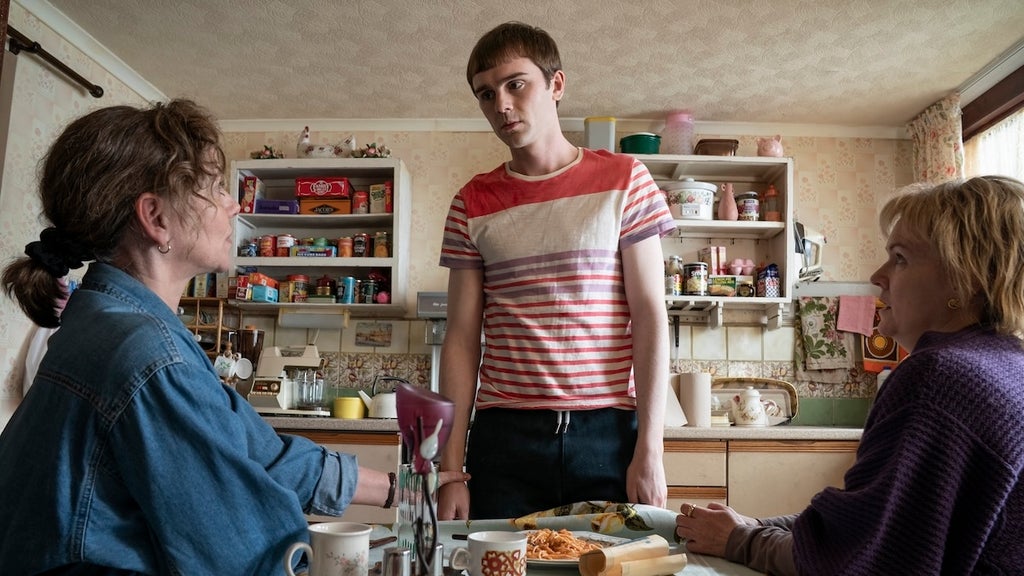
However, the work the show does to flesh out these men comes at the expense of some of the series’ supporting characters, who, sadly, aren’t always given the same amount of depth.
Family, for good or for ill, is an undeniable bond. It’s something that can frequently bring out the best and worst in a person. It’s hard to know how to navigate these situations, where it can be easy to feel like you’re living in their shadow or are constantly pulled, unwillingly, back into their orbit. The ways in which “Half Man” acutely understands that dynamic make it a must-see series even in spite of a few misgivings along the way, ultimately presenting itself as a singular experience that sticks with you. After all, family is hard to shake.
“Half Man” premieres Thursday, April 23, on HBO.
