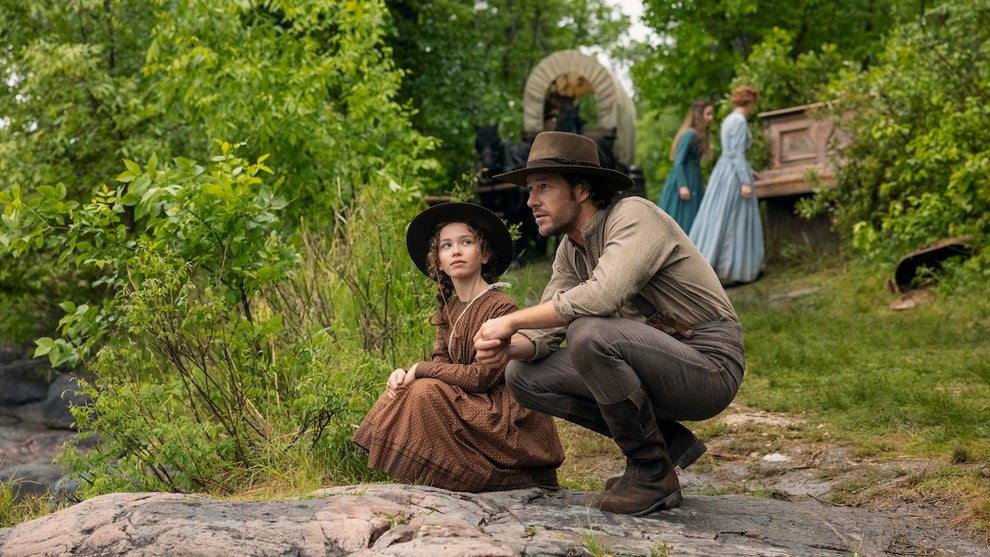
It’s been more than 40 years since the original “Little House on the Prairie” television series went off the air after nine seasons. Based on Laura Ingalls Wilder’s 1935 semi-autobiographical children’s novel by the same name, the series explored life in 1870s-era Walnut Grove, Minnesota, through the lens of a young Laura Ingalls and her family, Charles “Pa” Ingalls, his wife Caroline “Ma” Ingalls, and sisters, Mary and Carrie.
Now, decades later, following several subsequent made-for-TV movie follow-ups, adaptations and miniseries, the question is: Does the world really need another “Little House on the Prairie” reboot? If you ask Netflix, the answer is sure, OK, why not!
Its new “Little House on the Prairie” isn’t a radical update but it does hew closer to Ingalls Wilder’s book series, while injecting some deciding modern sensibilities into the storyline.
The series follows the Ingalls family’s adventures after Charles decides to uproot their relatively comfortable life in Wisconsin in search of better days and opportunities out west in Independence, Kansas.
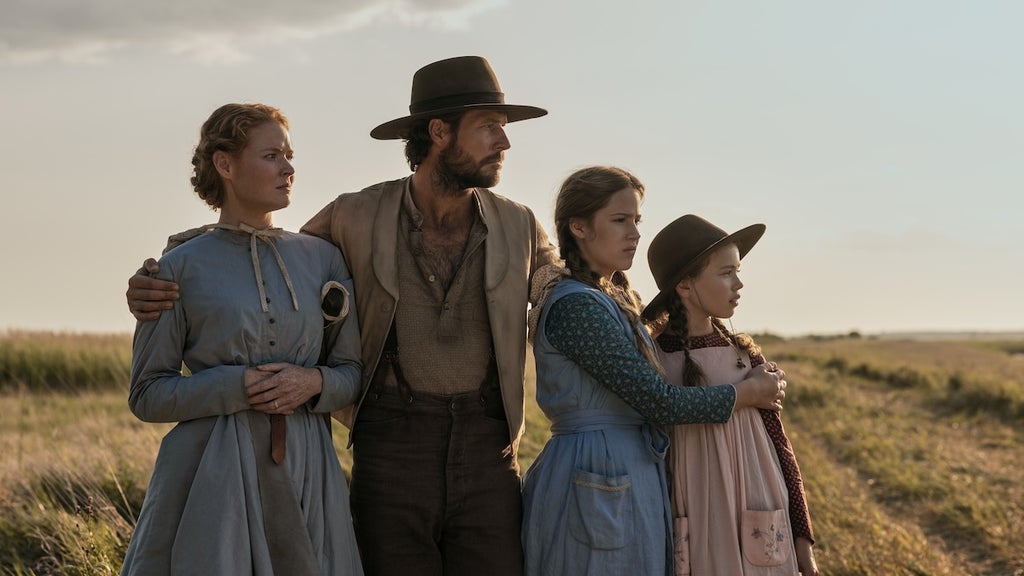
In this iteration, Alice Halsey (“Lessons in Chemistry”) perfectly embodies the role of young Laura with a tender-hearted plucky confidence. Luke Bracey (“The Artful Dodger”) and Crosby Fitzgerald (“Palm Royale”) give solid turns as Charles and Caroline Ingalls and Skywalker Hughes (“Joe Pickett”) brings empathetic heart to the role of Mary, the older sister beset by a prim sense of responsibility but also nursing a streak of jealousy toward Laura.
On the prairie, the Ingalls face plenty of daunting choices and setbacks. After leaving Wisconsin, the Ingalls are counting on the tenants in their old farm to pay a monthly mortgage that will support their new life. Injuries and illnesses, however, leave the tenants broke, forcing the Ingalls to turn to the promise of a robust farm harvest to make ends meet.
The series introduces two characters from the books, Dr. George Tann (Jocko Sims,), a Black physician; and John Edwards (Warren Christie), an unstable, grieving Civil War veteran with a taste for whiskey. There are also new characters, including members of the Osage tribe who originally lived on the territory. The Osage include a family, headed by Mitchell (Meegwun Fairbrother), a level-headed Osage translator, his wife White Sun, who is wary of the white settlers, and their children, including daughter Good Eagle (Wren Zhawenim Gotts), who becomes fast friends with Laura.
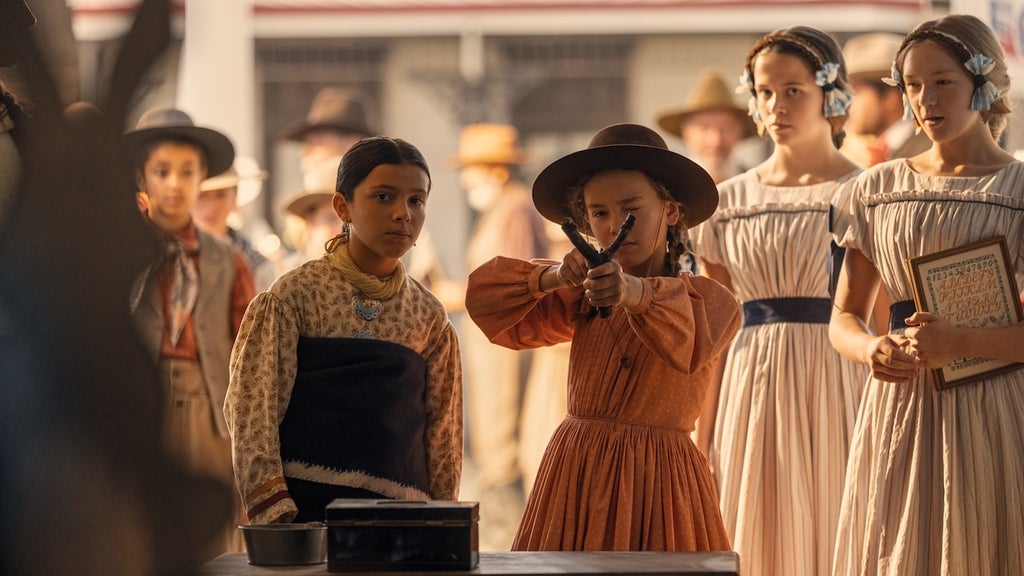
Conflicts between the Osage, the settlers, the railroad company that continues to plow its way through the prairie, and the government, which wants to make sure it makes money off land claims through the Homestead Act, raise the stakes for everyone, sometimes with devastating results.
The villain here is, not surprisingly, the greedy railroad developer Eli James (Michael Hough), who lured new settlers to Independence with false assurances. The entire James clan is terrible, actually. Wife Jemma (a delightfully mean-spirited Mary Holland) is bigoted and judgmental and daughters Edith and Romanzy (Zoe Fish and Lanae Smid, respectively) are bullying, entitled brats.
Other standout characters include Rebecca Amzallag as the appealingly rebellious Lacey, a French, trouser-wearing widowed saloon owner, and Barrett Doss as Emily, the generous-hearted Black shopkeeper who finds herself facing bigotry at the hands of the fine ladies of the town’s woman’s society.
Like the original series, which starred Michael Landon as Charles and Melissa Gilbert as Laura, this version is family friendly — almost blandly so — and chockfull of important messages about grit and survival, honesty and loyalty, and the importance of family, whether blood-bound or chosen.

Notably, one of the show’s executive producers is Trip Friendly, the son of Ed Friendly, who purchased the original television rights to the book series and pushed the show into development at NBC in the 1970s. Friendly left the show, however, after clashing with Landon. Friendly had wanted the show to faithfully follow the books while Landon insisted on taking generous liberties in its retelling.
This adaptation takes its own liberties too, sanitizing certain characteristics and storylines.
Although Caroline is initially distrustful of the Osage, for example, she eventually finds common ground with White Sun as the mothers bond over protecting their families. In reality, Caroline held racist views that she passed onto her children, including Laura. In 2018, uproar over the Ingalls’ views led to the American Library Association’s decision to rename the Laura Ingalls Wilder Lifetime Achievement Award to the Children’s Literature Legacy Award.
Despite such controversies, however, the “Little House” franchise has remained enduringly popular — the novels have sold more than 73 million copies to date. Through these stories, readers and viewers have loved learning about Western frontier life, whether that’s cultivating the land for farming, surviving brutal snowstorms and devastating fires, or by finding love and friendship in its forging of new towns.
This version of the story will likely keep that adoration going strong, satisfying devotees and new fans alike (the show has already been renewed for Season 2). Even though the production feels like a Hallmark movie with the lessons neatly delivered and the storylines tidily resolved, the series does make good work of centering women and minorities in a way that the original didn’t. Even if its depictions simplify and whitewash real prairie life, the covered wagon journey into the past is at least an appealingly wholesome ride.
“Little House on the Prairie” is now streaming on Netflix.