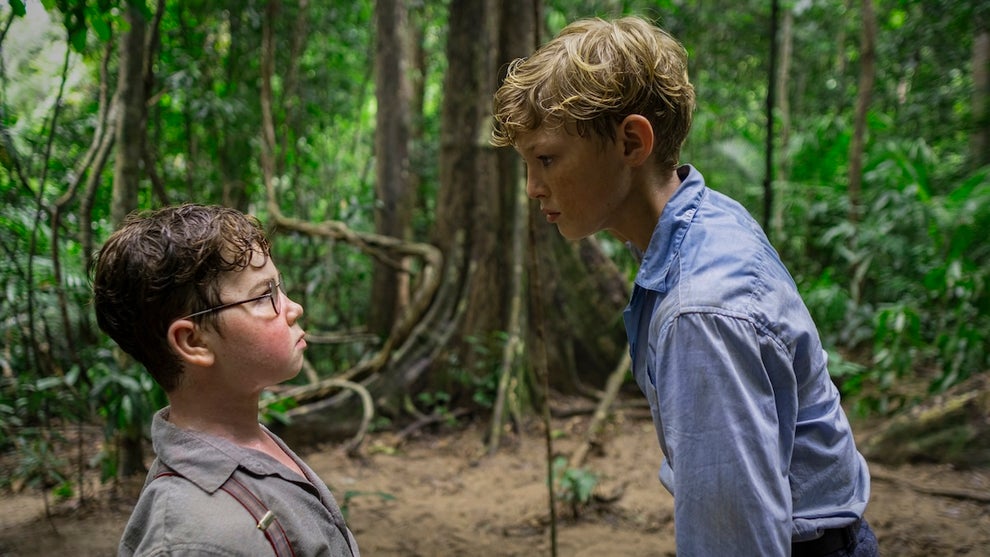
“Lord of the Flies” is a William Golding novel originally published in 1954. It’s been a ubiquitous piece of assigned writing since at least this critic’s high school English classes. It was adapted to film a few times; its first take, a 1963 movie directed by Peter Brook, is acclaimed enough to be a member of the vaunted Criterion Collection. It influenced all kinds of art in its wake, notably in TV shows like “Yellowjackets” and episodes like “The Simpsons’ “Das Bus.” Even if you have never read the book nor seen any of these movies or shows, it’s likely you know the general premise and themes explored.
All of this begs the question: Do we need a four-episode miniseries adaptation of “Lord of the Flies”? Is there anything left to explore and uncover? The answer, at least according to this critic: Not particularly!
A quick refresher: In the approximate time of Golding’s activity, making this a period piece, a small British airplane full of young boys crashes on a deserted island. The boys are the only survivors, and they quickly try to play grownups in an attempt to stay alive and get rescued. Leaders and social stations are quickly established, with three kids making a triangle of power struggles.
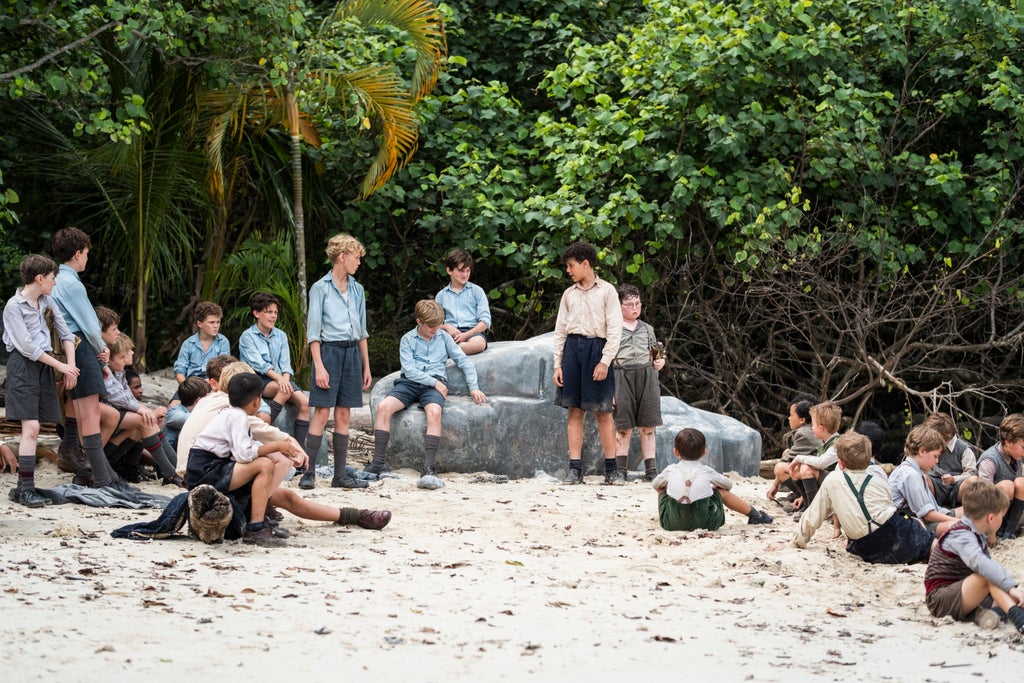
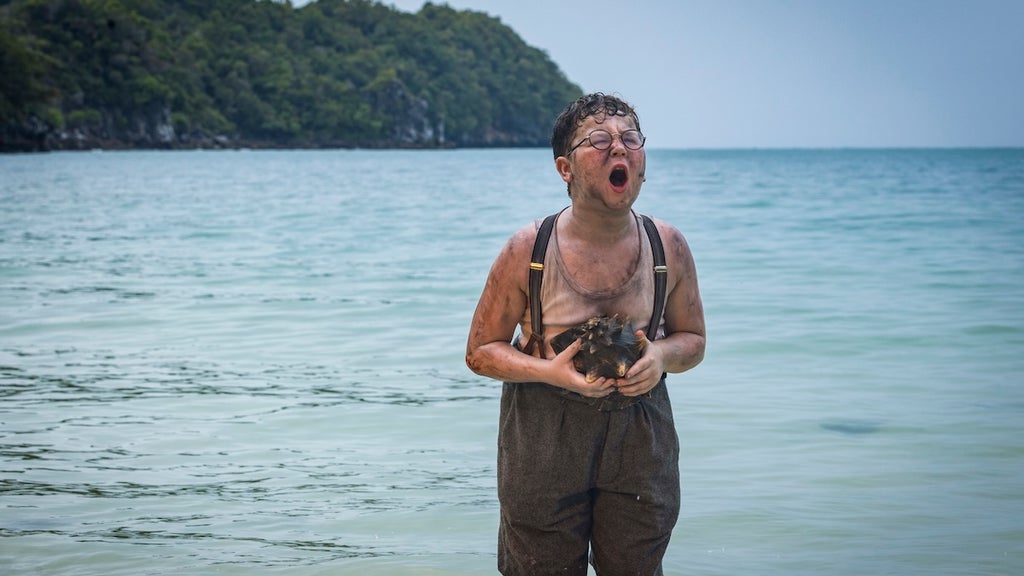
There’s the cruelly nicknamed Piggy (David McKenna), who is long-bullied but intelligent and diplomatic. There’s the oft-cruel Jack (Lox Pratt), who over-prioritizes traditionally masculine tenets like hunting and strength. And in the middle is Ralph (Winston Sawyers), who is kind and sensitive but has an undeniable, and perhaps exploitable, charisma. Tensions rise, blood is shed and a pig’s head on a stick starts talking. Is mankind inherently evil? Are societal bumpers threadbare illusions just barely holding our animalistic instincts of power at bay? Who’s got the conch?!
This Netflix miniseries, which originally aired on the BBC, is wholly written by Jack Thorne, whose jaw-dropping “Adolescence,” co-written by Stephen Graham, asks similar questions using a similar age and gender group (well, except the conch bit). Here, Thorne is a little more hampered by the text, and when notable quotes like “sucks to your ass-mar” are uttered, it breaks a spell of pseudo-modernization Thorne seems to be trying to cast despite the period setting.
Thorne’s modernization comes chiefly in two tactics, neither of which connect or elucidate as desired. First, each episode is named after a character, ostensibly announcing that the episode will follow his point of view. And while each episode at least starts from the eponymous character’s vantage point, and often includes a pre-crash flashback about them, the device is quickly relegated to window dressing, indicating at a kind of muckraking storytelling technique before reverting to a traditionally omniscient point of view. It looks like a pig but doesn’t taste like bacon, know what I mean?
The flashback device speaks to Thorne’s other primary tactic, a sort of necessary evil when adapting a concise work into an expanded form: fleshing out the story to fill in the allotted airtime. Sadly, the miniseries’ new material is often frustratingly literal, robbing the viewer of the pleasures of inference or drawing their own conclusions. Yes, I suppose it tracks that Jack’s family isn’t kind to him, psychologically making his behavior on the island “make sense.” But seeing a flashback of his family acting poorly while he shuts down stoically makes the appealingly ambiguous dull and didactic. I don’t think art should be made to be “gotten,” yet the overwhelming sensation while watching “Lord of the Flies” was, “Yeah, I get it.”
Other expansions of Golding’s work zero in more exactingly on the relationships between the boys whilst on the island. As stated before, some of these exchanges feel anachronistic, airlifted in from a 2020s drama that’s interested in “complicating character tropes, man.” The juice often isn’t worth the squeeze because the moves made are trite and obvious, founded on rote reversals of what we know about the characters upon first glance. What if the bully was kind of a leader? What if the leader was kind of a bully?
From a storytelling perspective, not much for either. But it does give its young and impressive cast of performers more room to spar with each other, and that can make for some effectively disquieting (and sometimes inspiring) TV. In particular, the relationship between Ralph and Piggy, as performed by Sawyers and McKenna, has some well-drawn shades and speed bumps that the actors play through sensitively.

What isn’t even a little sensitive, or interested in subtlety, is the visual direction. Marc Munden, who’s worked on loads of prestige TV like “The Sympathizer,” uses a litany of distorted wide-angle and fisheye lenses. His color correction is garish, reminding one of the high contrast, boldly saturated images favored by vulgar auteurs like Tony Scott or Michael Bay. It makes for technically impressive frames; Thorne said in the press notes that Munden “thinks like a painter,” and you could absolutely savor a number of resplendent screenshots from the show as self-contained works of aesthetic interest.
But does this bold strategy achieve any kind of storytelling purpose? “Lord of the Flies” starts as a grounded piece of survivalism, but as the facade of polite society erodes, it gets more heightened, violent, and even surreal. Munden lenses the show at this surreal level from moment one, so when the text actually demands surrealism, we’re already burnt out by the smorgasbord of visual tricks thrown at us. It feels less “intentionally composed shot plan” and more “what if a skateboard video was also a Nine Inch Nails music video?” If everything’s bacon, nothing’s bacon, know what I mean?
An undeniable success of this “Lord of the Flies” is its music. Credited to the eclectic trio of Cristobal Tapia de Veer (“The White Lotus”), Hans Zimmer (“Planet Earth”) and Kara Talve (“The Simpsons”), the sometimes jaunty score evokes a certain sense of traditionally British pride. But there’s dissonance at its core, a rotting, festering dissolution of values metamorphosing from the inside out. It does more to tell and expand the story of “Lord of the Flies” than “Lord of the Flies,” an otherwise holistically irrelevant addition to the deserted island of Netflix’s forgettable library of peak TV.
“Lord of the Flies” premieres Monday, May 4, on Netflix.