
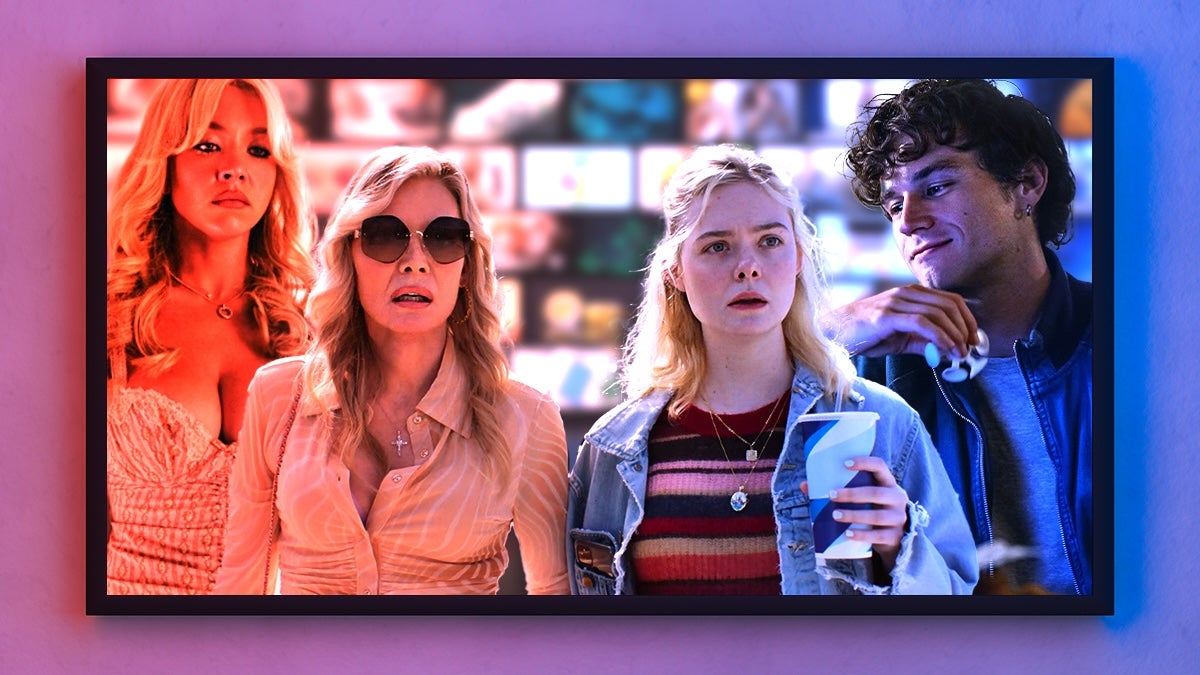
Trend alert: OnlyFans is everywhere. The video subscription platform often used by pornographic creators is a plot line in seemingly all the buzziest shows on TV right now, from HBO’s “Euphoria” to Apple TV’s “Margo’s Got Money Troubles” and beyond. But it’s not some epic advertising ploy. It is, as Harry Styles would say, a sign of the times.
As Hollywood writers look for realistic ways to depict their characters, the rising popularity of OnlyFans as a source of income in the gig economy — and the financial hardships that many have been facing over the last several years — inspired the most prominent depictions of the platform onscreen.
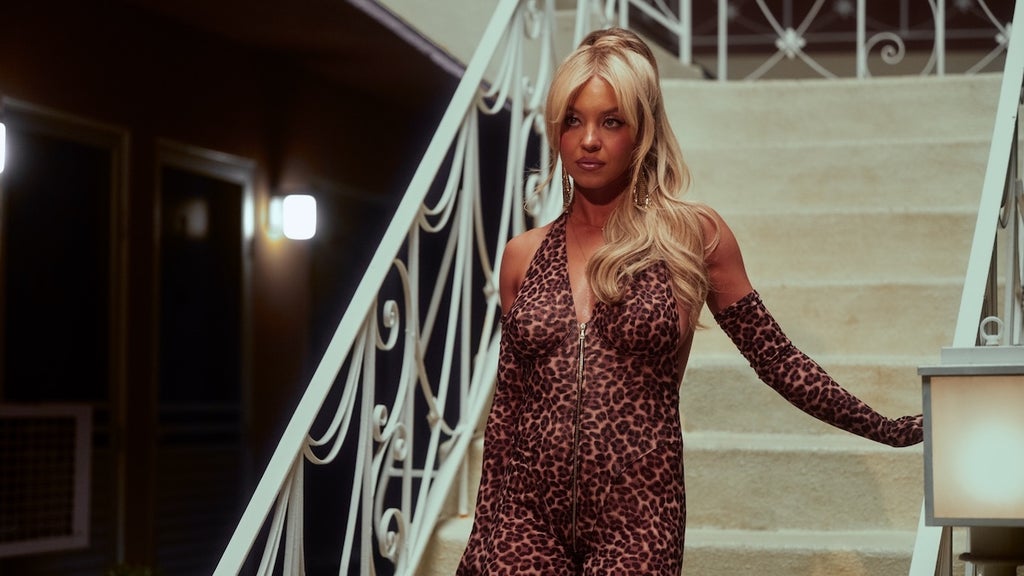
It’s precisely why Elle Fanning’s Margo turns to OnlyFans in Apple TV’s “Margo’s Got Money Troubles” as she battles a mounting stack of bills after getting knocked up by her professor and dropping out of college. And while “Euphoria” once depicted Barbie Ferreira’s Kat moonlighting as a cam girl as she learned to embrace her sexuality, the gig is much different for Sydney Sweeney’s Cassie in Season 3. Though Cassie turns to OnlyFans initially to pay for the wedding of her dreams — complete with $50K worth of flowers — eventually the job becomes a lifeline for both herself and Nate (Jacob Elordi) when a mob boss comes to collect his debts.

For both Margo and Cassie — as well as “Industry” supporting character Sweetpea whose use of a similar platform is revealed in Season 4 — their decision to jump into sex work is about survival, which “Margo’s Got Money Troubles” author Rufi Thorpe, who serves as an EP on the series, understands as “a symptom of how bad the economy is.”
“Hustle culture has dominated American life, whether you’re making extra money by delivering things on Doordash or whether you’re making extra money by joining OnlyFans,” Thorpe told TheWrap. “That greater economic uncertainty for Americans has resulted in OnlyFans as a cultural phenomenon.”
But depicting OnlyFans work as just a means of survival is reductive, and misses a whole spectrum of reality for some of the adult creators on that platform.
Angela Jones, a professor of women, gender and sexuality studies at Stony Brook, said many of the stories fall into the “last resort thesis,” coined by sex work scholar Heather Berg.
“The media is constantly trotting out this trope where … people only go into sex work as this kind of last resort — even if it was for flowers,” Jones told TheWrap. “It’s rooted in desperation rather than understanding that sex work is work, and people turn to sex work for the reason that anybody looks for a job: they need income, and it doesn’t necessarily have to be about kind of survival and desperation.”
Desperation isn’t a part of the equation for some trans and disabled people they’ve spoken to who find the job “profoundly better” than other choices, Jones said.
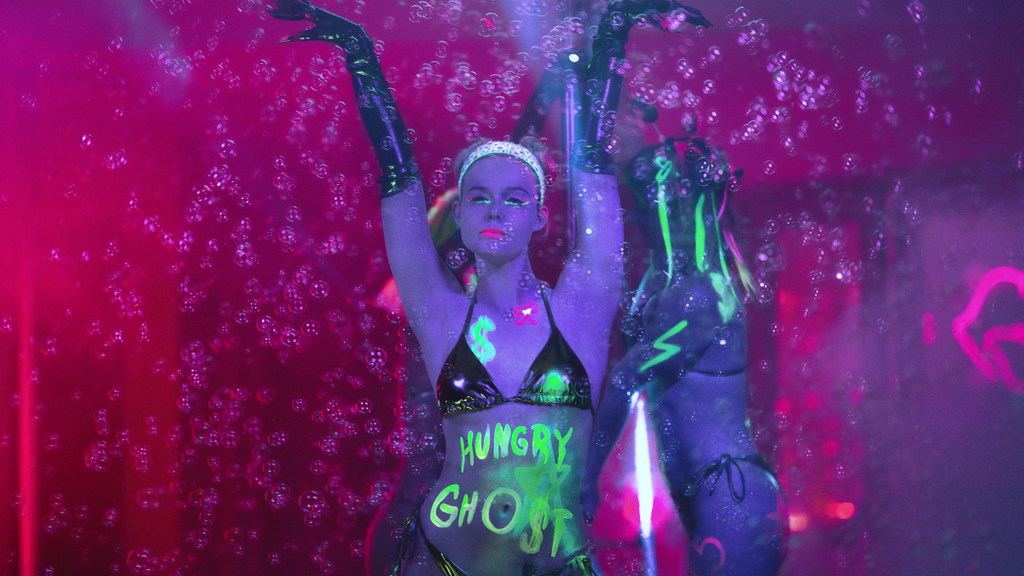
Take it from OnlyFans creator Isla Moon, whose journey on the platform began with the need for rent money during undergrad as she applied for PhD programs in psychology and neuroscience, but, after going viral on TikTok and making her annual salary in just two days, opted to make it her full-time gig.
“I’ve gained so much financial independence through this,” Moon told TheWrap, noting she now has a real estate business and a production company that satisfies her dream to produce reality TV and horror movies. She even distributes her reality show — a fishing competition show — via OFTV, which houses more work-safe content.
Playing catch-up
OnlyFans had its big boom during the pandemic, as, like any profession, sex work was forced to shift online. It’s that rise that paved the way for Thorpe to write “Margo’s Got Money Troubles,” which was published in 2024.
“I was seeing it in the world around me, and the truth is … it takes a very long time to write a novel, and then to make a show about the novel,” Thorpe said. “If anything it’s just a testament to how long the pipeline is for books and shows that it’s taken this long for TV to catch up.”
While David E. Kelley admitted diving into the world of OnlyFans was “daunting,” he and EP Eva Anderson, who was upped to co-showrunner ahead of Season 2, applauded Thorpe’s novel for “refusing to judge” its characters, with Anderson noting, “I think approaching it that way helped us keep away from being judgy or prescriptive to the characters, and really examining this world that a lot of people are living in all the time.”
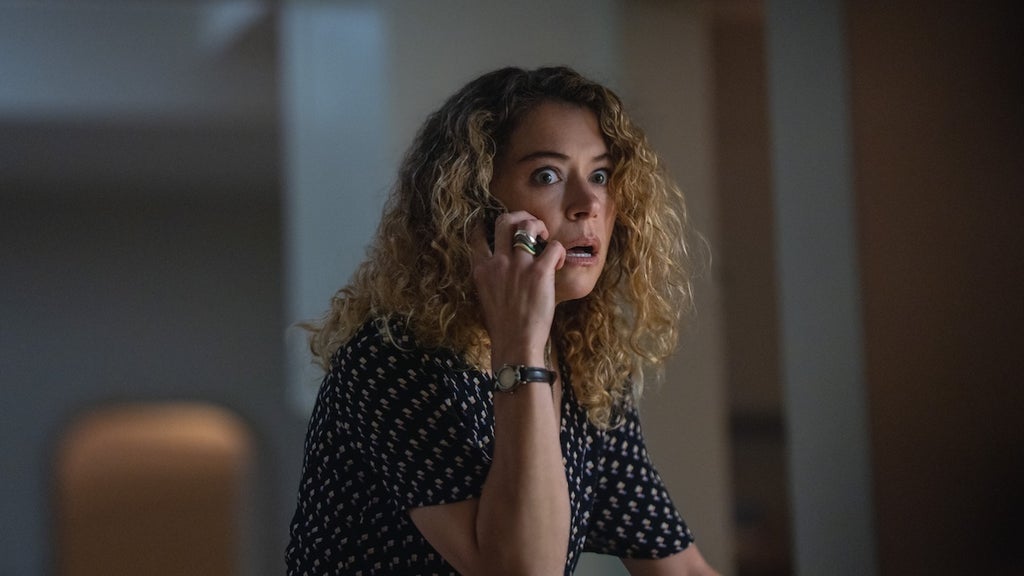
It might also be why Apple TV’s “Maximum Pleasure Guaranteed” finds a camboy (Brandon Flynn) at the center of a scam-turned-murder plot involving his client Paula (Tatiana Maslany). Unlike “Margo’s Got Money Troubles” or “Euphoria,” in “Maximum Pleasure Guaranteed,” online sex work is just a facet of the story, rather than a show about it — a decision that creator and showrunner David Rosen said was an intentional choice.
“It’s really about the scam, rather than the actual ins and outs of the profession because we had to take some liberties in terms of how these interactions might actually happen, and how one gets paid, and all those types of things,” Rosen told TheWrap. “Because I do believe #SexWorkIsWork as we put in the script, and we wanted to be really careful to be like, ‘This is one person, we’re not casting aspersions on the industry.’”
What TV is getting right — and wrong
It’s no secret that “Euphoria’s” depiction of sex work has stirred up critiques and controversy, with the New Yorker’s critical essay by Inkoo Kang calling out creator Sam Levinson for “squander[ing] opportunities for humanization or interiority in favor of provocation” as “Cassie exemplifies pretty much every generic insult one might imagine about women who take their clothes off for money.”
Jones noted the season included “so many tired, toxic, harmful, and just frankly kind of empirically inaccurate stereotypes about sex work,” pointing to tropes regarding the sex workers’ ties to addiction and the overemphasis on exploitation. Moon opted not to watch “Euphoria” after seeing how sex workers were depicted in the season trailer, explaining “it really rubbed me the wrong way.”
Jones hadn’t watched “Margo’s Got Money Troubles,” but the show seems to be regarded in the community more positively than “Euphoria,” though Moon said the show “doesn’t focus a lot or underestimates how much marketing and branding and subscriber retention that you need,” explaining that without a “For You” page (the main tab on social media apps like TikTok or Instagram that guides users towards recommended content based on their algorithm), creators must drive traffic to their page directly.
“95% of my job is social media,” Moon explained, noting the difficulty to retain subscribers after each 30-day subscription. “It’s like a whole thing of just trying to keep up while also trying to grow, so it gets a little intense … you have to see it as a business, if you run it like a business and treat it like one, you’ll build an empire, but a lot of times people don’t realize that you actually have to work for it.”
A step forward?
Jones isn’t too quick to label the depictions as a step in the right direction for sex worker representation, explaining, “sometimes there’s a rush to paint this fully as a positive trend without leaning into some of the nuance here … that there’s still a lot of repercussions, depending on the context, and that this can still cost people,” pointing to stories in mainstream press that have seen civilian workers lose their jobs due to their OnlyFans work.
That said, Jones noted “the representations that I see as being more positive are ones that share one thing in common, and that is that generally sex workers participated in or played some very significant role in the kind of production, the creation, the writing, the casting, all of it in the production of that media.”
That was certainly the case for “Margo’s Got Money Troubles” supporting actress Lindsey Normington, who organized the first unionized strip club in the United States.Anderson said that Normington served a check for lingo about the industry while on set.
“We feel heard for once, which is really nice,” Moon said. “It’s kind of nice to show people our perspective, even though it might not be perfect. I feel like any movie, any depiction won’t be exactly what it’s like … some shows or movies about what it’s like to be an Olympic swimmer, … it’s obviously not going to be exactly, exactly that.”
Andi Ortiz contributed to this story.
