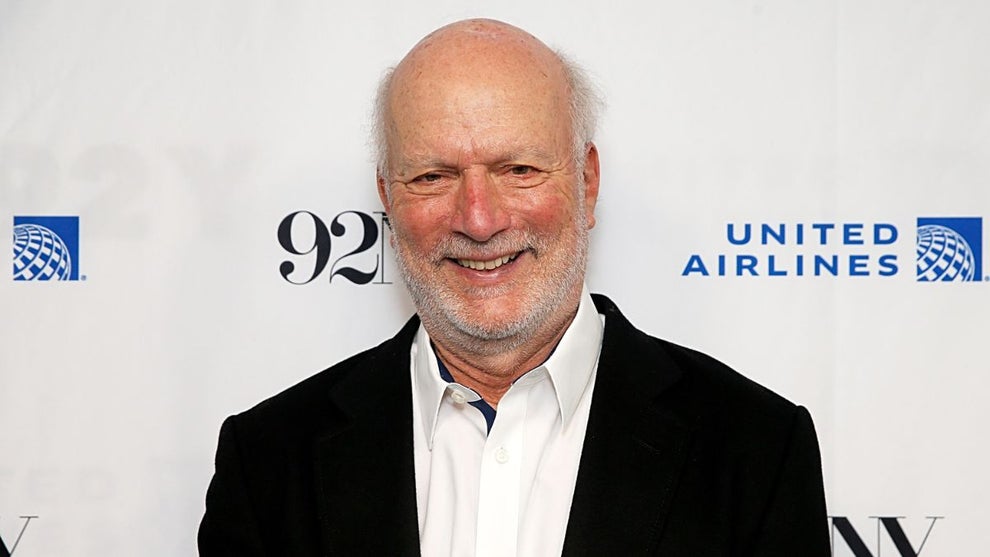
You may not be familiar with the name James Burrows, but you’ve likely seen it dozens of times on screen, and news of his death reverberated throughout Hollywood on Friday.
The director and producer was one of television’s most prolific figures, and one of immense impact. Over the course of a truly unparalleled career, Burrows, who died this week at the age of 85, directed over 1,000 episodes of some of the most beloved and acclaimed comedies ever created. Eleven Primetime Emmy Awards and five Directors Guild of America Awards lined his shelves, along with a DGA Lifetime Achievement Award, and an NBC special in his honor in 2016. In the glossy and ego-laden world of TV, most of the heavy work is done by the behind-the-scenes folks, and it was people like Burrows who helped to craft the all-American multi-cam sitcom.

Born in 1940 to writer Abe Burrows (best known for co-writing the books for the award-winning musicals “Guys and Dolls” and “How to Succeed in Business Without Really Trying”), Burrows began his career in theater, working on the disastrous musical adaptation of “Breakfast at Tiffany’s” starring Mary Tyler Moore. The show sank, but it led Burrows to seek work in television with Moore’s production company, MTM Enterprises. There, he began his behind-the-camera career on shows like “The Mary Tyler Moore Show” and “The Bob Newhart Show.”
Soon, his roster of shows expanded, and in 1982, he earned his first co-creator credit with “Cheers.” The NBC comedy about the lovable regulars of a Boston bar was not a hit at first, but it slowly built up an audience and ran for 275 episodes. Burrows directed all but 35 of them.
By the ’90s, he was one of the powerhouses of TV comedy, particularly on NBC, where he directed episodes of everything from “Frasier” to “Friends,” “3rd Rock From the Sun,” “NewsRadio” and “Will & Grace.” He became the go-to director for pilots of new comedy series, serving as a steady hand to steer more than 50 shows out of port before they entered more treacherous waters.
Even Chuck Lorre called upon his services to help turn series like “The Big Bang Theory” and “Two and a Half Men” into the juggernauts they became. He became such a familiar figure in the industry that he even appeared on some of these shows as a TV director, most notably across all three seasons of “The Comeback,” where he played a version of himself known as Jimmy the director. Even Valerie Cherish knew Burrows.
It speaks volumes to Burrow’s impact and the respect he commanded that NBC aired “Must See TV: An All-Star Tribute to James Burrows” when he reached the milestone of directing 1,000 episodes of TV. But that didn’t slow him down. He co-directed the “Live in Front of a Studio Audience” specials, recreating the iconic comedies that influenced him and generations of others, with all-star ensembles and the live formula the majority of comedy now avoids. He stuck around long enough to direct the revivals of shows he worked on the first time around, like the return of “Frasier” on Paramount+.

TV used to be static. It was cheaply made and involved little camera movement or cutting. Burrows helped to change up the format. The blocking became more complex. More characters filled scenes and the lighting became less flat. The sets were bigger too. Burrows is widely credited as the first director to add a fourth camera to the traditional three-camera set-up, which allowed for more sophisticated set-ups. All of it gave room for sharper and more layered comic timing. As fellow TV director Mark Cendrowski put it, “Having that balance of characters and jokes bouncing back and forth, the pace and tone. We owe a lot to what he’s done to ensemble comedy. He’s always been a master at it.”
In explaining his approach, Burrows told IndieWire in 2023, “I’m not a film director. The camera, I leave that to Spielberg and Scorsese. I’m a theater rat. I stage a play every week, a 20- to 25-minute play and then my camera comes in and covers it. I understand characters, I understand what’s funny, I understand the essence of keeping it moving and keeping the energy going. It’s all theatrical. If it doesn’t happen on that stage, it’s never gonna happen on film.”
Indeed, when a sitcom is at its best, it flows like great theater, and that was certainly the case with prime Burrows. The most famous episodes of “Frasier” and “Cheers” feel like Noël Coward with their wit and pacing.
Every few years or so, we get think-pieces declaring that multi-cam sitcoms are dead. The format is frequently dinged as out of date or forcing laughs from its audience, both on the sound stage and at home. But there are few things better than a supremely well-done multi-cam comedy, and Burrows was a master at crafting them. In an interview with The Daily Beast, Lisa Kudrow declared Burrows to be “the Zeus, the Mount Olympus of television comedy,” both in real life and on “The Comeback.”
He remained committed to them in his final years, including with 2025’s sadly canceled “Mid-Century Modern,” which he directed all 10 episodes of. James Widdoes, another TV director, said, “When the networks say, we’re not going to do any more multi-camera pilots, Jimmy’s gonna do a couple and keep the form alive. Jimmy’s been a constant through it all to keep it alive.”
In the final season of “The Comeback,” Burrows, as himself, directs the AI-written sitcom that Valerie Cherish hopes will once again revive her career. The pilot ends up being okay, and that, for Jimmy, is a failing. He delivers one of the season’s most devastating monologues as he declares that great art is made from human surprises, not predictable algorithms. When asked about it by IndieWire, he said he agreed with every word and that the modern sitcom was on the decline because “there’s no more innovation left.” But Burrows came and saw too many so-called deaths of the sitcom and always brought them back. Let’s hope that his legacy, as mighty as it already is, can buoy the next generation of multi-cam in the late-2020s.
