
The Emmy Awards are stepping into their streaming era.
Hollywood’s televised celebration of the best in television and streaming is setting up on Amazon’s Prime Video in an exclusive deal through 2033, bringing the telecast to more than 240 countries around the world — for free. The deal is worth around $15 million a year, an individual with knowledge told TheWrap.
The award show’s new long-term streaming home marks the end to a 31-year rotation between the American broadcast networks, NBC, CBS, ABC and Fox. Now, like the Oscars moving to YouTube in 2029, the Emmys will leave broadcast television for the first time in an effort to reach more audiences. Having the telecast as a free offering plays a key role in that quest for more viewers.
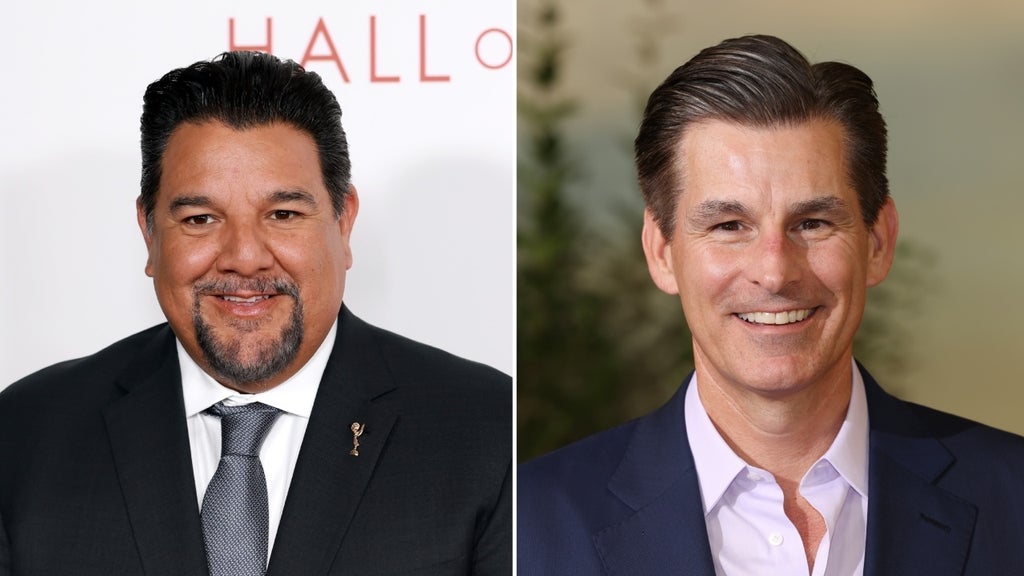
“Access was non-negotiable,” Cris Abrego, chairman of the Television Academy, told TheWrap. “Our priority was continuity. As much as [the wheel] served the Academy, it was difficult to help grow the Emmys while constantly rotating. We were basically starting over every year from a production standpoint, creative and branding. Amazon understood this early on and [Prime Video and Amazon Studios head Mike Hopkins] had a lot of ideas to preserve the legacy and how to evolve it.”
“Sort of like what we’ve done with live sports, there’s a lot of ways to innovate and modernize how things are done,” Hopkins told TheWrap of broadcasting the Emmys. “We got really excited about the idea of working with the Academy and transforming the broadcast in such a way that could make it bigger and younger.”

Shifting to a permanent home allows Amazon to dig deeper into marketing and evolving the telecast, rather than passing it over to another distributor for the following year. The deal keeps the Emmys at its traditional early September timing, with a specific date to be revealed later.
Without getting into financial specifics of the deal, Abrego said Amazon is “making a significant investment,” likely beyond the projected $8 million per year the broadcast networks paid under the latest wheel deal that was established in 2018.
The deal includes streaming of the Creative Arts Emmys, the two-night celebration of technical categories as well as the presentation of guest acting and some limited series categories. It also allows the TV Academy to tap into its offerings for more Emmys-related programming to share on the platform.
As of now, the deal does not include the Daytime Emmys telecast, which is organized by the National Academy of Television Arts & Sciences (NATAS). But Abrego said that might change soon as talks for the TV Academies to re-merge continue to unfold. It’s all part of the Academy’s evolution that also included the launch of its FYC festival Televerse in 2025.
“The Academy is a year-round ecosystem, we have so much depth in libraries and events that could start to help build the road to the Emmys leading up to the big night,” Abrego said.
The rotating wheel model for the Emmys first began with ABC, CBS and NBC from 1966 to 1986 — before Fox outbid the other networks and took over distribution in 1987, which led to a dramatic decline in ratings. ABC took over the rights in 1993 for four years, before the deal was scrapped in 1995 after other networks said they wouldn’t support the show on a rival network. The TV Academy then opted to bring back the wheel deal with Fox in the mix — and it remained in place until now (despite a lucrative offer from HBO in 2002 that fell apart after broadcasters once again threatened to boycott).
More than 20 years since then, changes to the TV landscape in favor of streaming seem to appease any concerns of a boycott from Abrego.

“We have really strong relationships with our broadcast partners and have been really transparent with them,” Abrego said. “There’s a lot of smart people running those broadcasters and other peers, and they have an understanding of what the Academy’s reach should be. I think they’re going to be in support of [this deal] to that extent. This is good for the industry.”
The way Hopkins sees it, Amazon is in a unique position in the marketplace to present the Emmys given it also partners with other media companies to distribute their streaming offerings, including access to HBO Max, Apple TV, Paramount+, Peacock, Fox One and AMC Plus.
“Many of the nominees and winners each year may not be on our Prime subscription, but they are on our service and available to our customers. We can be celebrating the nominees in the lead-up to the Emmys in a way others couldn’t,” Hopkins said.
The Emmys are the latest award ceremony to make its way into streaming. Prime Video previously snagged the distribution rights for the Academy of Country Music Award from CBS in 2021. The Actor Awards left TNT for Netflix a few years later, where it has garnered a relatively small audience.
And perhaps the biggest move yet, the Oscars will migrate from its longtime home at ABC and Disney for a new deal with YouTube to reach a global audience starting in 2029. “Apart from sports, this is the day network TV finally, truly, really died. We don’t have to wait till 2029 for the coroner’s report,” a former Disney executive told TheWrap when the Oscars update was first announced in December.
For Abrego, the move into a streaming-exclusive home is the next step in the virtual evolution — not a statement against broadcast. He noted the rotating wheel deal already allowed for media companies to air the Emmys through broadcast and through their streaming platforms, like NBC and Peacock airing the shows this year.
“I think the distinction between broadcast and streaming is becoming less meaningful every year,” Abrego said.
Like broadcast networks used the Emmys telecast to promote their new shows and talent — Mariska Hargitay hosted broadcast’s last time hosting the show on NBC this year — Abrego said to expect Amazon talent to be tapped for plenty of promotion during the show and other offerings. So Alan Ritchson, get your tux ready.
“I would love to see Reacher smashing out some Emmys,” Abrego joked.
“(Laughs) It’d definitely have to be a custom tux for him. But yeah, we’ll be agnostic on talent,” Hopkins added. “We’re trying to entertain a lot of people with this celebration of storytelling in television, and you can’t do it without celebrating all of it.”
