
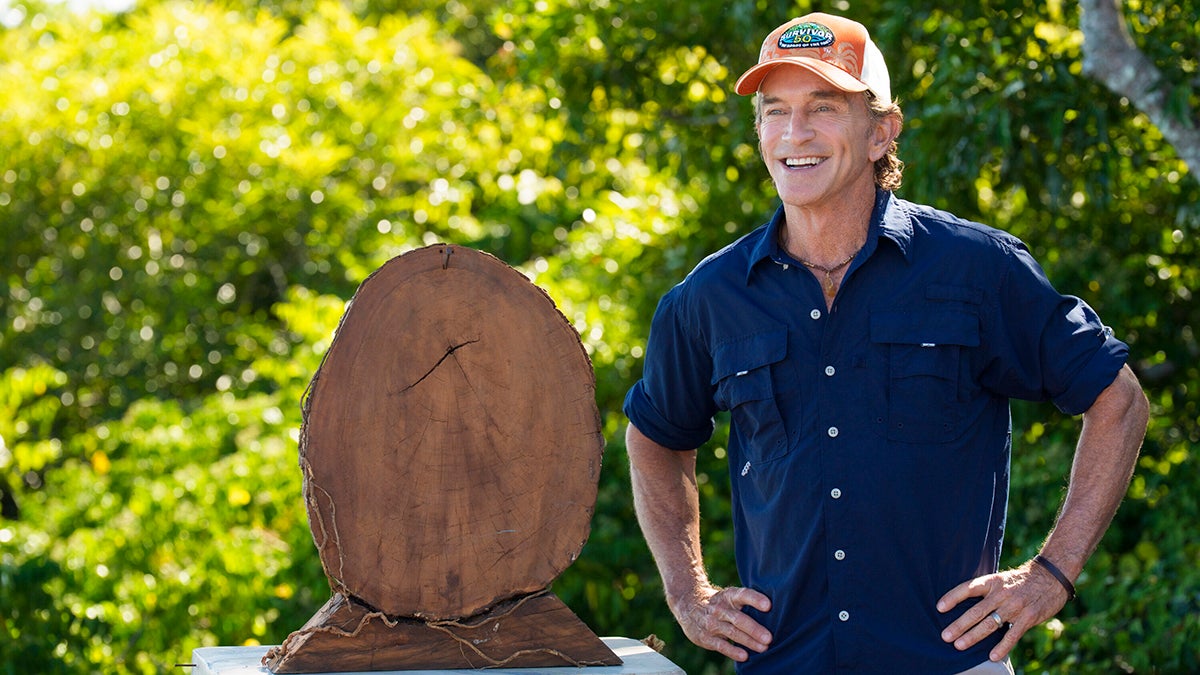
Arguably the show that transformed television and led to the boom in reality TV just after the turn of the century, CBS’ “Survivor” has now been on the air for 26 years, 50 seasons and 727 episodes. In that time, Jeff Probst has hosted every show, snuffed hundreds of torches and created a lexicon of familiar TV sayings: “The tribe has spoken,” “I’ll go tally the votes,” “Drop your buffs” and the proudly redundant “Once again, immunity is back up for grabs.”
Probst won the first four Emmys in the Outstanding Host for a Reality or Reality Competition category but then wasn’t even nominated for the next 12 years, though he clawed his way back to noms in 2024 and ’25. Now in his mid-60s, he’s been the “Survivor” showrunner for much of the run, a distinction he’s proud to make.
“I was never just a host,” he said. “That was the chip on my shoulder. When people called me a host, I wanted to knock their block off. Don’t put me in that category with all the other hosts on shiny stages with the long microphone. That’s not me. I’m a producer in front of the camera.”

Probst sat down with TheWrap two days after the live “Survivor 50” finale, which crowned Aubry Bracco as the $2 million winner. The show also had a viral moment when Probst mistakenly introduced Rizo Velovic as the final member of the jury before the audience had seen the footage of Velovic losing the fire-making challenge that eliminated him from the game and put him on the panel.
This was Probst’s final interview in a three-year stretch of planning, pulling off and promoting the landmark season.
What has this past week been like? Two days ago was the first live finale you’ve done in years, and probably the biggest one ever.
The past week has been really interesting because we’ve also been shooting “Survivor 51.” And so while I was on location shooting “51,” we were finishing post and planning the finale for “50.” It’s been madness for the last few months. And the excitement of doing a live finale is unlike anything else. It’s fun when that red light goes on and anything can happen.
As you learned when you brought up Rizo a little early.
Yes.
Was there any thought of, let’s get through this and then we’ll clean it up for the West Coast broadcast?
No, we never considered doing a pickup. “Survivor” lives by the same credo all the time, which is whatever happens is what we show. I went out [with Rizo] one act early. We had missed it somehow in the rundown. We had added an act break in the episode right before they start to make fire, and it never got updated in any of our scripts.
But here’s the best part: The president of the network, Amy Reisenbach, came in my dressing room and said, “Wow, I love live TV. That was amazing. What are you gonna do now?” Think about how many other executives could have come in and said, “First of all, what happened? Secondly, you’re wearing an earpiece from now on.”
When “Survivor“ began, you said that you figured it would run for a few seasons. What did you envision your career looking like post-“Survivor“?
Wow, if “Survivor” had only run a couple of seasons? Well, at the time I wanted to be a writer and director of feature films. On the first day of “Survivor,” I had this movie “Finder’s Fee” greenlit with a $1 million budget and Ryan Reynolds and James Earl Jones as the stars.
And so I thought I was gonna make my living in front of the camera hosting and behind the camera as a creator. If “Survivor” had ended then, I probably would’ve kept pursuing that. And I don’t know that that would’ve gone nearly as well as things went on “Survivor.”
By now, there’s a time-capsule component to past seasons. At a certain point in the late 2010s, for instance, you started to interrogate things as simple as your line “Come on in, guys!” at the beginning of challenges.
Yeah. One of the cool parts of “Survivor” is it is a reflection of our culture. We have done and said things in earlier seasons that we would never do today, and we are doing things today that we would’ve never thought to talk about 15 years ago.
I remember [contestant] Sarah Lacina saying, “Why do you only call men by their last names?” I said, “I didn’t even know I did.” Another lesson learned for me. When we got to the #MeToo era, I asked both my kids about saying, “Come on in, guys!” And our daughter said, “Look, it’s not a huge deal, but yeah, it’s a masculine term in my world. I wouldn’t call a group of people guys.” And I thought, That’s all I need.
In the earlier years, I would sometimes see a player do something dumb and think, Have you ever even watched this show before? These days, I rarely feel that way because it seems as if everybody comes in having studied the game.
It’s interesting to hear you say it that way, because I would argue nothing has changed in terms of human behavior always revealing itself. Season 50 showed it. This guy Ozzy [Lusth], he’s gotten deep in the game so many times. He and Cirie [Fields] had a pact to the end. And as producers, we could see it and we thought this would be unbelievable if these two could get to the end.
And what does Ozzy do? What he always does. He tells everybody, “Cirie and I are going to the end, just so you know.” And immediately all the weapons come out. And he knows it. He had a dream in the jungle that he needed to play his [immunity] idol. But he still didn’t ’cause it’s in his nature.
I think Survivor forces your nature to come out. If I, Jeff, played “Survivor,” at some point I’m gonna say something lippy and snappy. That’s me. I will do that. And if I was a player, I’d be dead.
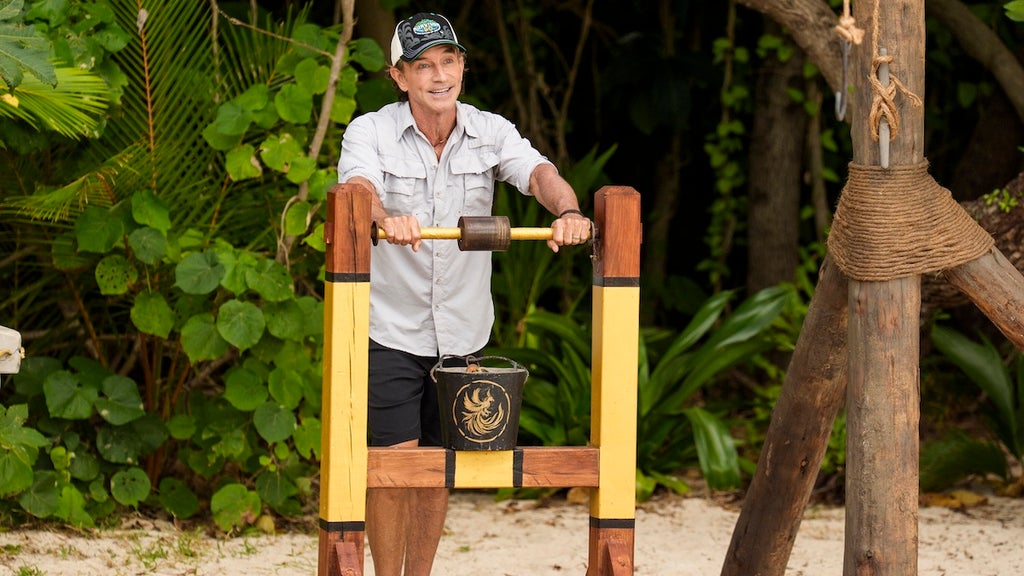
You did play “Survivor“ this year, when you participated in one of the challenges. You came in cocky and lost badly. Did you really think that you had it in the bag?
I always tell the truth on “Survivor.” I picked that challenge a year earlier. I said, “OK, for 50 I’m running a challenge.” We all agreed that it had to be one where I can talk while I’m doing it, so I can’t be running somewhere.
We figured this one [where players keep a weighted bucket on a string from dropping with the strength of their grip]. I immediately started working on my grip strength. When I was working out, I would have this rope attached to some weights and I would pull it up and be like, “I’m getting pretty good at this.”
And then we set the challenge up, I tested it at a rehearsal and I thought, Oh my gosh, I’m gonna win. And I can’t win. Somebody needs to win immunity. So at some point I’m gonna have to go, “Ooh, I’m getting tired” and put on a performance and let it drop. And I’m trying to figure out how I’m gonna do that, ’cause I don’t want to fake it.
[When the challenge began], that weight felt like 10 times the weight [I had before], and I instantly knew I was in trouble. I was desperate to not be the first one out. Somebody had to drop before me. I can’t remember who it was, but inside I went, Oh, thank God, at least somebody dropped. And then I just started slipping. That was 100% real.
Going into tribal councils, you obviously haven’t been hanging out in the camps listening to everybody talking. But you have access to that information because it’s being shot by your camerapeople. How much are you aware of who’s talking about whom?
Pre-tribal council, the co-EP story producers all get in a little room and do a 10-minute download. What I need to know are all the big things: Who has an idol or an advantage? And they will often say, “John has his idol. He might play it tonight if he gets a Spidey sense of something going wrong.”
And the other thing I know is who they intend to be voting out. It might be that Christina’s going home unless she gets wind of it, in which case she may play her shot in the dark. If she does play her shot in the dark and it hits that, it’ll probably be Eric that goes home.
So I know the key figures. A lot of people think that I know all the minutiae. I don’t.
In seasons where you’re bringing back past players and everybody knows who the contestants are ahead of time, pre-show alliances can form, like Season 50’s so-called Zoom alliance among several contestants. Is that a concern?
It’s real and there’s no way around it. So part of 50 was to anticipate pre-game alliances and design with them in mind. Things like a pairs challenge and a switch that are going to make it difficult. You can have all the alliances you want. The question is, can you hold on to them while you’re out there?
I think we did a pretty good job with that. My advice to players is just know those things can cut both ways. They did this season. Mike White got cut in a brutal way with what he thought was a relationship that was going to help him in the game, and they used it against him.
Has social media had other impacts?
Not from a game standpoint. Social media has the biggest impact after we start airing the episodes and you read all the negativity about yourself. Somebody thinks you’re dumb or you’re not physical or you’re unattractive or whatever it is.
I remind them periodically, “Just remember this great feeling you’re having right now from winning this challenge or finding that idol or pulling off that blind side. That’s real. Don’t let the negativity strip that from you when you get home.”
I try to remind the players, “Step back a little. You’re not as bad as they say you are.”
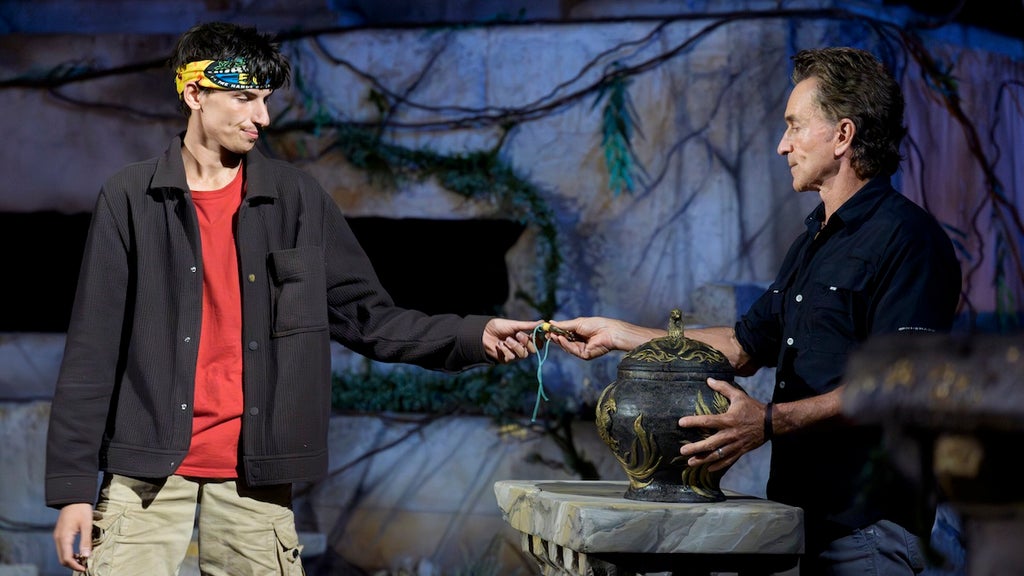
And do you remind Rizo that he’s not quite as amazing as he says he is?
[Laughs] I love Rizo. I like that blind confidence, but that’s because I’m older and I’m a dad. I look at that and go, he’s a kid and he’s full of bravado. I would also say it worked to a certain degree.
It is funny. But can you really call yourself a “Survivor” legend if you don’t even get to the final?
Yeah, I agree. But that’s what makes Rizo fun, right? Because he’s polarizing.
And you can make a case that if Rizo by some fluke had made fire, he would’ve had a shot at actually winning.
A hundred percent. Rizo absolutely had a shot, because there is something about that bravado versus “Gee, I hope your feelings aren’t hurt that I voted you out and I hope you’ll give me the million dollars.”
That falls flat. What doesn’t fall flat is, “You’re sitting over there because of me. And if that doesn’t get me your vote, then there’s something wrong.” People want to hear you claim your victory.
[Third-place finisher] Joe [Hunter] can’t do it. Joe is a wonderful guy. He’s an incredible dad. He’s a fireman. Joe does not have the ability to say, “Hey, listen to me. I kicked your ass.” He says, “I hope you respect that I tried to play a game with integrity.” People fall asleep when you say that. Joe is one of the nicest people you’re ever gonna meet. Can he win “Survivor”? No, not playing like that.
After the final votes were cast in Fiji, you had months before they were revealed. Obviously, the voting took place on camera, so there are people who knew the outcome. What happened from there?
Once we did the vote for “Survivor 50,” only a few people knew. Most people aren’t on the cameras. They’re just isolated cameras. But we have somebody who checks to make sure that names were written down and that we don’t have a tie or something weird.
Right after that, he’ll tell me, but we don’t walk around saying, “OK, everybody, here’s who won!” Those votes get taken immediately. They’re put in a box, they’re sealed and they’re taken back to America and put in a safe at our offices.
Ultimately you end up telling the network who won, because they want to know, but not a lot of people.
And now you’ve got betting sites like Polymarket and Kalshi that take wagers on the winner even though there are people who already know who won. Even before the first episode aired, Aubry was the prohibitive favorite with about 80% of the votes. So you have to wonder if insider trading is going on.
I’m so glad we’re talking about this! I was hoping somebody would give me a chance to speak on it. Those sites are outcome-neutral financially. They take a transaction fee for every bet, so they knowingly create markets around pre-taped outcomes. And the existence of the insider knowledge is not accidental. It’s structurally inevitable.
If you were pitching this business to investors, you would highlight the insider-information angle. You would say, “Here’s why it’s gonna work. People love feeling like they have access to secret knowledge, so let’s try to monetize it.”
As a show producer who spent three years on a season of “Survivor” along with a thousand other people, the frustration and the outrage with me is, you’re going to tell us that we should do a better job on our leaks. But you want those leaks. Those leaks are what make this financially viable for you. The more people betting, the better. The more likelihood that the person betting is right, the better. It’s a giant misdirect.
I have no problem with gambling at all, but gambling on a sporting event is very different from gambling on a pre-taped unscripted show. When you build a betting market around something that’s already happened, you’re not exposing some ethical loophole. You’re monetizing human weakness and calling it innovation.
If I can find any way to stifle them, I will. I don’t have an answer right now. But it impacts all of us, and I’m kind of amazed that we are OK with this.
This story first ran in the Limited Series/TV Movie issue of TheWrap’s awards magazine. Read more from the issue here.