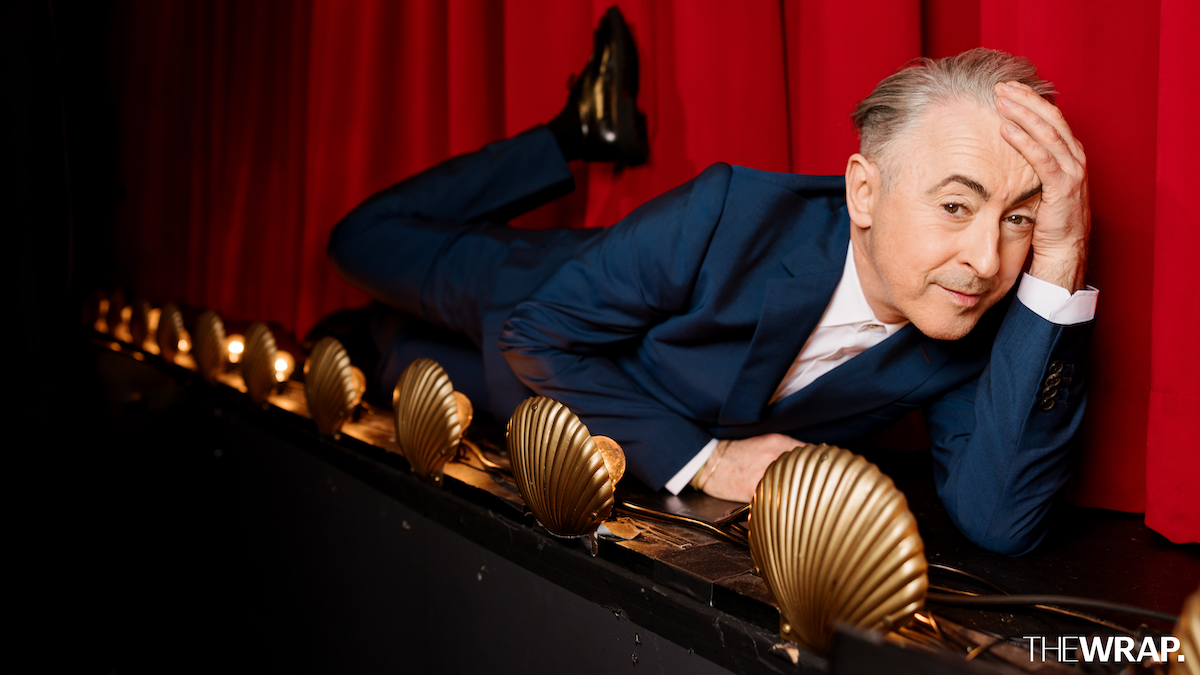
Alan Cumming is having quite the year. When we caught up with him in April, he was taking a break from a tour of a musical he’d written called “The High Life,” which was based on a sitcom he wrote in the 1990s about “a crappy Scottish airline.” He was planning to do another month of that, followed by a film and a new musical at Pitlochry Festival Theatre, the performing-arts venue in the Scottish Highlands where he serves as artistic director. After those, a play about Liberace and a revival of “My Fair Lady.”
And in between everything, he was scheduled to tape two seasons of “The Traitors,” the campy competition show that became a sensation and knocked “RuPaul’s Drag Race” out of its position as Emmy voters’ favorite reality program.
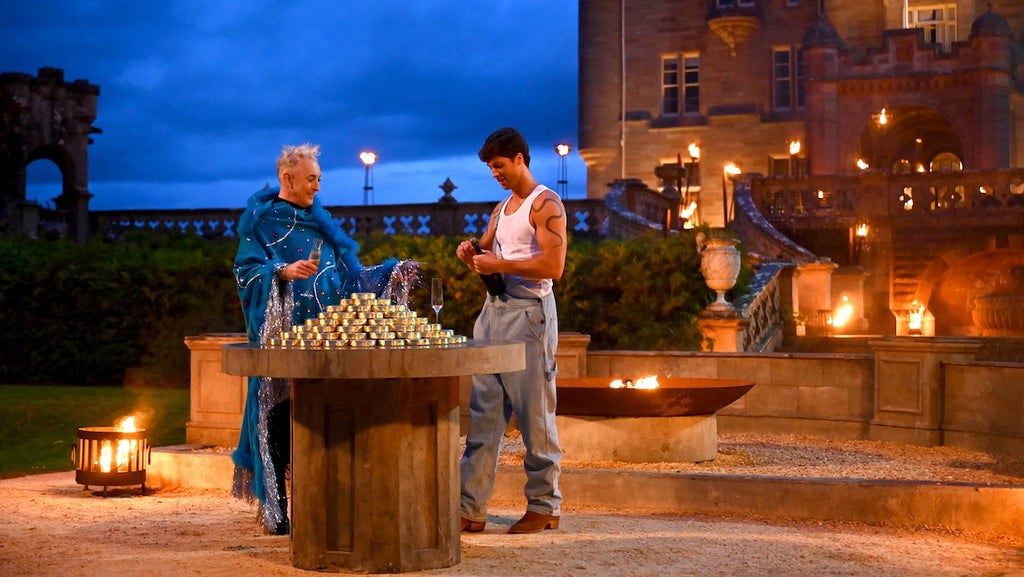
“I think that eclecticism is what keeps me interesting and interested,” Cumming said as he sat in a small Los Angeles theater, snacking on popcorn and talking about the show that, in its upcoming civilian season, will make the jump from Peacock to parent network, NBC. In “The Traitors,” contestants mostly drawn from other reality shows (including five from the “Real Housewives” franchise last season) are separated into the Faithful, who try to win a pot of prize money by competing in challenges, and two or three Traitors, who can “murder” other players and steal the prize pot — if one of them makes it to the end without being banished in the nightly round tables designed for the Faithful to uncover and weed out the Traitors.

In the highly popular Season 4, which concluded in February, “Love Island USA” vet Rob Rausch proved to be an adept Traitor, convincing the other players he was a Faithful and walking away with all the money, more than $220,000.
After years of working in theater and film, has the recognition you get for hosting a hit reality show changed things for you?
Yeah, I guess it has. It’s a huge, huge, huge, huge hit. I’ve been doing this for 40 years, so over the years, the level of notoriety or fame and the scale of things ebb and flow. But now it’s the biggest it’s been. Luckily, it’s something I really enjoy and something that’s really good. It’s not so great when you’re in a big hit that you think is s–t, which has happened to me before.
Earlier versions of “The Traitors” in the Netherlands and the U.K. are not this over-the-top or campy. When the producers of the U.S. version came to you, were they looking for a different style?
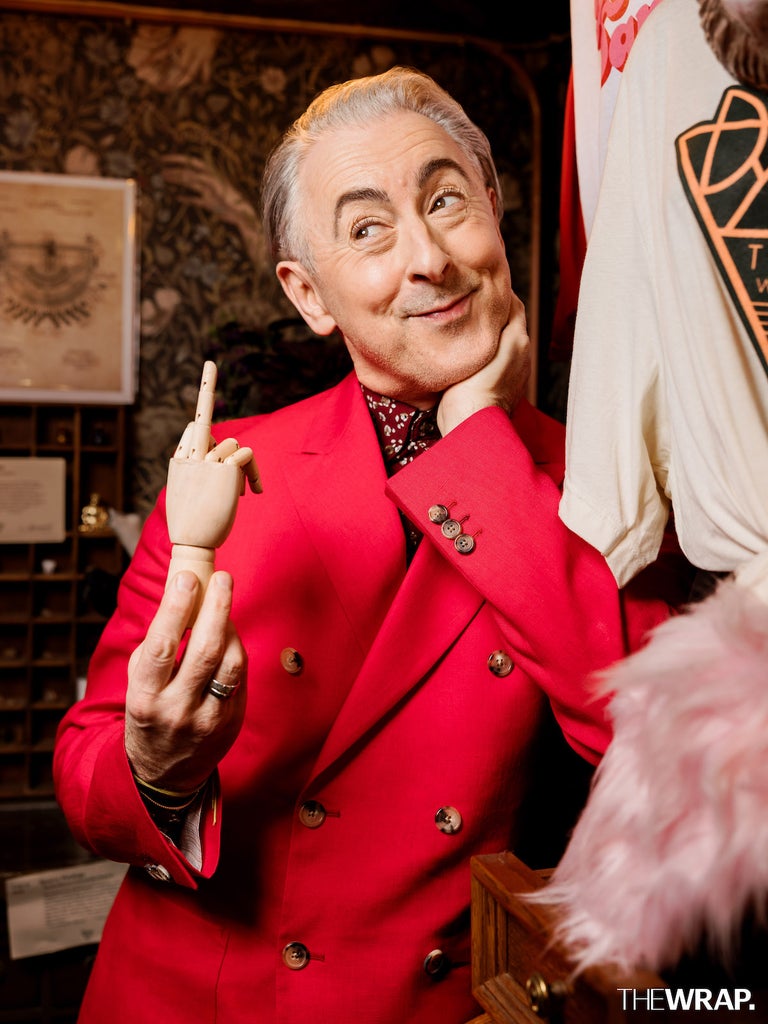
We kind of worked that out in the meeting. I talked about James Bond villains and how the look would be really important. And I know dandies who live in the Highlands and who are nuts. (Laughs) I suppose I’m one of them now.
And what was great was that all the things that the network was most worried about are the things that people responded to most positively: the fashion, the grandness, the over-the-top nature, the immersiveness of it.
It’s fascinating how contestants who are chosen to be Faithful fall into the mindset that being a Traitor is a moral failing, when in fact it’s a role that they were assigned when you chose them at the first round table.
It’s psychological torture. They forget that it’s a game. I hear people saying, “I could never be a Traitor!” I go, “Yes, you could if I tapped you on the shoulder.” It’s as simple as that. They lose a sense of logic and reality and I see them start to make these irrational pack-mentality decisions. It’s fascinating. That’s what I love about it. I love thinking, Oh my God, they’re losing it. It’s kind of cruel, I suppose. I said last year it was like “Lord of the Flies” with Botox, and it is, really.

How often do you find yourself watching the contestants and thinking, I cannot believe you just did that?
(Grins) All the f–king time. I mean, all the time. I think that’s the hardest thing for me. There’s a lot of poker face required in this job, and that’s not my forte. I just want to go, “What the f—? Are you serious?”
There was a time two seasons ago when they booted Wes [Bergmann] out at the round table and clearly [the Traitor] was Boston Rob [Mariano]. Clearly. They just got Rob-mitized. Apparently I was rolling my eyes and the producers were in my earpiece saying, “Stop that!” But I couldn’t help it.
This past season, it did feel as if Rob Rausch was the best Traitor so far.
Absolutely. I agree. Because he was working the Traitors as well as working the Faithful. And he came in under the radar. He said, “People think I’m just a dumb hot guy.” He’s clearly not. (Pause) Dumb.
And also I think he’s someone who observes and takes his time to make decisions. He was thinking of the long game. And as a Traitor, he was with two personalities who are completely in the moment (“Real Housewives” stars Lisa Rinna and Candiace Dillard Bassett). I think the “Housewives” shows are very much about grabbing the moment and keeping the attention on you. He didn’t play their game and quite easily outwitted them when they thought they were outwitting him.
People say, “Oh, it was an advantage to Rob, being so hot.” Yes, of course it was. That’s the thing: If you’re clever and hot, then it’s better for you. But that’s true of life. If you’re clever and you look great, life’s pretty easy.
On the fashion side, every season seems to bump it up another notch.
I’m directing a play in the summer about Liberace, and I went to the Liberace Foundation in January. And the man there said, “The thing with all these amazing outfits is that Lee had to keep topping himself. He had this pressure to keep getting bigger and bigger.” I was like, “Oh my God, that’s me and ‘The Traitors.’”
Will the tone change next season, moving to NBC with a cast of unknowns?
Well, by necessity it’s gotta be shorter. It’s a 42-minute show as opposed to whatever. The whole point is it is a heightened show, and quite theatrical. I presume the contestants won’t be quite at the same performance level, because the reality stars come with their shtick already. With the real people, it’s going to be like getting to know them a bit more, finding out who they are, rather than them arriving with a preordained identity.

I imagine the success of “The Traitors” was a big reason you were invited to guest-host Jimmy Kimmel’s show last summer…
Yeah, yeah. And the BAFTAs. (Laughs) It’s been interesting. You wouldn’t think hosting a competition reality show would elevate your standing, but it definitely has.
Your monologue on “Kimmel” absolutely scorched the Trump administration over trans issues. Was it important to you to use the platform in that way?
Yeah. You know, I’m not really good at bland. I’m always a bit more spiky — or not spiky, but cheeky or mischievous. And also, I was in the middle of shooting this superhero film (“Avengers: Doomsday”), and the “Avengers” cast were guests. I felt like, “Oh, this is a big corporate thing, one person from the Avengers talking to other people from the Avengers. I’ll do something in the monologue that I really feel needs to be said.”
That’s why I’m so glad I did it. Because it just reminded people you have to speak up and speak the truth. There’s so much that’s thrown at us that we are overwhelmed and we start to normalize things that should be a line in the sand. And I got a huge, overwhelmingly positive worldwide response from that.
There are people who are anti-trans — a very small minority, but they’re very loud. When you stick your neck out like that, you have to accept that you’re going to get online threats that are disturbing. But that’s been happening for a while, you know?
Speaking of the BAFTA Film Awards, did you realize what was going on when the audience member with Tourette’s shouted the N-word at Delroy Lindo and Michael B. Jordan?
I did not know until the show was over that any of that happened. I knew there was shouting. Obviously we were told John [Davidson] (on whom the BAFTA-winning movie “I Swear” was based) was in the audience and he might be shouting things. But I had no idea, and I felt the fact that nobody told me until the show was over and I was back in my dressing room was an example of the problem.
It really wasn’t handled very well. I was told in my earpiece, “You’ve got to say this apology thing.” I just thought it was a general apology for the shouting and the noise. I didn’t know that I was apologizing for such words of hatred. If I had realized that, I would’ve done it differently. So, yeah, I felt really let down as well, but obviously not in the way that the Black community and the Tourette’s community were. I think they were both let down in such a horrible way. Like I said in my statement, it was a s–tshow. And a good wake-up call to make sure that doesn’t happen again.
Are you now comfortable going back and forth between hosting, movies, TV and theater?
Yeah. It’s not an accident I’m having this time in my life when I’m in my 60s and I’ve got these really great opportunities, and I’m very comfortable with the idea of just doing what I want to do. I think I’ve always been a bit like that, actually. I’ve always been my own man. From my earliest days, I was at the Royal Shakespeare Company and then I would do a show at the end of the Edinburgh Fringe Festival as a stand-up comedian. And everyone was like, “Wait, what? I thought you were in Shakespeare last week.”
Have you got a few more seasons of “The Traitors” in you?
Yeah. I mean, contractually I do as well. But I really like it. It’s not an onerous time commitment, and I always have a great time.
This story first appeared in the Limited Series/Movies issue of TheWrap’s awards magazine. Read more from the issue here.