
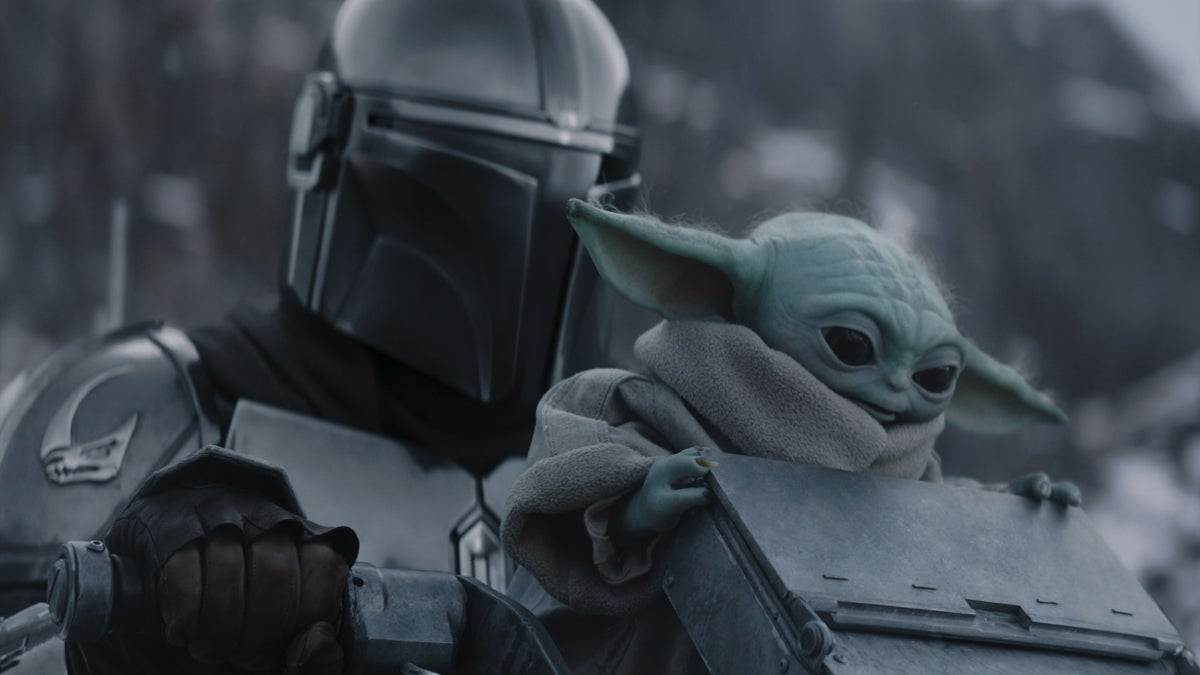
It is perfectly possible that Disney/Lucasfilm’s “The Mandalorian and Grogu,” could be a profitable venture by the end of 2026, winning back some of the lost goodwill of “Star Wars” fans, bringing back a windfall of ancillary revenue and establishing “Star Wars” as a theatrical IP again as films like “Star Wars: Starfighter” prepare to take to the big screen in the years ahead.
But based on pre-release reviews, audience tracking and opening weekend projections, this theatrical adaptation of the hit Disney+ series will also likely show something else: when it comes to the box office, “Star Wars” is no longer “Star Wars.”
For five decades, George Lucas’ galaxy of Jedi and Sith has been the defining blockbuster franchise in global cinema, even more than James Bond or “Godzilla.” It is a franchise that has produced seven films that were the highest grossing releases in the year they came out and then went on to make billions more in toys, merch, video games, and other media. It was a guaranteed megahit that theaters could plan their quarterly spending around.

But “The Mandalorian and Grogu” is looking like its best-case box office scenario is a moderately successful run through early June similar to recent Marvel films like “Thunderbolts*” or “The Fantastic Four: First Steps.” Pre-release tracking has the film earning a 4-day Memorial Day weekend opening of $82 million domestic and around $160 million worldwide.
An $82 million domestic opening would rank 15th among all Memorial Day opening weekends before inflation adjustment and would be less than half of the $182 million holiday record that Disney’s “Lilo & Stitch” remake made last year.

Some theatrical sources and rival distributors believe “Mandalorian and Grogu” has a chance to exceed $100 million domestically this weekend, but that would put it in the territory of the $103 million 4-day start of “Solo: A Star Wars Story,” a film that grossed $392 million worldwide and was seen both publicly and internally at Disney as a major bust after the three previous “Star Wars” films it had released had combined for more than $4 billion.

Granted, “Mandalorian and Grogu” comes into theaters with more general audience awareness than “Solo,” which had to introduce a completely new actor in an established role.
Since its premiere in 2019, “The Mandalorian” has been the most successful original streaming series ever on Disney+, passing 1 billion hours viewed this past December. The Mandalorian’s mantra “This is the Way” entered the pop culture lexicon while his Force-sensitive child companion Grogu, known for more than a year online as Baby Yoda, became arguably the most popular “Star Wars” character Disney has ever introduced, spawning memes, fan art, and billions in merch sales. Disney is hoping that those merch sales are revitalized with this new film bearing Grogu’s name, one of the reasons why the series is getting the big screen treatment.
“Grogu is the character that really enticed the next generation of moviegoers. Disney had to look at which ‘Star Wars’ story they would return to theaters with after nearly seven years away, and this is the safest option available because of that character,” said Exhibitor Relations’ Jeff Bock.

But nearly seven years after “The Mandalorian” premiered and three years since its most recent series wrapped up, what is the appetite for more of this duo in theaters? The critics aren’t giving the film much help with only a slightly positive 60% Rotten Tomatoes score. While some critics call it an entertaining popcorn flick, even the positive reviews note that there isn’t much in this film to elevate above a feature-length episode of “The Mandalorian,” a show already known for its cinematic budget and production value.
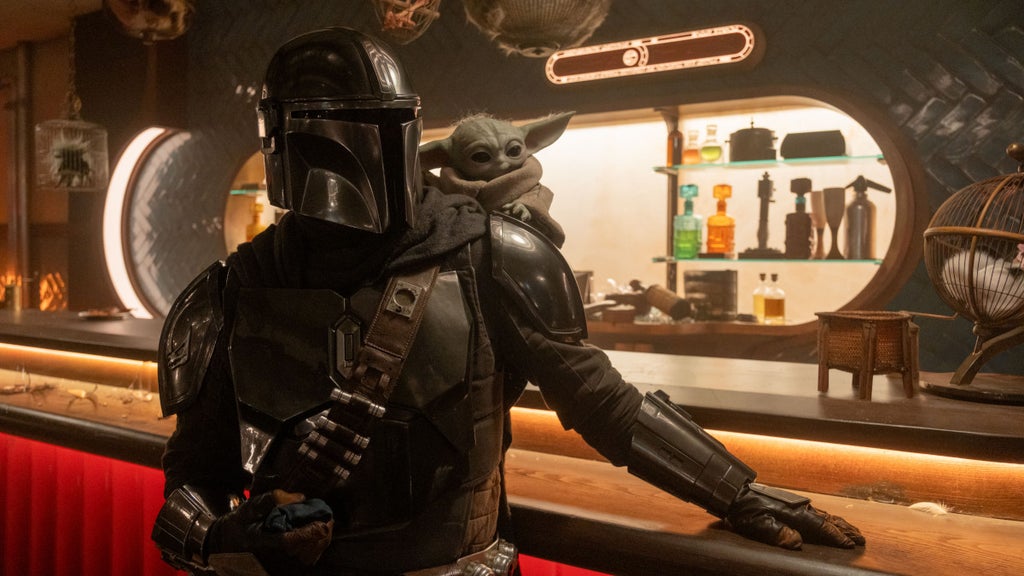
So the question that will be answered after the “Star Wars” devotees show up on Memorial Day weekend is whether there’s enough interest among audiences, especially families with seniors and kids under 13 who have particularly come to love Grogu, to help “Mandalorian and Grogu” leg out while films like “Backrooms,” “Scary Movie” and “Masters of the Universe” aim at Gen Z and Millennial audiences.
More importantly for theaters, will the word-of-mouth get lapsed “Star Wars” fans who are intrigued enough interested in buying a ticket, or will they just wait until they can see “Mandalorian and Grogu” on Disney+ like the series it is based on? Either option helps Disney, but obviously the second option doesn’t help exhibitors.
“If merch sales hit certain marks to the point that it is clear that Grogu has cinematic draw, Disney might be able to get a trilogy out of this,” said Bock.

But again, it speaks volumes to what “Star Wars” is now that these questions even have to be asked. In Disney’s portfolio, “The Mandalorian and Grogu” is looking more like Pixar’s “Cars 3,” a film that made a rather modest $383.9 million worldwide in 2017 but made many millions more from merch sales. A similar fate here would be a short term win for Disney, but may not bode well for the future of the “Star Wars” franchise, which is now under the direction of Dave Filoni and Lynwen Brennan after over a decade of stewardship from Kathleen Kennedy.
Beyond “Mandalorian,” a pair of other new releases will make much smaller contributions to the holiday box office. Paramount’s “Passenger,” an R-rated horror film about a couple haunted by a demonic presence after witnessing a grisly accident, is projected for an $11 million 4-day opening this weekend from approximately 2,500 locations.
Also opening is Neon’s “I Love Boosters,” a madcap absurdist satire of the fashion world and its exploitation of garment and department store workers from “Sorry to Bother You” director Boots Riley. The film has a 94% Rotten Tomatoes score out of its SXSW premiere and is projected for a $9 million 4-day opening.
According to one studio source, the overall 4-day total for Memorial Day weekend is expected to be around $190 million. While that’s a big drop from the all-time Memorial Day record set last year at $330 million, that is mitigated by the strong May the box office has had so far with $567 million and counting, 33% ahead of last year’s pace.
