
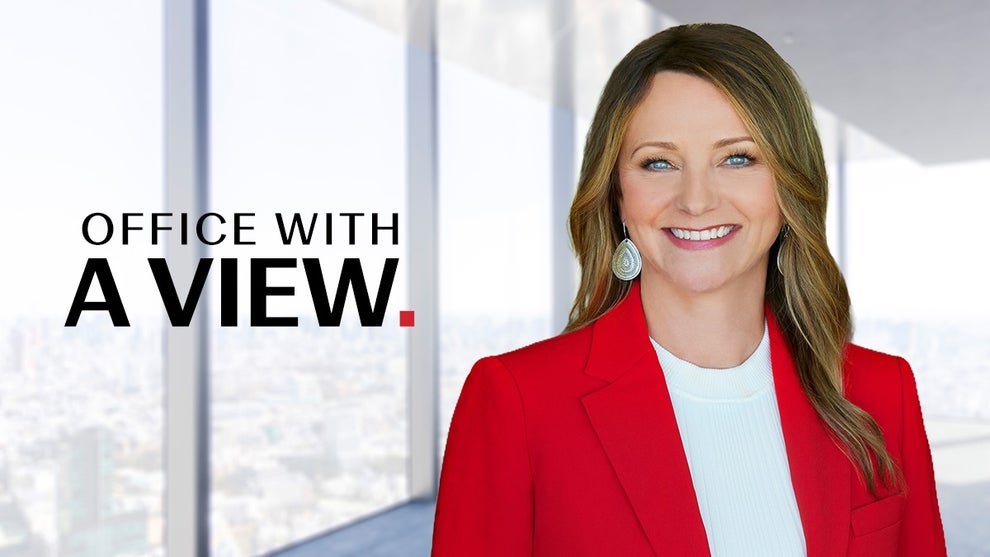
As journalistic institutions face widespread cuts and shrinking linear audiences, CBS Television Stations President Jennifer Mitchell claims the business isn’t disappearing, it’s evolving.
Mitchell worked her way up from a digital web producer role at a local station in the Bay Area to a top executive position, overseeing 27 stations across 17 markets, including two independent stations in Seattle and Tampa. After two years at CBS, Mitchell feels heartened that local news will always have an audience.
“Local news and news in general are not going away,” she told TheWrap. “In order to accomplish that, you have to reimagine the business, and that includes being on the forefront of the latest technology, being on the forefront of the latest platform, where we know our audiences are gravitating to.”

Since taking the role in 2021, Mitchell has pushed the station group beyond the traditional broadcast model, expanding 24/7 streaming channels, building out social distribution and rolling out AR/VR-enhanced newscasts across major markets.
CBS Stations, which is run separately from Paramount’s national CBS News operations, has launched immersive augmented and virtual reality technologies across nine major network markets. What began as an innovation used in CBS’s experimental Bay Area market became a system deployed in New York, Los Angeles, Chicago, Philadelphia, Denver, Miami, Dallas and Atlanta, with more set to launch this year.
“We are in a constant state of evolution because our audiences, our consumers are,” she said. “They’re getting their news differently than they did five years ago, 10 years ago, 15 years ago, and we have to be on top of that, and we have to go with them as their behaviors change in terms of how they consume content.”
The executive has also leaned into streaming to match consumer consumption habits. Social media has also proven productive in reaching audiences who may not sit nightly for the 5 o’clock broadcast.
Read TheWrap’s full conversation, which has been edited for brevity and clarity, with Mitchell below.

What did you apply from the digital world to your executive role at CBS Stations?
I always bring that digital-first mentality to the conversations, to the meetings, to our employees. What are we doing to attract the newer audiences, the next generation, audiences of people who might not ever watch a local newscast at five o’clock on television? How are we attracting them? What’s the content model in terms of what we are airing on our streaming channel? What are we putting out on our digital platforms, apps, websites, all of the different social media channels? Those are a very big part of how we’re reaching the next generation of audience.
Which of those lanes have proven the most successful as you bring in new audiences?
Streaming is a huge priority for us. We have 24/7 streaming channels at all 15 of our CBS owned stations, so much of the day we are live, particularly Monday through Friday. That’s between regularly scheduled newscasts, but also streaming-only newscasts or shows that we produce specifically for the streaming audience.
We’ll do specific weather shows if we’re in big weather situations in some of our markets. We’ve done programming in and around sports. We have a ton of sports on CBS, and so we do a lot of pre-post-game sports programming. Same with entertainment in terms of award shows. Then, of course, breaking news. When there is big breaking news in one of our markets, we do absolute wall-to-wall coverage on our streaming channels, so it’s not an afterthought.
Social is another big place. Social is the place where we can reach our audience when we really need to grab their attention or let them know of something happening, and then we draw them into the various platforms and channels where we will be live on or producing content for.
How is CBS Stations attempting to grow as much of the journalism industry is shrinking?
We’re at an incredibly disruptive time in the industry and in our business, but one thing I will tell you is that local news and news in general are not going away. What we do is so incredibly important to our audiences, to our communities. It’s really about reimagining what that looks like today and in the future moving forward.
In order to accomplish that, you have to reimagine the business, and that includes being on the forefront of the latest technology, being on the forefront of the latest platform, where we know our audiences are gravitating to.
We are in a constant state of evolution because our audiences are our consumers are. They’re getting their news differently than they did five years ago, 10 years ago, 15 years ago, and we have to be on top of that, and we have to go with them as their behaviors change in terms of how they consume content.
Can you explain the AR/VR technology that you’re introducing into your markets? How are you innovating in that space specifically?
San Francisco, which I often call our incubation station, because we often test and trial things in that market, and if it works, we scale, if it doesn’t, we fail fast and we move on, which is another thing that sort of is very popular in the technology industry.
We’re sitting around talking about, what does the next generation of a newscast look like? We started talking about environment and how we present the news, and how could that look different. We explored how do we create virtual environments? Not for the sake of virtual environments, but how do we use that technology to enhance our storytelling?
All of our election coverage has been in virtual environments where we can make the content more interesting, more compelling and again, use it to advance the storytelling. And so now I’m proud to say that we’ve launched 10 of our stations, who are now live with AR/VR technology in their studios, and the remaining five will launch by the end of this year. Now we’re starting to see our competitors start to dabble in it a little bit, which is interesting. It’s definitely been successful with really positive feedback from our audiences as well.

Hollywood Needs AI | Guest Column
What’s the biggest challenge facing local news in making sure that you are maintaining an audience or reaching them in the ways that are most impactful?
The biggest challenge we face right now is that there are less people watching live local linear newscasts on television. However, the audiences are shifting, and they’re consuming us just on different platforms or devices.
When I talked earlier about the importance of our streaming channel, the importance of our presence across the social platforms, we’re still reaching those audiences. They’re just coming in via different vehicles. As audiences shift, we have to as well, so it’s my job, it’s all of our station’s job, to make sure that we are everywhere, that the audience is.
CBS News is a different entity from CBS stations, but has the change in ownership had any impact on your work on the local broadcast level?
CBS stations operate independently. We’re a very specific, differentiated business from the rest of the portfolio within Paramount and obviously now Paramount Skydance, and there’s opportunities where we collaborate with the other divisions in the company, whether it’s from a marketing perspective. We operate independently.
We operate 15 different newsrooms around the country that are led by news directors, who have complete editorial control and direction over their newsrooms and all of their content.
For you at CBS Stations, what’s on the forefront? Whether it’s trends for local news that you’re forecasting or innovations that you’re wanting to invest in in the next year or five years?
The speed at which things are changing, both from a business perspective and from an audience perspective, and how people are consuming news and information, it’s moving faster than it’s ever moved in the history of this business.
Something I think about a lot right now is AI. There’s so much good that AI can do for so many businesses, including ours, and then there’s so many things that worry me about it, in terms of news. What we have is trust with our audience and AI, there can be some flaws, and so I have to be really careful with that. That’s an area that I’m thinking a lot about, but how we use it — and we do use it a little bit for some things — but how we use it, we have to be really smart and careful about that.
Investing in our people will always be what we do, because at the end of the day, it’s all about the story, the journalism and being good journalists. So that will always remain the the priority for me and the foundation of what we do.
What are your earliest memories of local news?
I am from the Albany, New York, region and capital district in New York. I would always watch the news at night with my parents, and Chris Kapostasy was my favorite anchor at the local station. She now works at MSNOW [as Chris Jansing]. Watching her when I was young was part of why I went into the business.
There’s a relationship that a viewer develops with the people that they watch on local news, particularly people who are in the market for long periods of time. There’s such a trust and a relationship built between the the viewer and the anchor or the reporter, and they’re a big part of why people still watch local news.
