
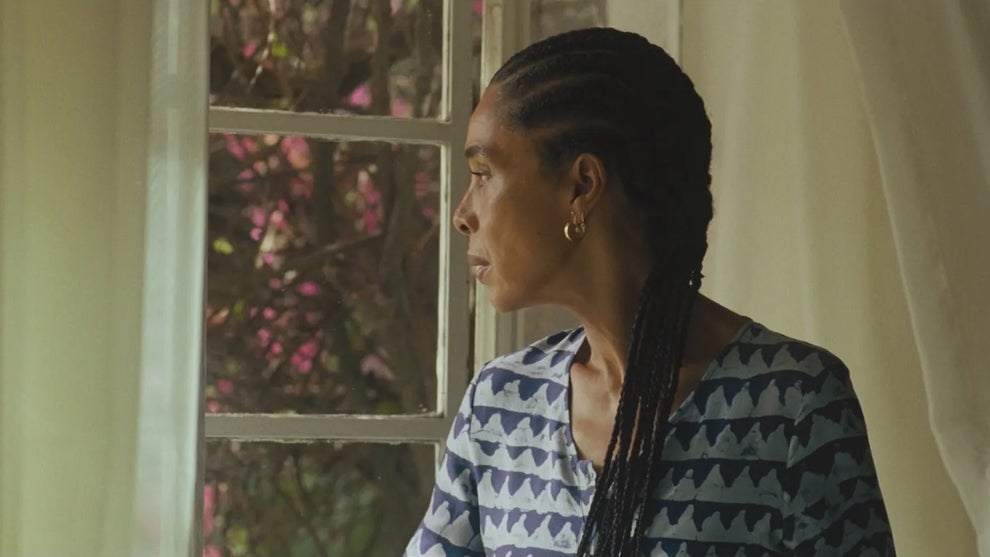
“Clarissa,” the stellar second film from the directing duo of Arie and Chuko Esiri after they previously made their mark with “Eyimofe (This Is My Desire),” is a work that’s both old and new.
It’s both with its split timeline, which jumps back and forth between decades to bring a collection of troubled characters into focus as time begins to slip away for all of them. And it’s old and new in its source and setting: An adaptation of Virginia Woolf’s classic novel “Mrs. Dalloway” that transposed to modern Nigeria, it delicately immerses us in this rich setting and breathes bold new life into the core ideas of the story while sharpening the reflections Woolf had about colonialism. That its title pointedly shifts the focus from Clarissa Dalloway’s last name to her first provides an early hint of what will be one of its greatest strengths: the outstanding Sophie Okonedo.
Okonedo, who previously stole every scene she got in the melancholy joy that was “Janet Planet,” plays the older version of Clarissa with a resolute grace and quietly pained sadness. We increasingly see that the former is a mask for the latter as Clarissa navigates a life that, while stable, is also far from happy.
When we first see her planning to host a party in her home, there are moments of witheringly dry humor as she oversees her staff with a terse manner. But the film also delicately reveals how this is a way of hiding from her fear of being cut off from the world around her and the person she once was.

When we flash back to her younger self (played by an also excellent India Amarteifio), the differences could not be more stark. Not only would the younger Clarissa likely be horrified by the person she has become and the life she is leading, but you get the sense that her older self is suppressing some of these same feelings.
The film, which premiered Saturday in the Directors’ Fortnight Sidebar at the Cannes Film Festival, expands out from there, exploring the intersecting lives of various characters in a manner that’s as free-flowing as the film’s mesmerizing, melancholic water sequences shot by cinematographer Jonathan Bloom. The other characters include Richard (Jude Akuwudike), Clarissa’s husband; Peter (Toheeb Jimoh and David Oyelowo), a writer she once and possibly still loves; Sally (Ayo Edebiri and Nikki Amuka-Bird), a woman she developed a deep connection with; and Septimus (Fortune Nwafor), a veteran now struggling with the violence he witnessed.
Editor Blair McClendon (“Aftersun”) confidently cuts between the cast members, leaving them all well-served. While the characters often leave much unspoken, the filmmaking ensures we understand each of them on a deep level. It’s all part of how the film remains visually attuned to the natural world and tapped into the rhythms of the characters moving through it, while never losing sight of Okonedo’s captivating Clarissa.
The Esiris strike a tone that’s both poetic and painful when Clarissa comes face-to-face with the various parts of her past. The visual style of the two timelines, with the past more beautifully shot and alive while much of the present feels empty and cold, only makes the disconnect between them that much more potent. “Clarissa” is a film that’s still incredibly reserved, ensuring a burst of violence feels both tragically inevitable yet still rattling. This is where the uniformly strong cast rise to the occasion, excavating the repressed emotions through everything they say and everything they don’t.

When multiple people ask Oyelowo’s character whether he’s still writing, the actor finds new layers every time he repeats his stock answer. We can see how he is lying to others and to himself with each answer, with the increasing strain of not speaking the truth starting to eat him up inside. When he then finally comes clean, it’s too late for an easy catharsis, but it still feels like a weight has been lifted.
But as this and plenty of other developments play out, Okonedo steals the show once more. In her every move and line, we see and hear a combination of resolve and resignation, revealing how much of her younger self is still there and fighting to be heard.
Yet for all the sadness at the core of its story, “Clarissa” is captivating in how honestly and openly it confronts that emotion. You feel the characters’ discontent and desire, while the Esiris’ thoughtful filmmaking that makes you wish that you could go back to the past along with these people to do so many things differently.
Neon acquired “Clarissa” prior to its Cannes premiere.
