
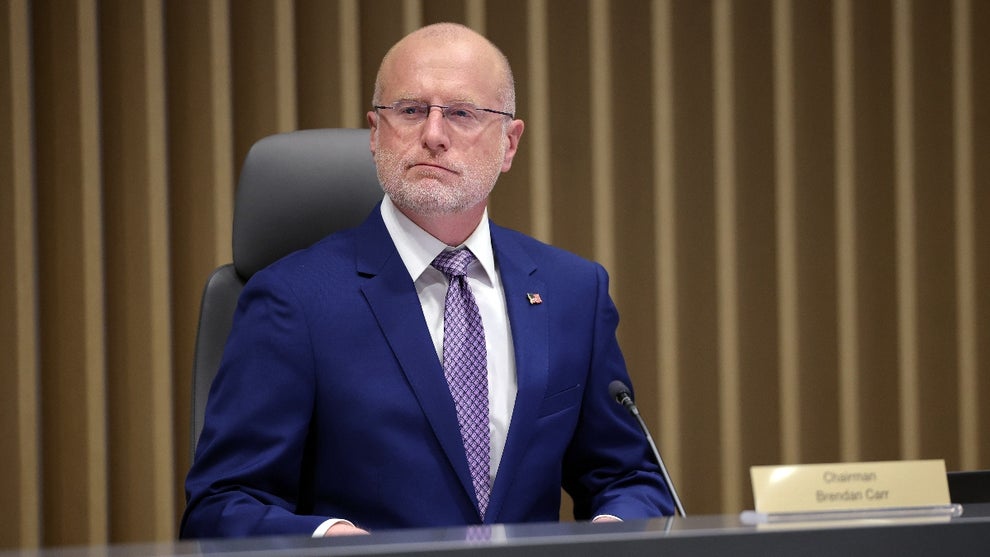
The Federal Communications Commission has launched a review of the TV Parental Guidelines, citing concerns about whether the system adequately addresses content related to gender identity issues while ensuring it is “empowering parents to make informed decisions for their children.”
The voluntary ratings system was established after Congress passed the Telecommunications Act of 1996, which included a provision requiring labels for programs’ suitability for children. It also required TV manufacturers to develop technology allowing parents to block material rated as violent, sexual or otherwise flagged by the system.
The ratings include TV-Y, which indicates programs appropriate for all children, including very young ones, and TV-Y7, which appears on programming suitable for children ages 7 and older. Other ratings include TV-G, which is used for programs suitable for all ages, as well as TV-PG, TV-14 and TV-MA. The guidelines also include content descriptors to let parents know when programs contain sexually suggestive dialogue (D), fantasy violence (FV), coarse or crude language (L), sexual situations (S) and/or violence (V).
“Recently, parents have raised concerns that controversial gender identity issues are being included or promoted in children’s programs without providing any disclosure or transparency to parents. Specifically, the industry guidelines that parents rely on are rating shows with transgender and gender non-binary programming as appropriate for children and young children, and doing so without providing this information to parents, thereby undermining the ability of parents to make informed choices for their families,” the FCC’s notice states. “Consistent with Congress’s vision for the ratings system, we seek comment on whether the industry’s approach is continuing to provide the information that is relevant to parents today.”

Specific questions relate to the transparency of the TV Parental Guidelines Monitoring Board (TVOMB) and the accuracy of the ratings system. They include:
- How does the TVOMB engage with the public and are the steps taken sufficient? Is the composition of the board sufficiently balanced to represent a broad range of stakeholders outside of the entertainment industry?
- What more could the board do to include family-oriented perspectives—which are not well represented in the media industry—in its ratings process? Should additional faith-based organizations be represented on the TVOMB?
- Does the current complaint process provide for meaningful public participation? Is the general public aware of the ratings system and how to provide feedback to the TVOMB? Is the general public aware that the V-chip can be used with the ratings system to block unwanted video programming from reaching children?
- Do descriptions of the content provide a sufficient basis for parents to make informed decisions concerning viewing decisions for their family, including when gender identity themes are discussed or displayed?
- Are parents aware that children watching programs rated TV-Y, TV-Y7, and TV-G may contain the discussion or promotion of gender identity themes?Should such programming be rated differently or contain relevant descriptions so that parents can make informed decisions?
- Is there disparity in ratings among different viewing platforms; i.e., is the same program consistently rated when it airs on broadcasting, MVPDs, and streaming platforms? Are streaming platforms more broadly interpreting what is allowable in categories intended for audiences under TVY14?
- Is objectionable content rated consistently across various programmers? For example, do different networks rate explicit language, suggestive language, and violent programming similarly, or are some networks prone to provide a lesser rating than others?
Comments will be due May 22, with replies due June 22.
