

In this week’s newsletter:
- The biggest takeaways from the stunning loss taken by Candle Media on its sale of Hello Sunshine back to founder Reese Witherspoon.
- Is YouTube winning the streaming wars? One analyst declares victory as Netflix struggles with growth and engagement.
- Another agentic AI startup raises $10 million dollars, while …
- Character.AI gets bailed out by Disney, who tapped its CEO to be its new chief technology officer, after declaring bankruptcy.
Thanks for reading.

THE DEEP DIVE
Hello Sunshine, Goodbye Cash
When seasoned Hollywood operators take a 90+% hit on a startup headed by an A-list star, the industry takes notice.
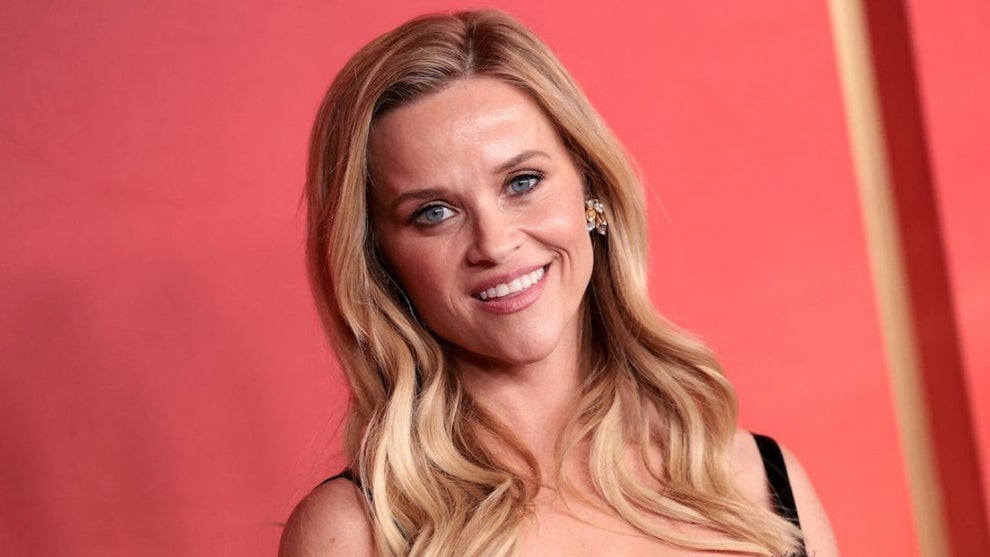
We’re talking about this week’s news that Blackstone-backed Candle Media, the company formed by former top Disney execs Kevin Mayer and Tom Staggs, sold their majority stake in Reese Witherspoon’s Hello Sunshine at a stunning loss.
Candle Media bought the Witherspoon-fronted company, which produces shows and movies and includes a creative platform and popular book club, in 2021 for $900 million. It was sold back to Witherspoon and her new backer Mediawan for a sum a person familiar with the terms of the transaction said was in the low-to-mid eight figures. You don’t need a finance degree to know that’s an absolute bloodbath for Meyer and Staggs.
- Blackstone backed Candle Media, a company formed by former top Disney executives Kevin Mayer and Tom Staggs
- Candle Media bought Witherspoon’s Hello Sunshine in 2021 for $900 million. It sold this week at a fraction of the price.
- Witherspoon appeared to be less interested in building a multi-faceted entertainment business for Candle Media and more keen to act and produce. Those different goals contributed to Hello Sunshine generating far less revenue than Candle Media expected.
- Experts doubt Blackstone will provide Candle Media with more capital for future acquisitions.
What happened? The biggest issues seem to be a change in strategy for people investing in entertainment and a misalignment of goals between Candle Media and Witherspoon.
Star-struck investors losing their shirts is a Hollywood tale older than “The Producers.” The history of media deals is littered with big losses. Remember Coca-Cola buying Columbia Pictures? Or AOL buying Time Warner in an ill-fated combination of “new” and “old”? Or telecom giant AT&T going Hollywood with its Warner Media acquisition? Discovery buying Warner Media from AT&T? And just this month, Larry and David Ellison took on $80 billion in debt to merge Paramount with, who else, Warner Bros. Discovery, and the jury’s out on that one.
“The history of media deals has not been great,” said one institutional investor.
But the Hello Sunshine deal is unique, with a uniquely costly outcome. “Nobody in their right mind should have paid what they paid in the first place and that was a widely held belief at the time of the deal … outside their deal group,” said an executive in residence at a noted investment banking firm.
Price aside, Hello Sunshine never became the Oprah-like entertainment empire Candle Media envisioned by capitalizing on the popularity of Reese’s Book Club, which has 6.2 million members.
With Candle Media’s backing, Hello Sunshine’s first acquisition was “The Home Edit,” a show about the home-organizing company streamed on Netflix. It set the tone for where things would go.
“The reality of an infinite ancillary flywheel where a show would drive commerce, branded goods and social media is very hard to do,” said Raymond Wang, principal analyst of Constellation Research. “If ‘The Home Edit’ failed, then everything else was going to be harder. The valuation for the original company was based on the belief that Reese had the relationships, market acumen and personal brand to make the project work.”
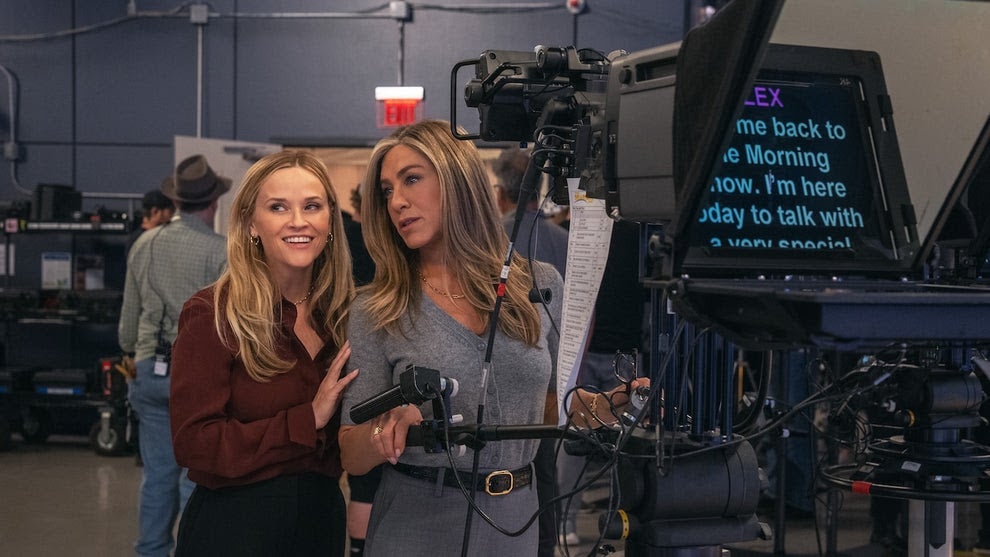
Instead, Witherspoon stuck to making and acting in TV shows and movies such as the Apple TV series “The Morning Show,” “The Last Thing
He Told Me” and ”Lucky,” which were produced by Hello Sunshine.
But Witherspoon struggled to build up a roster of other creatives that could provide new revenue streams or IP.
“The single most important facet to success in venture investing is the entrepreneur themselves,” said one venture capital fund manager. “There are going to be challenges and you’re going to pivot two or three times.”
The entertainment business has also changed since Candle Media made its deal with Witherspoon. Back then, the streaming wars were hot and many expensive projects were getting the green light. When that strategy resulted in billions of dollars in industry losses, content spending growth dried up and projects got canceled. Low interest rates meant capital was freely flowing.
“Cross platform is not as hot and now the focus is on Film/TV IP,” Wang said.
Private equity investors interested in the entertainment business say they are now putting their money into sports, live entertainment and creator content. Artificial intelligence is also changing the economics of content production and distribution, much to the dismay of many in the industry.
“Some entertainment executives are very sharp people but when you get them together and you start talking about technology, or changes in consumer behavior they have no idea,” said the head of one investment firm. “Most of them are wed to a model and refuse to accept that their model is broken.”
In addition to Hello Sunshine, Candle Media paid $3 billion for Moonbug Entertainment, about $50 million for Faraway Road Productions and a piece of Will and Jada Pinkett Smith’s Westbrook Inc. for an undisclosed sum. It also bought the digital media firm ATTN in 2022 for $100 million and sold it in February. Terms of that deal were not disclosed, but it might mean Candle Media is becoming a seller rather than a buyer.
Will Blackstone give Mayer and Staggs more capital for acquisitions? “Not a chance,” said one senior fund exec. “They overpaid for a lot of it, and now that’s unwinding.”
Moonbug, which owns the kids series “Cocomelon,” is probably Candle Media’s most attractive asset. “That’s a piece of IP everyone’s going to want,” the exec added. But a person familiar with the company has said that Moonbug is seen as an anchor asset for Candle Media.
One winner in this deal: Witherspoon, who takes control back at a steep discount. “Good for Reese. She sold at the peak and has probably bought this back at the trough,” the exec said.
What, like it’s hard?

DEAL SHEET
- Clueso, which uses agentic AI to produce product demonstration videos, raised $10 million in Series A funding. Dharana Capital led the funding, with Founders Future, Neotribe Ventures, Y Combinator and f7 Ventures participating. The round brings total funding to $12 million, with more than 80% of new capital coming from existing investors.
- Koch Equity Development agreed to acquire Getty Images in a prepackaged bankruptcy. Koch and members of the Getty family will invest $533 million in Getty Images, while the company’s lenders agreed to cancel $270 million in debt.
- SportsGrid, which programs a 24-hour streaming sports gaming network, is up for sale, according to Front Office Sports. The network’s revenue has been falling, and last year a partnership with FanDuel ended. The sale process is being led by Telos Advisers.
- The Walt Disney Co. bid $20 million for intellectual property owned by Character.AI, the chatbot platform that declared bankruptcy. Character.AI has been the subject of lawsuits alleging that the company’s chatbot encouraged children to hurt themselves. Disney hired Character.AI’s former CEO Karandeep Ahand as chief operating officer this month.
FINANCIAL ROUNDUP
YouTube Winning the Streaming War
Barclays analyst Kannan Venkateshwar said that YouTube gained ground in engagement during the third quarter while growth slows at both subscription services and free ad-supported streaming TV channels.
“The scale of that TV migration now looks increasingly material,” Venkateshwar said.
At the same time, Netflix’s engagement weakened during the quarter. The streamer should do better in the fourth quarter when it has NFL games, but football might not be enough to push Netflix’s engagement above last year’s levels, the analyst said. (To assuage Wall Street’s concerns about slow growth, Netflix fired 1,000 people, or 6% of its staff, this week.) Netflix also changed out its creative chief, which signals more changes ahead.
Also Read: Are Netflix’s Layoffs Enough to Quiet Wall Street Concerns?
Among the other subscription services, Paramount+ had the strongest acceleration. Peacock also showed continued growth and Disney had a turnaround showing gains at the end of the quarter following early weakness.
Venkateshwar noted that ad-tier penetration is growing faster than engagement, creating a problem. “Combined with the fact that much of the ad adoption reflects migration from ad-free plans rather than incremental customer growth, we see rising cannibalization and engagement dilution risk,” he said.
Another issue could come from AI agents like Meta’s Muse. “AI agents can identify and cancel underused subscriptions, reducing the consumer inertia that has historically supported subscription retention,” the analyst said.
While YouTube showed gains, Pluto TV, Roku Channel and Tubi’s momentum moderated in the quarter, the analyst said. Those services could come under more pressure as Netflix and Disney roll out their own FAST platforms.
FROM THEWRAP
‘Matchbox: The Movie’ Is a Low Point for Mattel. What Does It Say About the Future of Skydance?
Canadian Streaming Shows Are Drawing Big Audiences, Political Battles Aside
The Skydance Film Enigma: How Do Paramount and Warner Bros. Coexist?
HEARD AROUND
The Making of Grand Theft Auto VI
How a Western Consumer Giant is Thriving on China’s Social-Media Shoppers
Bending Spoons Shares Surge 41% on News That Berkshire Hathaway Invested Another $330 Million
The NFL’s $192 Million Bet on Flag Football Is Paying Off With Teen Girls
