
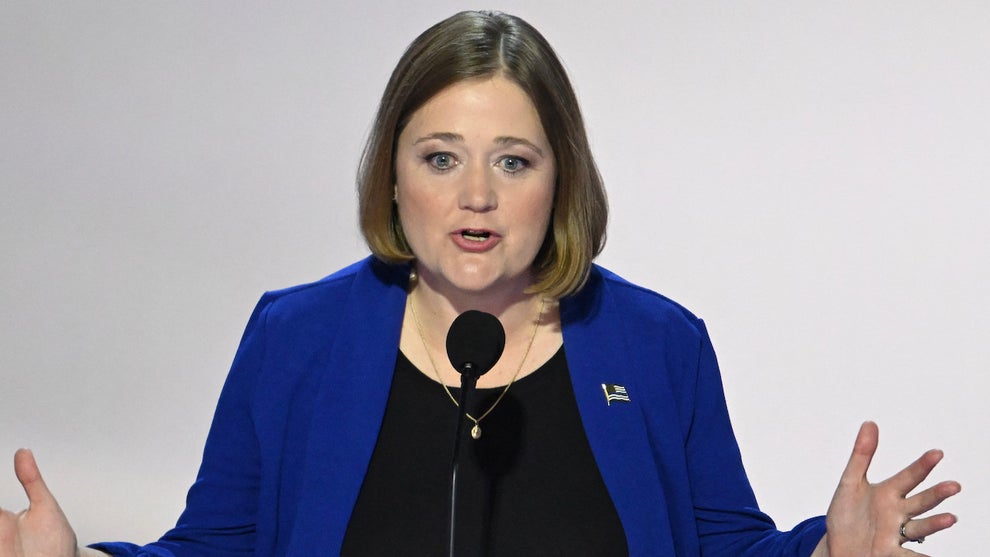
Iowa Attorney General Brenna Bird and Montana Attorney General Austin Knudsen have filed a motion with the Supreme Court to block California Attorney General Rob Bonta and 11 other states’ “politicized” antitrust lawsuit against the pending $110 billion Paramount-Warner Bros. Discovery merger.
In the 56-page filing, the pair argued that the 12 states have “effectively vetoed” a transaction that has been approved by regulators and government bodies representing 68 jurisdictions around the globe, which “burdens the national economy, harms Plaintiff States’ quasi-sovereign interests, and conflicts with the federal antitrust enforcement regime.”
They warned the litigation is depriving the Iowa and Montana economies of the benefits of the deal and harming “tens of thousands of employees of Paramount and Warner Bros., as well as hundreds of millions who watch their movies, shows, and news through a variety of sources” in the process.
“This case is about the legal limits on politicized antitrust enforcement by a small handful of states seeking to enjoin a $110 billion merger that the United States, most American states, and competition regulators worldwide have cleared,” the complaint continues. “Plaintiff States have the same interest that Defendant States have in well-functioning markets, but believe the merger will help their economies. Because they have the same interest, they should be able to litigate the issue, but can only do so here.”
Bird and Knudsen said the Supreme Court is the only venue that can resolve a “controversy between sovereigns” and that it should “enjoin the Defendant States’ suit and decide the issue for itself, ensuring a prompt and fair adjudication of the merger.”
Iowa and Montana also requested that the Supreme Court set a deadline of Sept. 15 for Bonta and the other state AGs to respond and an Oct. 9 conference hearing.
“We are reviewing the filing and will respond as appropriate,” a spokesperson for the California AG’s office told TheWrap.

The move comes as Bonta and the other 11 state AGs’ lawsuit against Paramount is headed to trial in March 2027.
It’s unclear whether the Supreme Court will ultimately take up Bird and Knudsen’s case. Assuming that Iowa and Montana could get oral arguments scheduled between Oct. 2026 and April 2027, a decision wouldn’t be made until late June or early July.
Paramount has agreed to delay the closing of the merger until five days after the outcome of the trial, or June 1, 2027, whichever comes earliest. The contractual expiration date on the merger is June 4, 2027.
Starting Oct. 1, Paramount CEO David Ellison is on the hook to pay WBD shareholders a 25 cent per share ticking fee, which translates to a payout of $650 million per quarter or $7 million per day until the deal is closed. If the deal does not close at all due to regulatory matters, he must also pay WBD a $7 billion break-up fee.

On Monday, Bonta canceled a mediation session with Paramount and said he’d return to the negotiating table as early as this week if the company agrees to“stop leaking and stop misrepresenting through their leaks” to the press.
“It’s up to them,” Bonta told TheWrap when asked if talks could resume this week. “They’ve got to figure out where the leaks are and shut them down. And once they figure that out, we’ll be happy to talk with them. I don’t know how long it’ll take them to figure it out and to fix it, but when they do, we’re ready.”
He also reiterated that the state AGs are “not interested” in behavioral remedies being offered by Paramount, such as Ellison’s pledge for 30 theatrical film releases a year. In terms of specific examples of what a structural remedy could look like, Bonta said someone else would have to own a “significant” portion of the 50 basic cable channels that would be included under the combined company, but stopped short of saying CNN would be one of them.
“We have some thoughts on [specific channels]. I’m not going to share those with you. If we do end up ever having productive settlement negotiations, that is something to be discussed,” he added. “But the idea of what it means to have a structural remedy, for example, in the basic cable channel licensing market means separate ownership of a significant number of those channels.”
The Wall Street Journal has also reported that Bonta is interested in keeping the operation of the two companies’ studios separate.

TheWrap exclusively reported a Los Angeles County study which found that the merger could result in nearly 4,500 film and TV jobs lost over the next three years when the two companies combine. It could also put over 5,800 indirect or induced jobs from related small businesses at risk, per the study.
Overall, the economic impact of losing these jobs would be $1.26 billion in wages, $2.78 billion in economic value, $4.06 billion in total business output and $547 million in tax revenue, including $78.6 million in local taxes — most of which (63%) comes from property taxes.
If a settlement ultimately can’t be reached, Ellison has threatened to move Paramount’s operations out of the Golden State, a move experts warn could also be “devastating” for the local economy. Bonta once again called the threat “blackmail” and emphasized that no matter where they decide to go, the lawsuit will continue.
“They can’t escape accountability. There’s no reason, based on our lawsuit, for them to go anywhere else unless it was their plan all along before this lawsuit to always go to another state,” he said. “Maybe they think it’s clever, maybe they think it’s helpful to be engaged in the court of public opinion. But as I’ve said time and time again, and I’ll say it now, this is a very straightforward, black and white, bread and butter, meat and potatoes antitrust case about three markets.”
“If there ever is a decision to leave California, that is completely David Ellison’s decision,” Bonta added. “He owns it. It is laid at his feet. He’ll have to explain the 180-degree turnaround from ‘I’m committed to the future of Hollywood’ to ‘now I’m leaving.’”
