
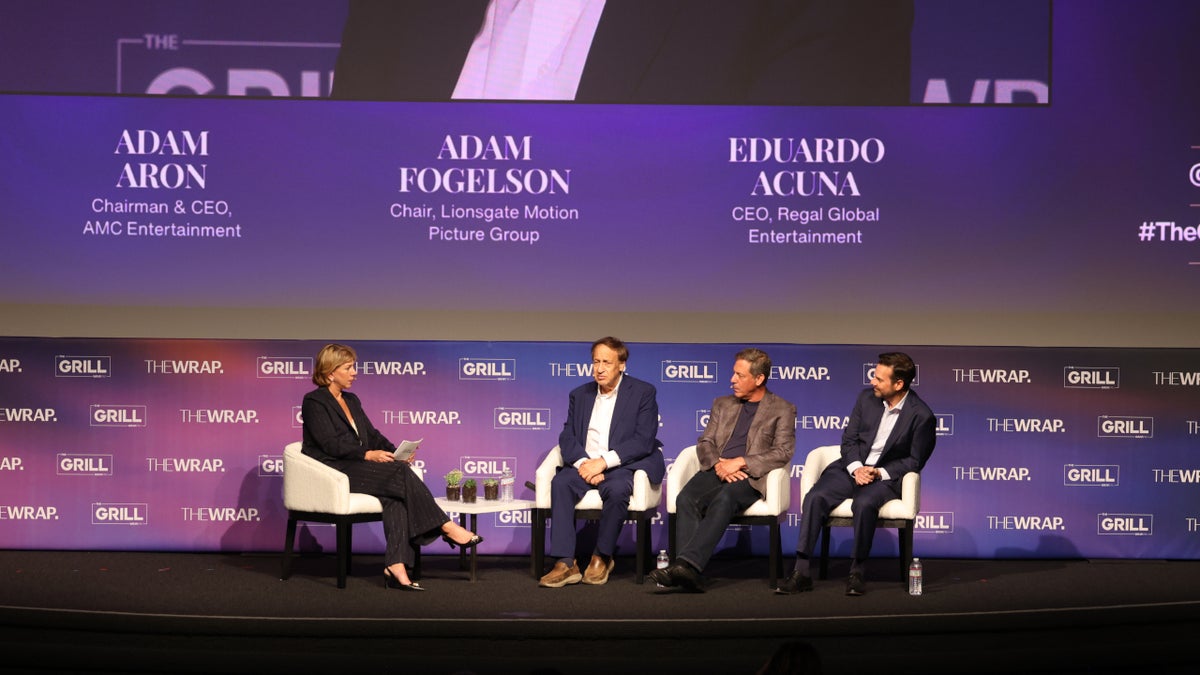
It’s been a great 12 months for Lionsgate. “The Hunger Games” franchise has been successfully revived and the studio has a new hitmaker partner in “The Housemaid” author Freida McFadden. And to cap it all off, the studio released “Michael,” which now stands as the highest grossing biopic of all time and the first to cross $1 billion worldwide.
For motion picture group chair Adam Fogelson, that success came after a turbulent shooting process that included extensive reshoots to remove scenes involving one of Michael Jackson’s child sex abuse lawsuits, which the pop star settled in exchange for this estate pledging to never participate in a depiction of the alleged events involved. The film got plenty of scrutiny in the lead-up to release, but Liongate motion picture group chair Adam Fogelson says that its ultimate success reminded him of something important that he learned long ago as a film exec.
“There are always going to be voices that are going to be loudly shouting at you that you’re making a horrible mistake in almost anything worthwhile that you choose to do,” Fogelson told moderator Sharon Waxman at TheWrap’s business conference TheGrill on Wednesday. “You have to ask yourself: Not only do I believe that this is worthwhile from a business standpoint, but am I willing to stand in front of all of the difficult conversations that are going to happen?”

Fogelson was joined at TheGrill by AMC Theatres CEO Adam Aron and Regal Cinemas CEO Eduardo Acuna for a panel discussing the rebound of the box office in 2026, which is on pace for a $10.5 billion-plus domestic annual total. Aron said he didn’t doubt for a second that this rebound would come, believing that once the quantity and quality of movies in theaters increased — which has been the case with summer films ranging from “Obsession” to “Spider-Man: Brand New Day” — that moviegoers would return.
“Movies have been central to the American fabric of culture for more than a century. And yes, COVID was a lousy thing, and in many respects devastating. But I didn’t think it was going to change the fact that people have loved going to movie theaters forever and ever,” Aron said. “It’s our job — the three of us, both representing studios and fellow circuits — to make sure that a century from now, people still love going to movies.”
Acuna said he wasn’t quite as free of doubt as Aron, but says he’s been heartened by the strong turnout of younger moviegoers for films like “Backrooms,” noting that there was an overestimation of how much Gen Z is interested in spending their time watching Twitch and YouTube to the detriment of theatrical.

“The best thing that I read lately was that we as humanity have reached the peak of our digital consumption. We just ran out of hours. You’re sleeping, you’re going to school and you’re in your phone the whole day. And these young people … they want to physically be with others, have a communal experience somewhere. And there’s literally no cheaper way to do that than going to a movie,” he said.
The panel was also asked about their thoughts on the Paramount-Warner merger, which Aron has repeatedly supported. Acuna said that, despite his previous skepticism over the merger, he is “cautiously optimistic” that Paramount can pull its weight in terms of theatrical output and revenue support.

“Consolidation is not always a good thing, and it had to be scrutinized, and it was. And I think (California) Attorney General Bonta did a great job of that. Cinema United did a great job of opposing it at the beginning. I was vocal at the beginning saying consolidation is not ideal, but at some point you have to look at real-world alternatives. There wasn’t that many and I was just very concerned with dragging this out very long,” he said. “So I’m happy that instead of having to pay ticking fees or having to spend on really expensive litigation, that we can actually go back to making movies and help the industry.”
Fogelson added that another reason for optimism for theaters comes from outside the major Hollywood studio system, pointing to the rise of studios like A24 as well as the success of true independent films like Markiplier’s self-distributed horror film “Iron Lung.”
“I can tell you that virtually every movie that Warner Bros. or Paramount — separate from their giant IP — that they made in the last few years, we and other studios were bidding on those projects, and I think those projects would find a home elsewhere if they weren’t making them,” he said. “So I am very comfortable, even with this merger, that the flow of product, the quality of product and the box office that will come from it will be more than enough to have this business healthy for the future.”
