
As Paramount Skydance sought to quash an antitrust lawsuit from 12 state attorneys general, CEO David Ellison made a major threat: If the two sides couldn’t reach a settlement clearing the path for the $110 billion deal by Oct. 1, he would move the Hollywood studio’s operations out of California, impacting thousands of jobs and billions of dollars in annual economic output.
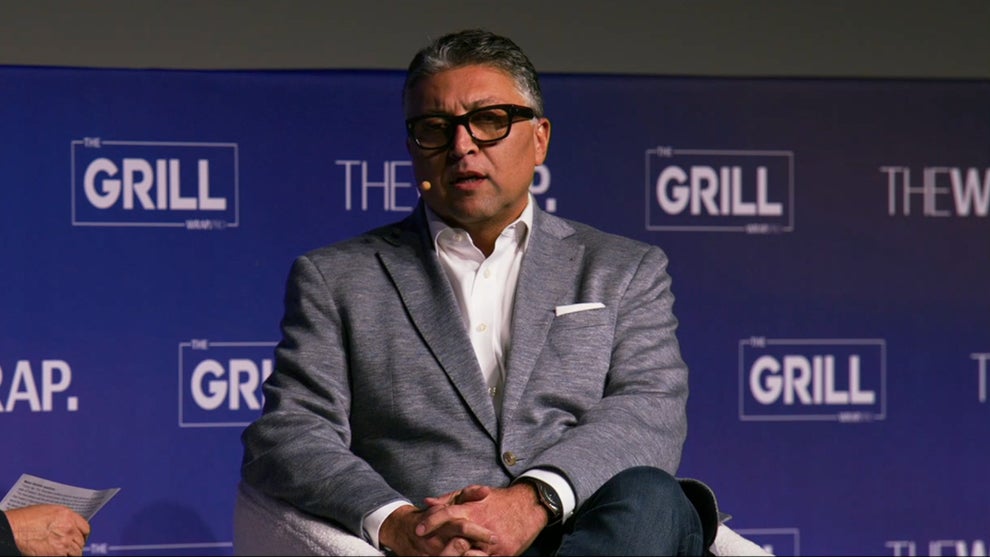
When asked about it during TheWrap’s 2026 TheGrill conference on Wednesday, Ellison’s Chief Legal Officer Makan Delrahim told Sharon Waxman it was “not a bluff,” but pushed back on calling it a threat and dismissed the role it may have played in turning the tide on a settlement.
“I don’t know if that factored into the state AG’s views. I don’t know for one way or the other, but it wasn’t a threat. It was not a bluff,” he said. “What’s great about competition and antitrust is that the states can compete for businesses in different states. You’ve had production going to New Jersey, New York, Georgia and they compete with California.”
Instead, he argued that the key to getting a settlement done was that the 12 states had no antitrust case. Delrahim said that their argument that Paramount-WBD would have a combined market share of 27% in the theatrical film market didn’t take Amazon MGM Studios, Lionsgate or A24 into account.
“Once you factor those in, that market share goes below 20%, and that’s assuming you take their time frame from 22 to 25 for that market share, which is based on box office revenues,” he said. “That’s just not how antitrust works. So once the facts were out before a judge, it would have never ever held up.”
“Every step of the way when you have a bad case, you’re making precedent, and as a former enforcer, it makes it more difficult for the future. So now, every time the state AGs bring a case, guess what the parties are going to do? They’re going to file the motion we filed,” he continued. “The state AGs, I think, realized there’s not a case here. Why are we doing this? And they realized that delay is not going to help anyone, which is why all the unions and everybody supported that.”
He also denied Bonta’s allegations that Paramount leaked the details of the negotiations in August, adding that what was reported was not accurate. After Bonta canceled a mediation meeting, Delrahim said that the circle of Paramount leadership involved in settlement talks narrowed to him and Ellison, as well as one attorney at Latham & Watkins who was not involved in the antitrust litigation.
After negotiating back and forth, the two sides would ultimately reach an agreement on the eve of Yom Kippur on Sept. 21 and announced the terms the following day. Delrahim said it was Ellison himself who got it over the finish line during the holiday.
“David was incredibly involved in this process himself with the staff. He and I would fly up, come down. He was personally invested and he is the single best client a lawyer can have because he’s incredibly genuine, he’s credible, and as a former producer and a guy who understands his business, he can speak with authority when asked these questions and allegations come up about different parts of the business,” he said. “It is incredible. You don’t even have to prepare because the truth actually is incredibly powerful.”

The settlement includes commitments to invest a minimum of $1.5 billion over five years in domestic TV and film production, release at least 30 films a year in theaters and negotiate the distribution agreements for each company’s suite of cable networks separately.
The combined company also must set up an independent editorial board to oversee the CNN and CBS News operations, continue to operate Paramount and Warner Bros. Discovery’s studio lots for five years, honor collective bargaining agreements with Hollywood’s unions and make community investments, including a $5 million-per-year contribution to an independent film fund and $9.5 million annually for film and TV career training and development programs to benefit qualified educational institutions and community arts organizations.
Failure to comply with the various commitments in the settlement range from a $30 million penalty per film that misses the theatrical goal to forced divestitures of the company’s 49% Miramax stake within a 12-month period as well as BET, Comedy Central, VH1, Smithsonian, Destination America and Science Channel within a 120-day period.
Despite concerns that the settlement is “weak and unenforceable,” Judge Araceli Martinez-Olguin signed off on the agreement, calling it a “fair, reasonable, and good faith approach” to addressing the harms alleged in the AGs’ lawsuit.

In addition to unpacking how the deal got done, Delrahim addressed the politics surrounding the deal and the concerns around CNN’s independence.
“I understand people being concerned about somebody’s views that they may not like to have any access to any type of news,” he said. “But am I concerned that this issue is the cause for concern? No. Am I concerned that CNN, CBS News will somehow foreclose access to information? I don’t.”
He accused the Block the Merger coalition’s Norm Eisen of using the opposition against the merger as a fundraising campaign for himself. He also doubled down on previous remarks that some who opposed the merger were antisemitic.
When asked if there would be any retaliation against creatives who opposed the merger, Delrahim said that would be “silly.”
“We’re in the business of storytelling. We’re in the business of fulfilling consumers’ demands, and you don’t do that,” he said.
