
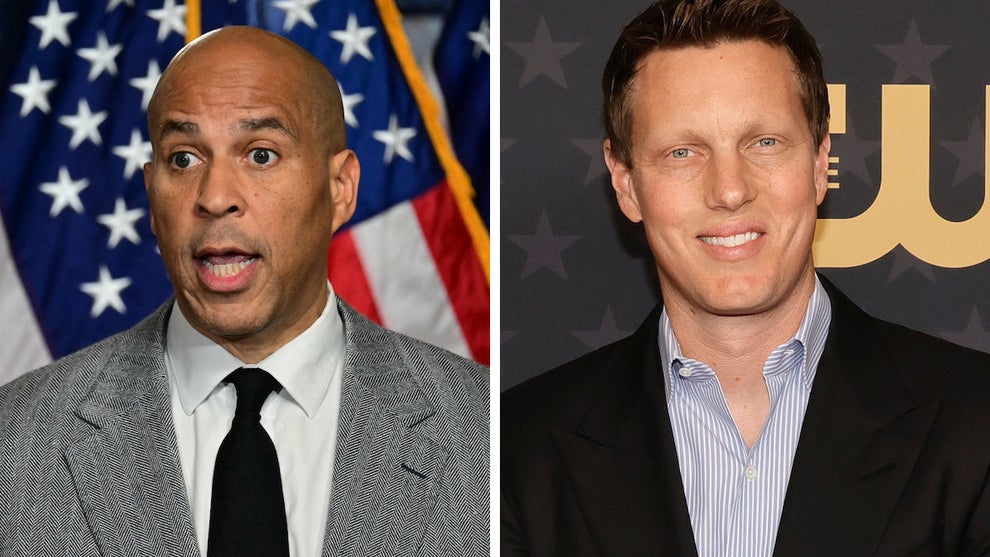
Paramount and 12 state attorneys general are pushing back against Sen. Corey Booker and the Block the Merger coalition’s concerns about their Warner Bros. Discovery merger settlement.
In a Monday court filing, the parties noted that the settlement was “vigorously negotiated at arm’s length” and “reflects a reasonable compromise that addresses the competitive issues posed by the proposed merger in the markets alleged in the Complaint.”
“The fact that a proposed consent decree does not contain every outcome that one party may have wanted in a multilateral negotiation does not make it substantively unfair,” the group argued. “This is the very essence of a negotiated agreement that includes compromises on behalf of all of the parties involved.”
They added that the agreement’s enforcement provisions “have teeth” and urged the court to sign off on it to clear the way for the $110 billion deal’s closing.

The filing comes as the Block the Merger coalition argues that the terms of the settlement are “weak and unenforceable” and that it doesn’t go far enough to addresses potential harms to competition, creativity, and independent journalism.
Meanwhile, Booker had expressed similar concerns and urged the court in a letter to measure the proposed remedies against the injunction originally sought by the state AGs to block the merger. He also called for an “independent public-interest review” before approving the settlement.
“If the benchmark for substantive reasonableness were the maximum relief a plaintiff might theoretically have won after a trial, no pretrial settlement could ever be approved—a result that would be entirely inconsistent with the strong policy favoring negotiated resolution of disputed claims,” Paramount and the state AGs replied on Monday. “The adequacy of the decree must therefore be assessed against the risk of continued litigation—including the substantial prospect that Plaintiff States would have recovered nothing at all—rather than against an assumed permanent injunction that Plaintiff States did not obtain.”

Under the terms of the settlement, Paramount has agreed to a minimum investment of $300 million per year for five years in U.S. film and TV production, amounting to a total of $1.5 billion. The company will also release at least 30 films per year theatrically in the first two years of the deal and 32 films per year in the three years after that.
At least four films per year must be independent films and at least 20% must be blockbusters, although the consent decree defines independent films as movies “based on an original screenplay” or simply co-produced by Paramount. If Congress passes a federal film tax credit, Paramount agreed that 20% of all film production must be in the U.S. for the first two years of the merger and 30% of the next three.
Paramount will also be held to its prior commitment to have a theatrical window of 45 days and hold its films back from streaming availability for 90 days.

On the TV side, Paramount agreed to negotiate distribution for its suite of cable networks and Warner Bros. cable portfolio separately, unless a distributor requests otherwise in writing. It also agreed to establish an independent oversight board at CNN and CBS News and will continue to operate free, ad-supported streaming platform Pluto TV.
Additionally, the companies will maintain their respective studio lots, honor collective bargaining agreements with Hollywood’s unions and make community investments. Those investments include a $5 million-per-year contribution to an independent films fund and $9.5 million annually for film and TV career training and development programs to benefit qualified educational institutions and community arts organizations.
Failure to comply with the various commitments in the settlement range from a $30 million penalty per film that misses the theatrical goal to forced divestitures of the company’s 49% Miramax stake within a 12-month period as well as BET, Comedy Central, VH1, Smithsonian, Destination America and Science Channel within a 120-day period.

The latest filing comes after Judge Araceli Martinez-Olguin held off on ruling on the settlement and ordered the parties to address Booker’s concerns and her outstanding questions. Once everything is reviewed, Olguin said she would make a ruling in “due course.”
Paramount CEO David Ellison has said that the deal would close within two weeks from when the settlement was reached, putting the closing date in early October.
Per an SEC filing on Friday, Paramount’s Class B stock listing is expected to move from the Nasdaq to the New York Stock Exchange on Oct. 5 and begin trading on the NYSE on Oct. 6. Paramount would distribute warrants to purchase those shares on Oct. 13.
However, they noted that the merger is “subject to further closing conditions, and the ultimate timing for the closing of the WBD merger, if any, is not yet certain,” the filing noted. As a result, Paramount may choose to cancel or postpone the move.
