

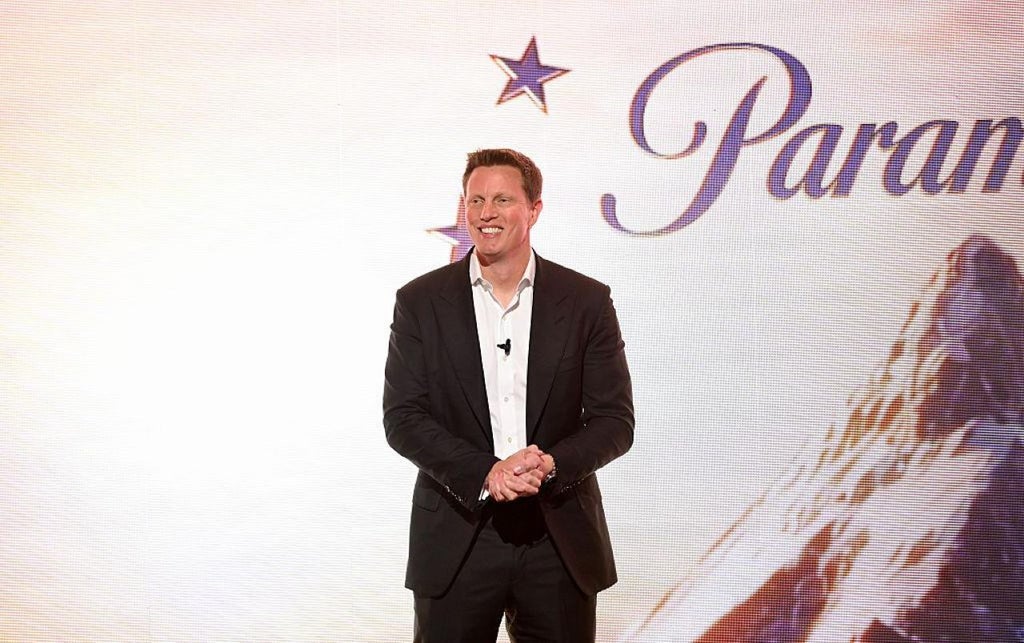
On Monday, Paramount CEO David Ellison, taking a victory lap after securing a settlement that gives the go-ahead to acquire Warner Bros. Discovery, told staff in a memo that the $110 billion combination would mean “more opportunity for our creatives, production crews and employees across the business, and more great entertainment for audiences everywhere.”
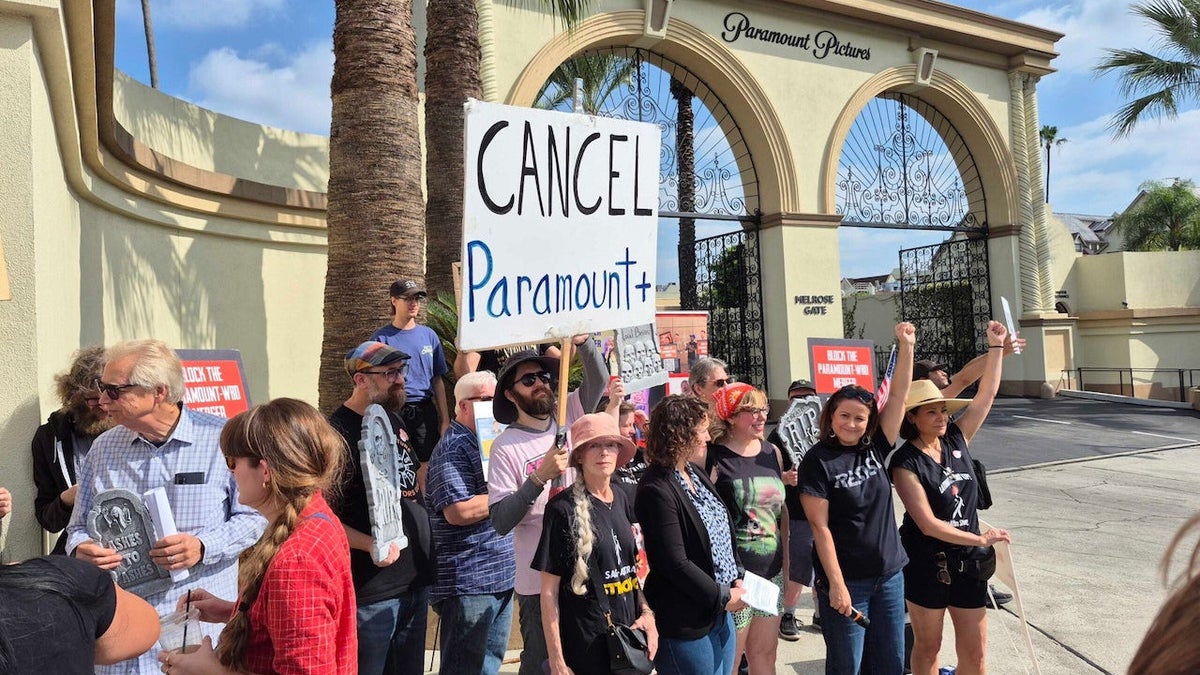
A day later, protesters from the Block the Merger coalition held a rally in front of the Paramount lot, clearly skeptical about Ellison’s claims.
“I am so disappointed and pissed off with these people who are playing with us like chess pieces,” said actress Frances Fisher, an active board member of SAG-AFTRA.
Mark Ruffalo, a vocal critic of the merger, separately called the settlement a “huge win to Trump and his billionaire cronies,” while Jane Fonda said Ellison “sold people in the entertainment industry, as well as consumers of our creative work, down the river.” Another creative who spoke anonymously to TheWrap called the merger “a f–king nightmare.”
That frustration underscores the sentiment of a large swath of Hollywood bracing for the ramifications of an industry-shaking combination between two legendary studios. And while both Ellison and California Attorney General Rob Bonta expressed confidence that the settlement and merger will create new jobs, the creative community in Los Angeles thinks that layoffs and mass restructuring are sure to follow.
The key reasons for that concern stem from the roughly $80 billion in debt the combined company will need to service and $6 billion in annual merger cost savings targeted within the first three years of closing. That’s before factoring the presumed narrowing of production/development options that comes from one entity owning two of the five major Hollywood studios left and the ill will Ellison has garnered for his family’s political connection to President Donald Trump, which has shown itself through the controversial changes to CBS News and cancellation of “The Late Show With Stephen Colbert.”
“We are looking at the total sea-change event of our industry. No executive will be left safe by this,” one director warned. “We’re staring face first at an utterly destructive shockwave that will impact everyone in Hollywood — even the people who came up with this horrible idea in the first place. Be careful what you wish for.”
A spokesperson for Paramount declined to comment on this story.

Hollywood labor reacts
Even as Tuesday’s protest voiced the frustrations of the industry, the unions tried to address the changes.
SAG-AFTRA President Sean Astin and Chief Negotiator Duncan Crabtree-Ireland said the settlement addresses some concerns about production levels and U.S. production investment, but emphasized the commitments are the “lowest standards that our employers must meet” and encouraged the combined company to “exceed their legal obligations and make additional efforts to ensure that our workplaces are healthy and that employers honor our dignity.”
The Directors’ Guild of America said it plans to continue discussions with Paramount on domestic TV production, with a focus on “ensuring a competitive and robust marketplace that protects jobs.” Cinema United President and CEO Michael O’Leary added that while “no settlement can eliminate all risk from a merger of this size, these conditions will enable our industry to adapt and succeed in a rapidly changing media environment.”
But despite reaching its own legal settlement that includes a five-year layoff pause at CBS and $17.5 million health fund contribution, the Writers’ Guild of America warned the deal would “cause damage to writers and the industry at large.”
Elsewhere, the Block the Merger coalition called the move a “bad deal for the future of film, entertainment, independent journalism and a strong democracy in this country.” And one exhibition exec who asked to remain anonymous remained pessimistic about Paramount’s ability to deliver not just with their output, but with the quality of films and marketing that is needed for consistent hits to arrive in theaters.
Actress Elyssa Phillips, part of SAG-AFTRA, did not hold back in her criticism of California Gov. Gavin Newsom and Attorney General Rob Bonta, saying she felt “duped” by Bonta’s promise that he would hold Paramount accountable.
“They both betrayed California, and it feels like a gut punch because I believed [Bonta],” Phillips said. “Paramount is going to slash thousands upon thousands of jobs because you don’t need two of the same departments whether it is marketing or transportation jobs or so many other parts of our industry at a time when we’re already seeing so much of our economy that’s based around entertainment suffer.”
Another unnamed director warned: “When you have one person who is in the pocket of a fascist controlling this many media companies, it’s not good for free speech. It’s bad for business, and it’s bad for freedom.”
But how bad will it get?

How the merger impacts the creative community
In the next two weeks, there will likely be more questions than clear answers on what happens. Ellison acknowledged as much in his memo, noting that the closing is “really just the starting line” and that bringing the two companies of this size together would take time.
But some initial plans have already been telegraphed, such as combining HBO Max and Paramount+ into a single platform and cutting costs in areas like back offices and infrastructure like streaming tech stacks. Of course, those cost savings are also widely expected to include layoffs — likely through the elimination of redundant staff.
We have some idea of how bad it will get.
In August, an economic analysis of the merger ordered by the Los Angeles County Board of Supervisors estimated that nearly 4,500 local film and TV jobs could be at risk over the next three years. It also predicted that 2,661 indirect jobs at small businesses that support production, such as prop houses, printers, transportation companies and other vendors, could be impacted. An earlier version of that report published in June pegged the consolidation risk for the combined company’s global workforce at roughly 6,000 employees.
But there are some gains. The settlement calls for a minimum investment of $1.5 billion in domestic production over the next five years and at least 30 films per year theatrically in the first two years of the deal and 32 films per year in the three years after that. At least four films per year must be independent films and at least 20% must be blockbusters, although the consent decree defines independent films as movies “based on an original screenplay” or simply co-produced by Paramount. If Congress passes a federal film tax credit, Paramount agreed that 20% of all film production must be in the U.S. for the first two years of the merger and 30% of the next three.
Presumably, the increase in domestic productions could partially offset Paramount’s merger-related layoffs, although it’s still too early to get a sense of the magnitude of those cuts. Paramount went through a few rounds of layoffs in different units after it was acquired by Skydance.
The combined companies will also maintain their respective studio lots, honor collective bargaining agreements with Hollywood’s unions and make community investments. Those investments include a $5 million-per-year contribution to an independent films fund and $9.5 million annually for film and TV career training and development programs to benefit qualified educational institutions and community arts organizations.
Ellison also said on Monday that Paramount would be staying in Los Angeles.

Risk mitigation vs. creative vision
Kevin Klowden, Milken Institute senior fellow and Melcene Advisory principal and managing director, told TheWrap that while the settlement is a short-term “shot in the arm” for theatrical releases and domestic production, it’s unclear how much of the domestic production investment will specifically benefit California.
“They’re not going to move the company out but that still doesn’t alleviate the larger job pressures that we’re seeing on the reduced production unless local production picks up,” Klowden said. “Even with the increase in incentives that kicked in last July, the overall local filming numbers have not yet picked up and are down from last year.”
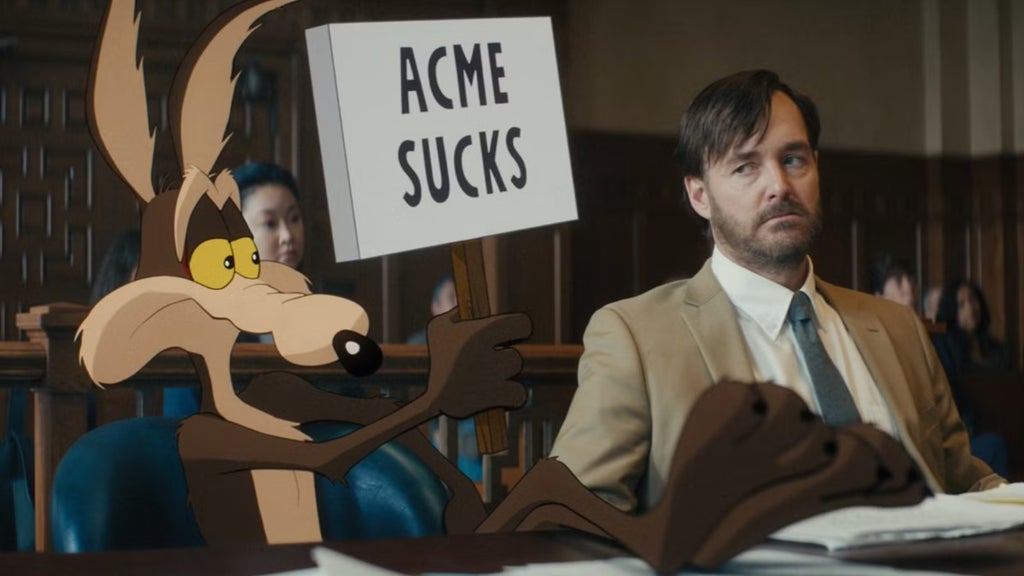
He also warned that the combined company’s heavy debt load could weigh on green lighting and risk-taking with projects, citing “Coyote vs. Acme” as a prime example of the impact media consolidation can have. Though the film was initially shelved for a tax write-off by then-new Warner Bros. Discovery CEO David Zaslav, it was rescued by an independent distributor and has since crossed the $100 million mark at the global box office after being released in theaters.
With even fewer media companies around, that appetite for taking chances could be further diminished.
“There is already a problem in the economics of Hollywood in terms of risk mitigation,” Klowden said. “A number of different kinds of productions that are essentially relatively mid-cost but higher reward, such as romantic comedies, have mostly disappeared because of the fact that the people who are making the decisions don’t know how to project that risk. If that continues, that could be a real problem.”
Failure to comply with the various commitments in the settlement range from a $30 million penalty per film that misses the theatrical goal to forced divestitures of the company’s 49% Miramax stake within a 12-month period as well as BET, Comedy Central, VH1, Smithsonian, Destination America and Science Channel within a 120-day period.
But experts told TheWrap that the penalties are “toothless” and that there’s no way to enforce the settlement without “playing chicken with the health of the studios.” They also warned that “all bets are off” after the five-year commitment period.
“Letting the studios make separate decisions isn’t going to last. The only way this works from a synergy standpoint is to look at both sides of the business at the same time and in the same light and move forward together,” said Lloyd Greif, CEO of investment firm Greif & Co. “There’s not going to be competition between a film or a TV show that Paramount is doing versus Warner Bros. That’s fiction.”

Ellison’s talent balancing act
While cost-cutting and layoffs are normal parts of any media consolidation, experts warned that Ellison will have to tread carefully with both creative and executive talent needed to make the economics of the deal work and mend fences with his Hollywood critics through actions rather than words.
“The combined company is going to have a lot of content that they’re going to need to produce and be able to put out simply to justify the numbers, and they’re going to need to not alienate a whole ton of relationships,” Klowden said. “If they operate in a way that makes them hard to work with, there are still enough other alternatives for various people to consider.”
Paramount began shoring up talent deals in the early days of the Skydance takeover, and now counts Jon M. Chu, the Duffer Brothers and James Mangold among its roster of overall deals.
While experts acknowledged it could become “open season” for rival studios like Netflix, Disney, Apple and Amazon to try to poach talent and projects, they were skeptical that the combined company would be abandoned altogether, even after Ellison’s threat to move Paramount’s operations out of California.
“Most talent can’t really afford to avoid those companies if they’re going to represent a larger share of the market, unless the working conditions are hostile enough that they feel like they just wouldn’t work with them anyway,” Klowden said. “Unless you’re standing on your principles, simply saying no to that larger company cuts out a certain amount of your leverage.”
Still, Bullseye Entertainment founder and former NBC Studios President Tom Nunan told TheWrap it would go a long way for Ellison’s relationship with the creative community to make specific spending and production commitments within the state of California and continue to give creative freedom and make efforts to retain executives like Warner Bros. Pictures’ Mike De Luca and Pam Abdy, HBO’s Casey Bloys and WBTV’s Channing Dungey.
“If he [gets into the middle of everything], it’ll be a disaster with the creative community,” Nunan said. “But if he can just let the creatives do their thing and support them and embrace them, who knows? Maybe this will work out.”
Drew Taylor contributed reporting to this story.
