
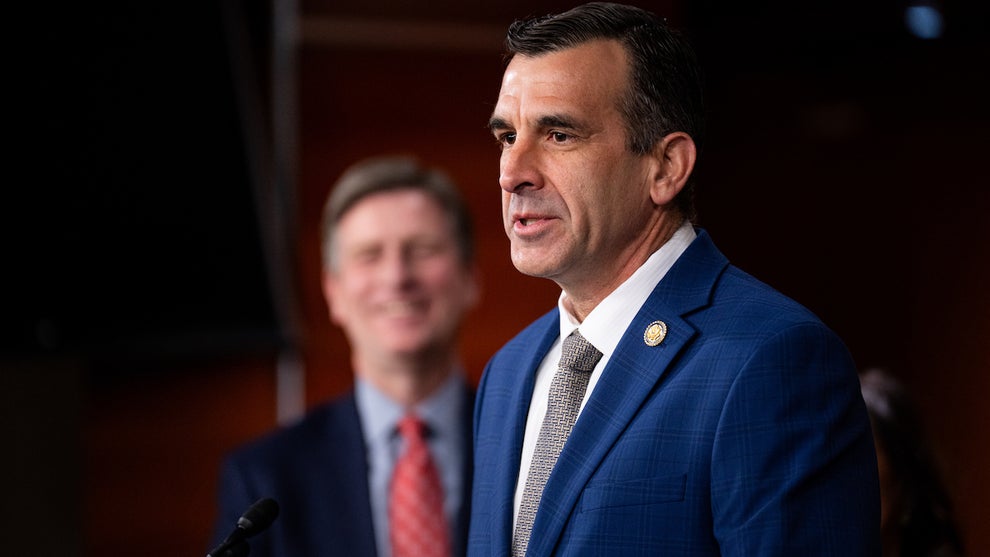
Congressman Sam Liccardo is urging FCC chairman Brendan Carr to deny Paramount Skydance’s petition that would allow three Middle Eastern sovereign wealth funds and other foreign investors to acquire 49.5% of the equity of the company following its merger with Warner Bros. Discovery.
Together, Saudi Arabia, Abu Dhabi and Qatar would control a combined 38.5% non-voting stake, exceeding the FCC’s statutory 25% cap for foreign ownership. Other foreign equity owners include “passive limited partner investors” in funds managed by RedBird Capital Partners, which would account for 5.8%, and foreign-based entities that have acquired the company’s Class B stock, who would control 5.2%.
The petition also asks for approval for foreign investors “in the aggregate to indirectly hold up to 100 percent of its equity and/or voting interests in light of routine fluctuations in publicly held equity interests and to account for potential future investments.”

Paramount has argued that it would not result in a transfer of control and that the Ellison family and RedBird Capital Partners would hold the largest equity stake in the company. But Liccardo points out that the “procedural subtlety of restricting these sovereign funds to non-voting equity shares does not resolve this conflict.”
“Paramount characterizes this arrangement as routine passive foreign investment. It cannot gaslight the American public,” he wrote in a Friday letter. “The scale of their ownership alone constitutes more than mere influence; the company’s financial dependence makes it beholden to its largest shareholders. The Commission must not allow a legal technicality to launder what is, in substance, a surrender of American media and infrastructure to the hands of foreign authoritarian regimes.”
He argued that the Middle East Funds “represent authoritarian regimes with complex and, at times, adversarial relationships with U.S. foreign policy objectives and norms of press freedom.”
“The Commission’s public interest standard is not satisfied merely by confirming that domestic parties hold voting shares. Broadcast licensees bear affirmative obligations to serve local communities, maintain editorial independence, and support a robust and free press,” the letter continues. “The financial architecture of this deal — in which foreign sovereign entities provide most of the equity capital—creates structural dependencies and incentive distortions incompatible with these obligations, regardless of formal voting arrangements.”

Liccardo warned that the FCC’s approval of the petition and “capitulation to foreign regimes” could result in Congress pursuing “legislative remedies.”
These include limits on foreign government ownership, mandating divestment of foreign sovereign equity stakes in FCC-licensed entities, establishing hard statutory caps on foreign government ownership with no waiver authority, and subjecting existing approvals—including any
granted in this proceeding—to mandatory retroactive review.
“Congress did not entrust the public airwaves to this agency so that it could auction off America to Riyadh, Abu Dhabi, and Doha. This will not stand,” the letter concluded. “I urge the Commission to exercise its full discretionary authority under Section 310(b)(4) to conduct a thorough
and independent public interest analysis and to deny or defer action on this petition pending the completion of all applicable national security reviews.”

The FCC says the petition has been accepted for filing upon initial review and that Paramount may be required to submit additional documents or statements. It will also be “referred to relevant Executive Branch agencies for their views on any national security, law enforcement, foreign policy, or trade policy.”
Paramount says it is also submitting responses to standard questions directly to the Committee for the Assessment of Foreign Participation in the United States Telecommunications Services Sector, also known as “Team Telecom.”
The public can file comments with the FCC until May 27, with replies due by June 11.
